
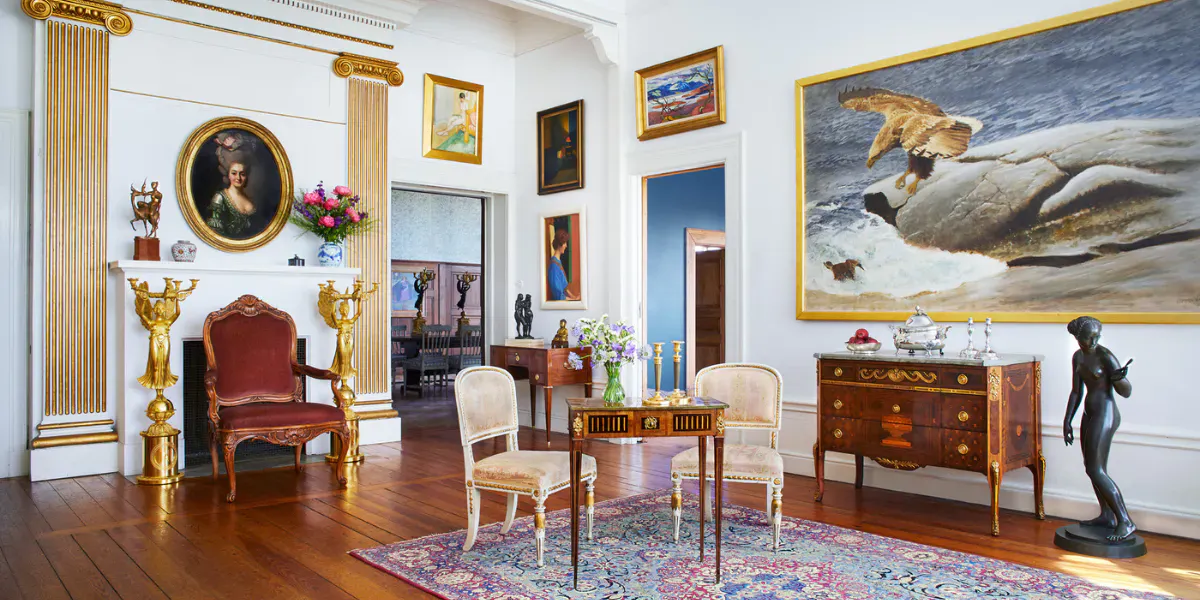
For five days, over a thousand exciting objects will be presented at Uppsala’s Auktionskammare in Stockholm. Between 14-18 June, three international quality auctions will be held with three fantastic catalogues: Jewellery and Watches on 14 June, Classic Art on 15-16 June and Asian Art on 17-18 June. Highlights include Rolex watches, world-class French furniture art and works by Francesco Guardi and John Bauer.
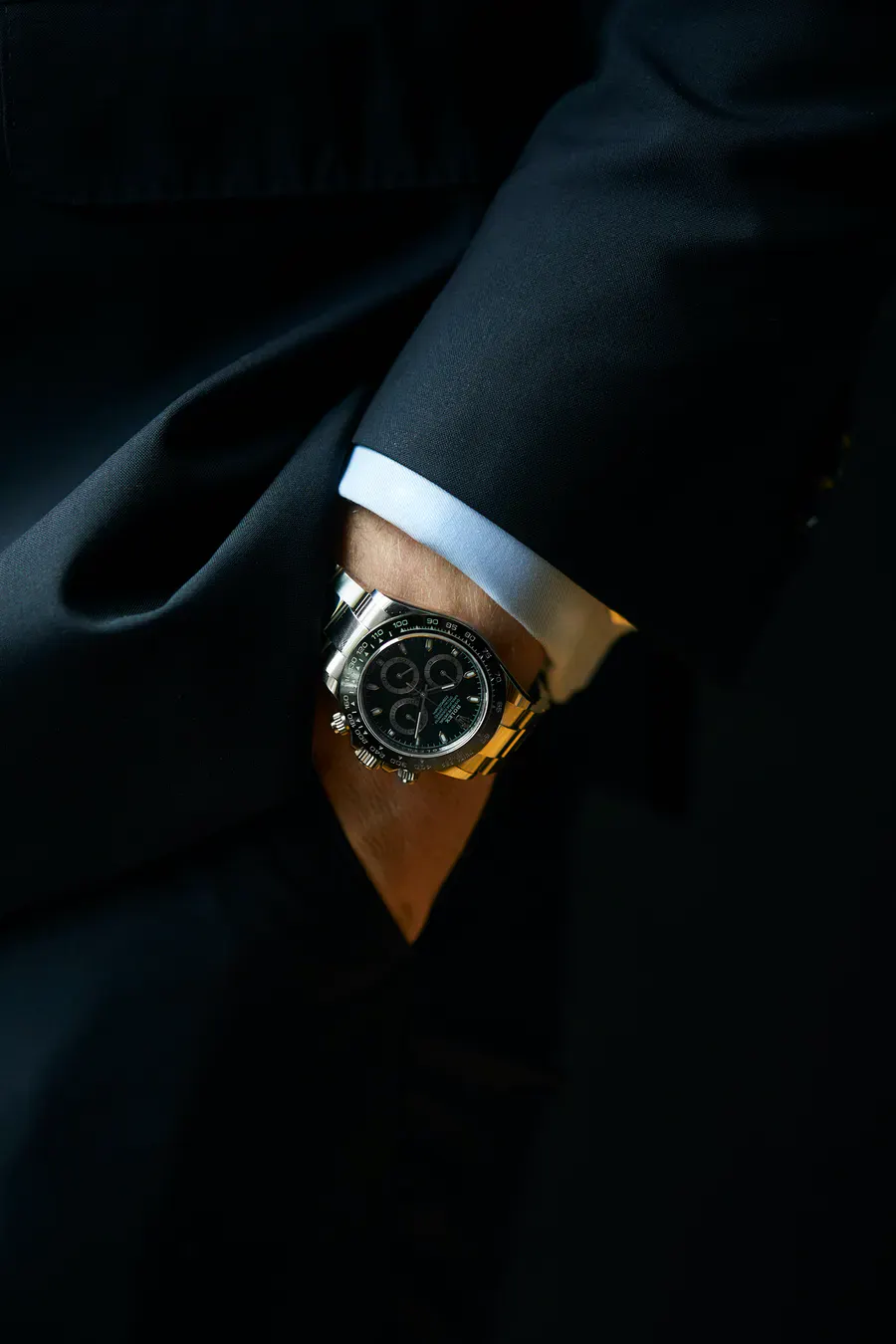
Rolex Daytona was designed in 1963 and was specifically developed for racing drivers. Among other things, it can measure stopping time and average time, and got its name from the racing mecca Daytona in Florida. Today, it is one of the watchmaker's most sought after models, and this particular model has a stylish deep blue dial.
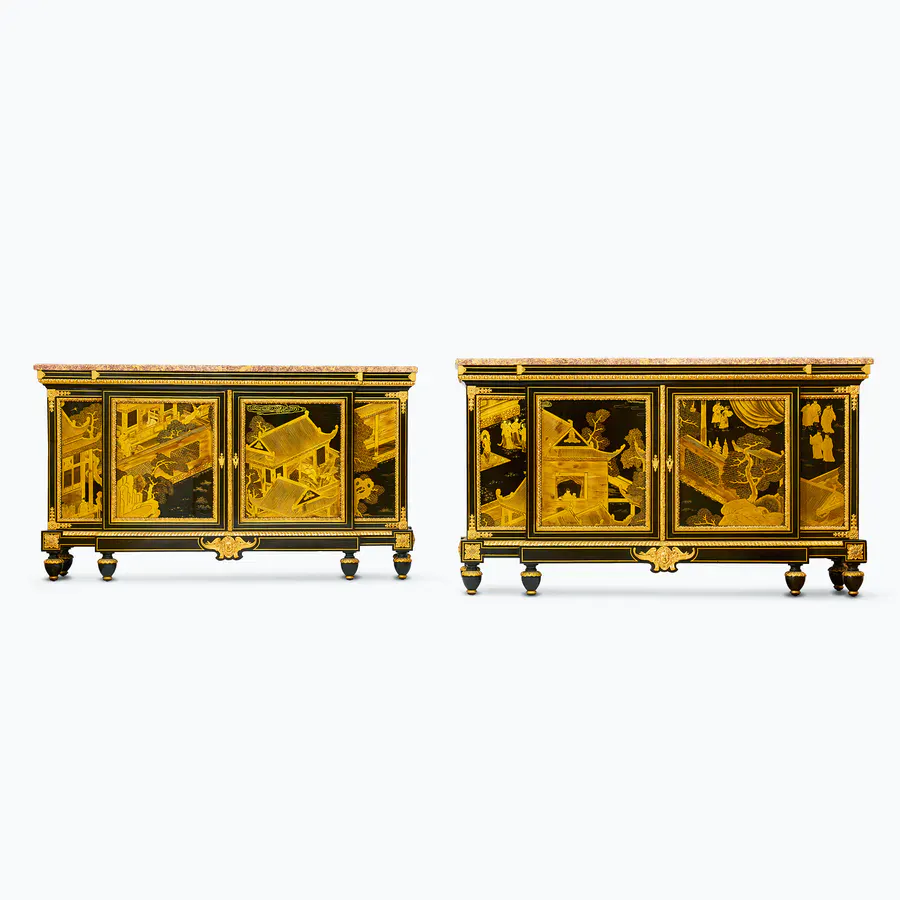
Napoleon III's regime in France marked a particularly glamorous period in the history of design. The bourgeois classes longed to return to the glory days of the French court and the so-called ‘new styles’ became popular. These two cabinets were made in Paris in the early 1860s, but the model is strongly influenced by the strict design language of neoclassicism. The craftsmanship is advanced, and they are, among other details, veneered with ebony and with finely inlaid Chinese lacquer details. The high quality and distinctive style indicate that they might have been made by the well-known furniture carpenter Charles-Guillaume Winckelsen.
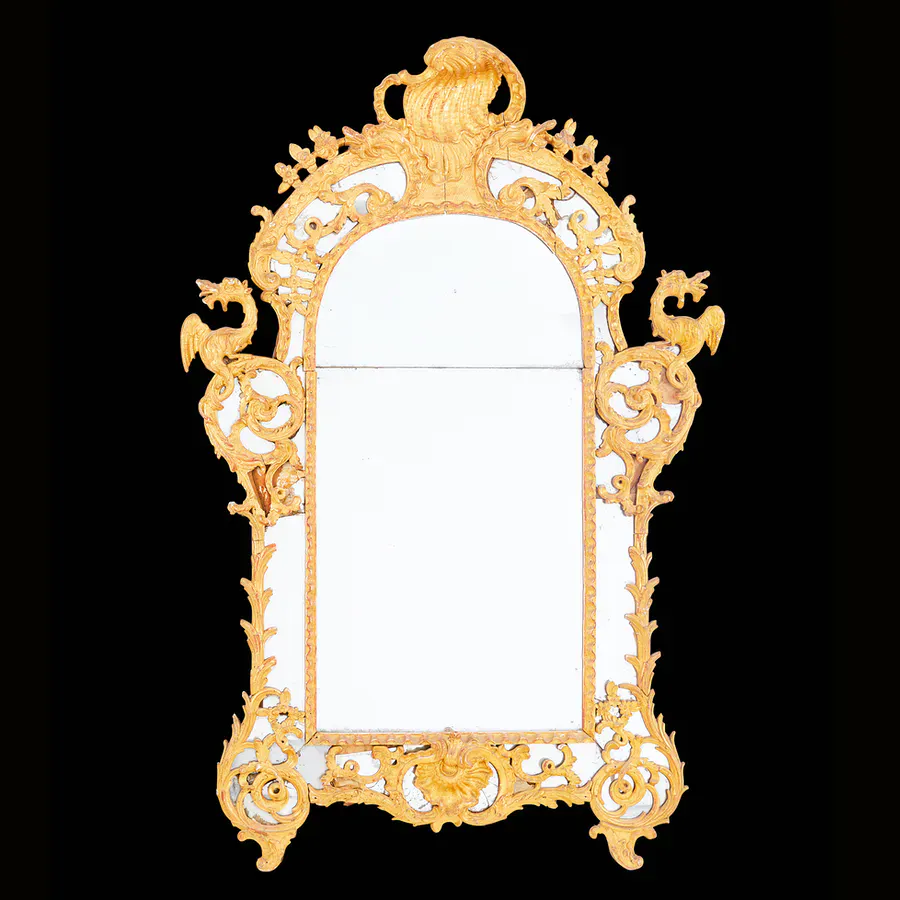
The 18th-century interior design ideal promoted light and airy proportions. Mirrors, which both reflect light and give the impression of space, thus became extremely important. This is a special example of the last period of Rococo. The frame's elegantly ornate decoration also includes two dragons, an appreciated touch of exotic surprise. The mirror was made in Paris in the 1730s and is said to have hung over a fireplace or a console table. It is not only the neat gilding that testifies to its exclusivity, but also the mirror glass, which was valued higher than others, especially in this model where the frame also contains recessed glass.
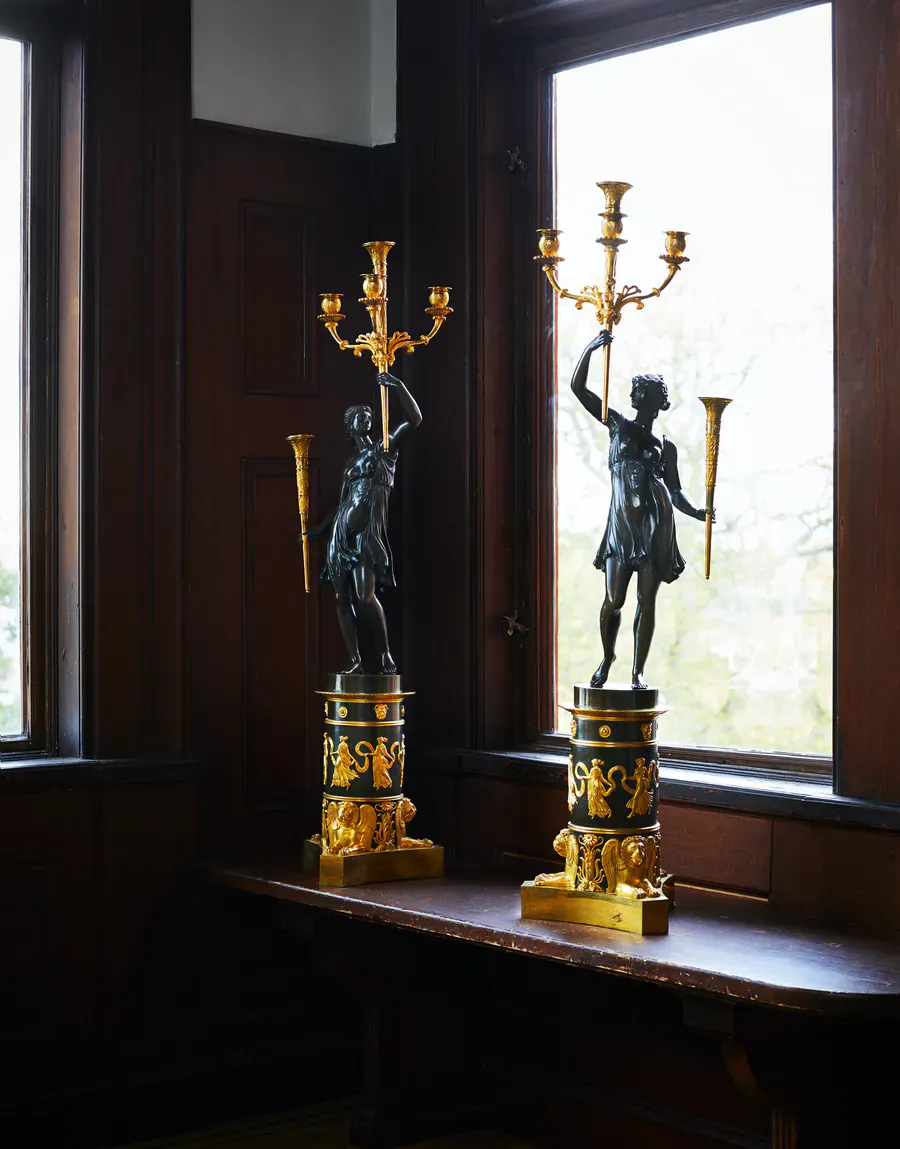
The name Empire was born after Napoleon I's regime in France around the turn of the century 1700-1800. Symbolically, he wanted to break with everything that belonged to the old regime, modelling his persona and court after the Roman emperors. These candelabra embody the classic design language of the Empire. Two nymphs dance beautifully in draped pieces of cloth. They are placed on a stand with relief decoration and they each hold a torch and drinking horns in their hands. This particular model was commissioned by the Imperial Court of Fontainebleau Castle, and the candelabra are either made by Claude Galle or Pierre-François Feuchère.
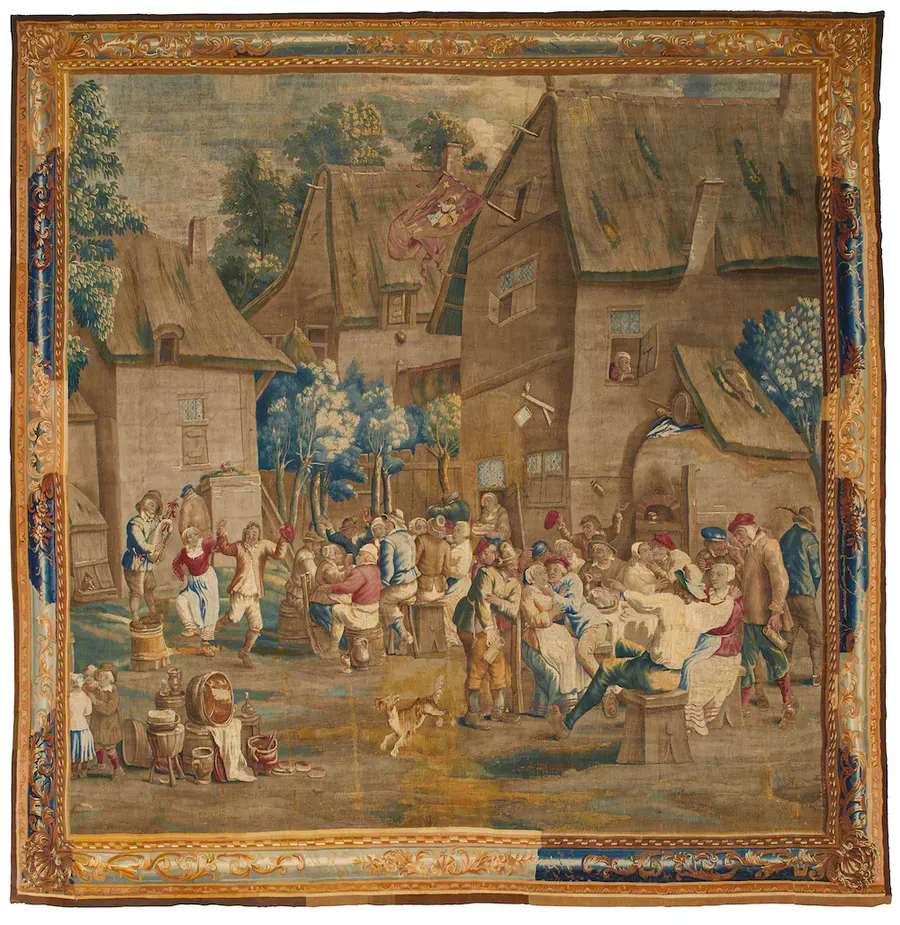
This woven wallpaper is probably made in Flanders by Jacob van der Borcht. Originally, it was part of a series called L’homme Qui Pisse (The Man Who Pees). But don’t be discouraged by the strong name - it is a delicious piece of craft. Festive everyday scenes of this kind have a long tradition in Flemish art and this motif is believed to have been taken from a painting by David Teniers the Younger. Other wallpapers in the same series are represented in museum collections around the world.
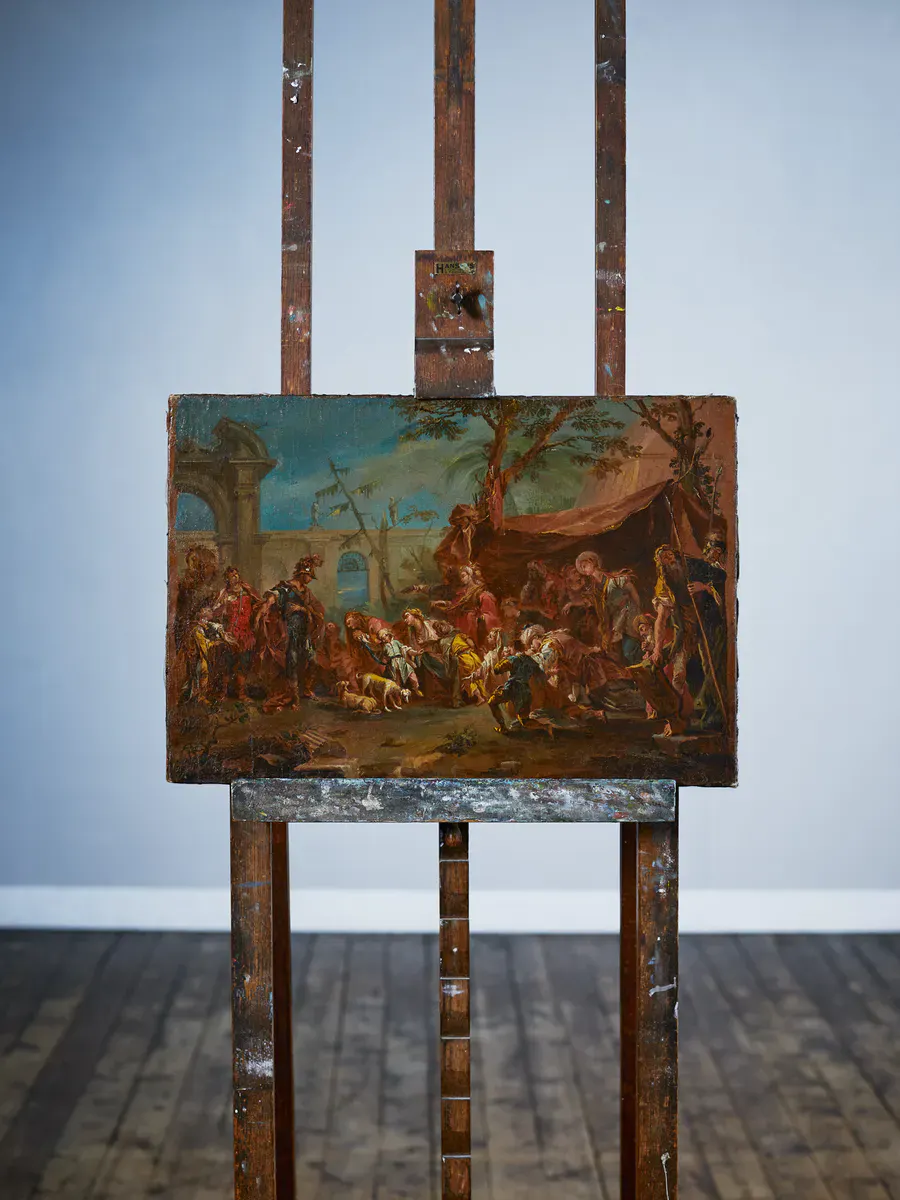
Francesco Guardi was one of the most significant and influential Venetian artists in the 18th century. Unlike the contemporary Canaletto, he used a more sketchy and expressive style. Guardi is primarily known for his depictions of the city and images of contemporary social life, making this a remarkable painting full of historical motifs. Here, Alexander the Great has just defeated Darius III Kodomannos and seized his wife Stateira II. Darius' mother Sisigambi begs Alexander on her knees to return her. However, she makes a mistake when she kneels before the man in the helmet, as Alexander is in fact standing behind him in a red suit. The picture is painted from a famous work with the same motif by Angelo Trevisani which resides in the National Museum's collections.
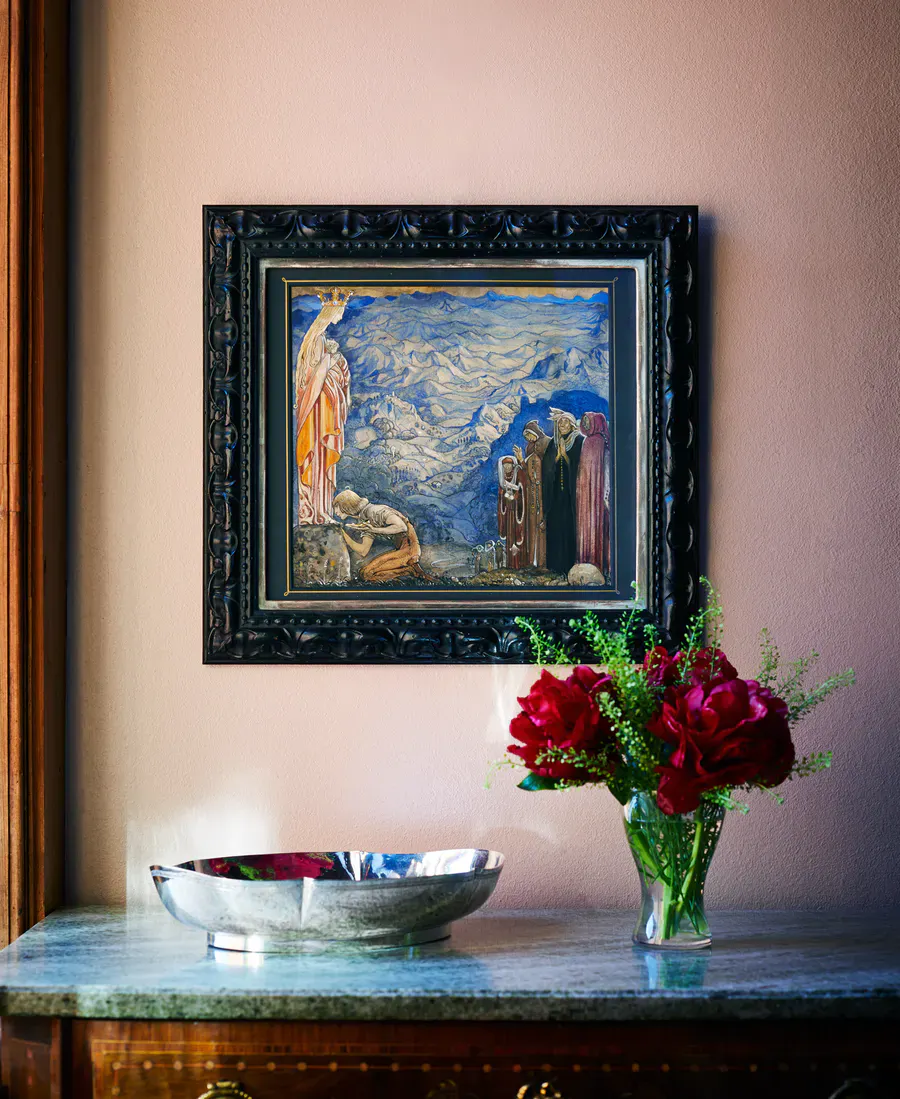
John Bauer has here illustrated the final scene in Emil Linder's saga The Musician Who Got the Madonna's Golden Shoe from 1915. The story takes place in Tyrol, where a poor musician falls in love with a picture of the Virgin Mary. To express his love, he plays for her, after which she is so taken by the music that she comes to life and gives him her golden shoe. The villagers accuse him of theft, but to prove his innocence, he plays a second time for the Madonna, after which she gives him her second shoe. It is this moment of redemption that Bauer has chosen to illustrate here. The virgin lets the musician kiss her foot. Although we recognise Bauer's dreamy language and suggestive silhouettes, we are here far from his usual forests of Småland. In this picture, he has probably rather been inspired by the Italian landscape, where he travelled in 1908, and the imagery of the Renaissance. The Madonna in particular seems to be influenced by Fra Angelico's frescoes. The painting has been exhibited at both Jönköping County Museum and Prince Eugene Waldemarsudde.