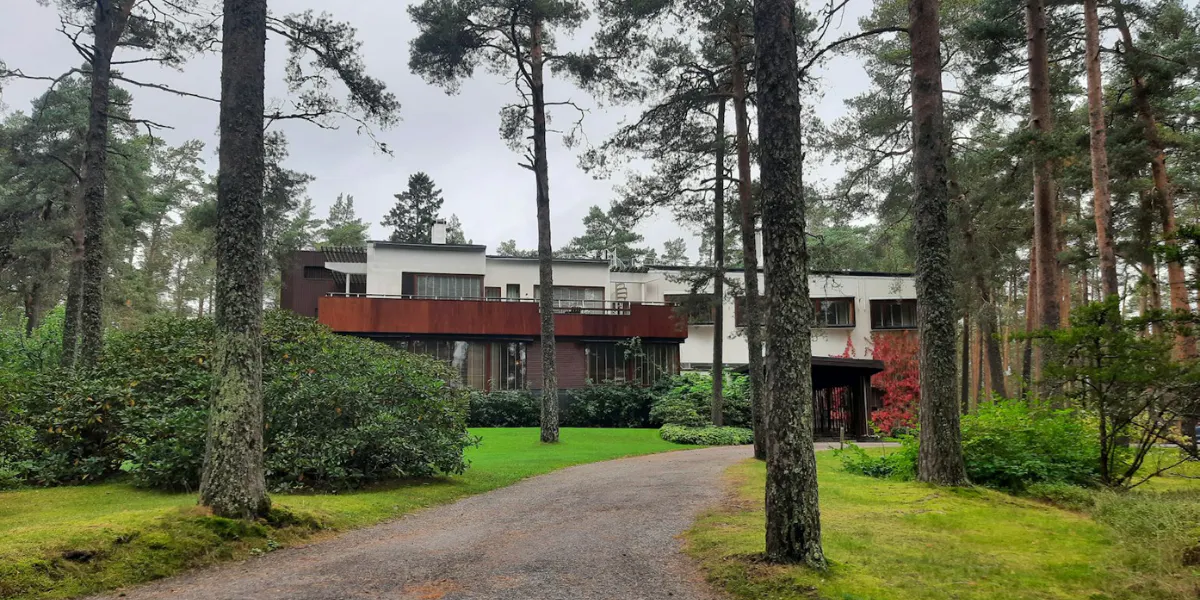
The Finnish architect Alvar Aalto (1898-1976) is among the most important architects and designers of the 20th century, and his work continues to resonate today. Aalto's vision was a "humanistic modernism" rooted in Finnish building traditions, harmoniously balancing nature, functionality, and humanity. Throughout his long career, Aalto received commissions in Finland, Europe, and beyond. Now, the UNESCO World Heritage Committee has declared 13 buildings and building complexes by this master of modern architecture as UNESCO World Heritage Site at its 48th session, held in Busan, South Korea on July 19-29, 2026. This special honor recognizes the enduring significance of Aalto's creations and their continued relevance.
Listed as number 1752, the UNESCO entry called Alvar Works comprises 13 buildings and building complexes in Finland, which were constructed between 1928 and 1988. Aalto created these in close collaboration with his first wife Aino and second wife Elissa, his studio, and other design partners who shared his vision.
See also: UNESCO Recognizes Eight Frank Lloyd Wright Buildings as World Heritage Sites
The oldest of these buildings is also one of the most famous that Alvar and Aino Aalto created together. The Paimio Sanatorium, built between 1928 and 1933, is considered a milestone in modern hospital architecture. Between 1938 and 1939, the couple designed the Villa Mairea in Noormarkku, one of the most significant private residences of the 20th century. The clients, Maire and Harry Gullichsen, were close friends and gave the Aaltos considerable creative freedom, thus enabling this gem of modern architecture. The Finlandia Hall is also listed, which was built between 1962 and 1975 (including later additions) and is now a Helsinki landmark.
See also: The Aalto Vase: Small in Size, Big in Impact
The other entries include the housing estate of the Sunila Housing Area in Kotka (1936-54), the Säynätsalo Town Hall (1949-52), the Experimental House in Muuratsalo (1952-54), Alto's own house in Helsinki (1935/36) along with his Helsinki atelier (1954/55), the Church of Three Crosses in Imatra (1955-58), the Aalto campus of the University of Jyväskylä (from 1951), the main office of the Social Insurance Institution in Helsinki (1953-56) and the Aalto Centre in Seinäjoki (1951-88).
See also: Alvar Aalto: A Finnish Hero
Other additions to the UNESCO World Heritage list this year include the wider area of Mount Olympus in Greece, listed as a natural and cultural heritage site; Okefenokee National Wildlife Refuge in Florida and Georgia (nature); the Beaches of D-Day Landings in Normandy, France (culture); the Jingdezhen Handicraft Porcelain Industry Sites in China (culture); the Boma–Badingilo Migratory Landscape in South Sudan, which is an ecosystem of savannah and wetland areas where the world's largest terrestrial mammal migration takes place (nature); and 19 other new entries and extensions of existing sites.