
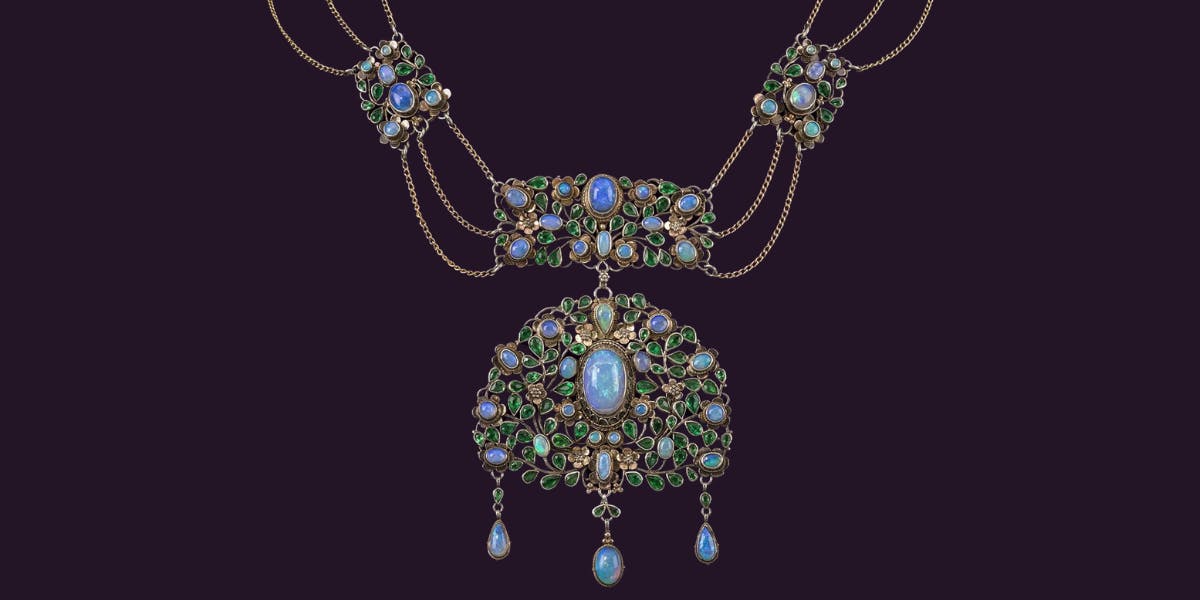
Arts & Crafts jewellery exemplified the romanticism of the Arts & Crafts revival, adopting the traditions of the movement in its love of detail, craftsmanship, and the importance placed on use and design. British designer and architect Charles Robert Ashbee (1863-1942), a fellow of Arts & Crafts founders John Ruskin and William Morris, was a pivotal figure in this new form of jewellery, influencing a whole generation and establishing the principles that would survive way beyond his lifetime.
See also: William Morris: Unravelling the Legacy
Ashbee rebelled against what he considered to be the ‘vulgar and tawdry, showy or mean’ jewellery worn by his contemporaries. He sought to design pieces that went beyond the commercial aspect to be works of art in their own right. On the fashions of the late 19th century, he wrote: 'We nowadays have lost all understanding of the colour of jewellery. We use certain conventional stones, diamonds, rubies, sapphires, white pearls, the stones that are in the market, and we set them uniformly in gold as the most expensive of metals; the rest are 'fancy stones', and don't concern us. To the Cinquecento jewellery, no stones were fancy stones...'
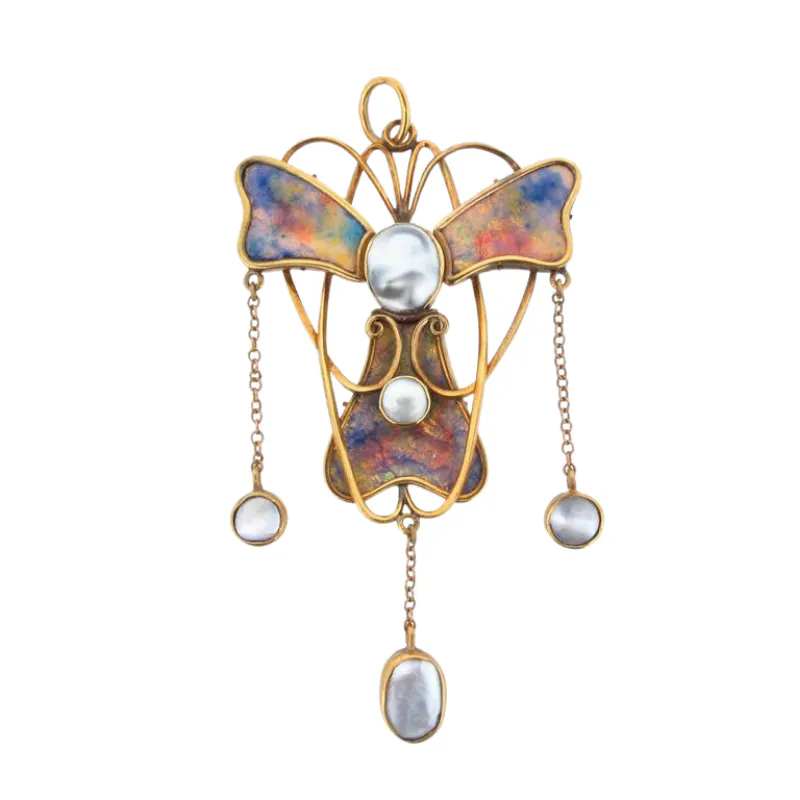
See also: Jugend: The Birth of an Artistic 'Youth' Movement
By 1900 Ashbee had created a new form of fresh and informal jewellery, as could have been viewed in The Studio, Art Journal and Dekorative Kunst. It was simple and natural in form, adaptable and relatively cheap in comparison with what had gone before, and he revelled in using coloured stones of all forms. The principles and tastes that Ashbee established became an important benchmark for all other Arts and Crafts jewellers, with others adopting his values to create a whole range of Arts & Crafts styles. His designs rested on 5 main principles:
1. The importance of metalwork
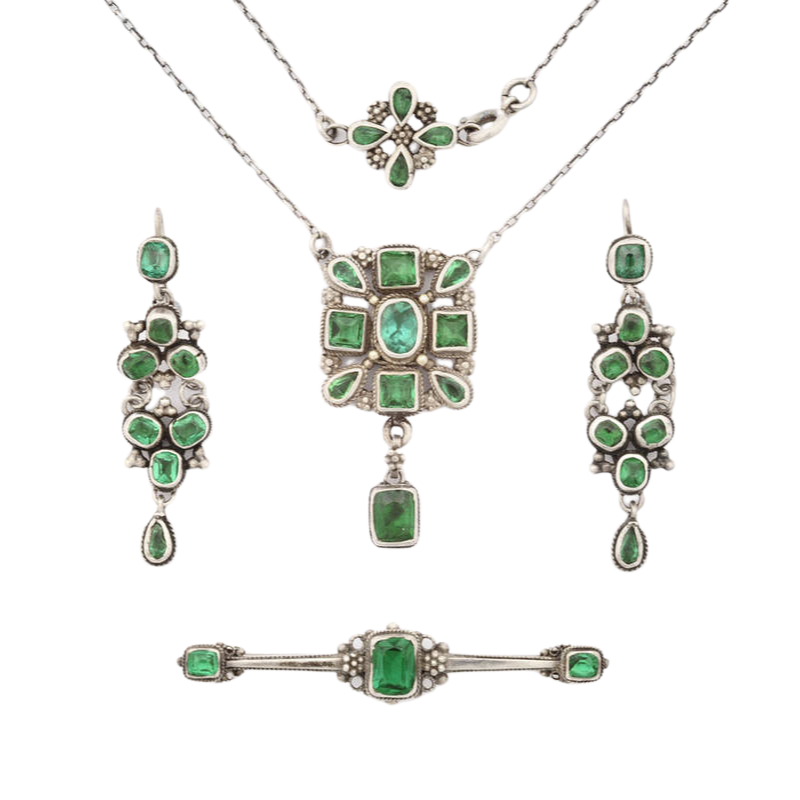
Silver became the metal of choice for most Arts & Crafts jewellery, as it was no-where near as costly as gold, which would more likely be found as a trim. Silver was softer, as were other metals such as copper, brass and aluminium favoured by Arts & Crafts designers, making it easier to use and allowing designers to bend and conjoin wirework, set stones or enamel more easily to create more elaborate and intricate designs. Furthermore, if it all went wrong, it was not as costly!
2. The choice of stones
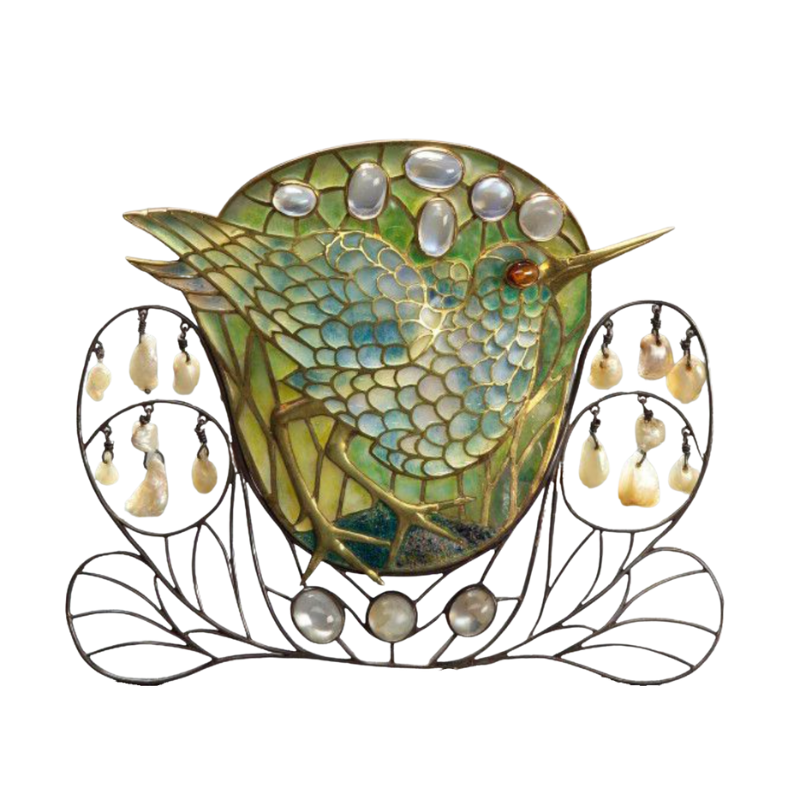
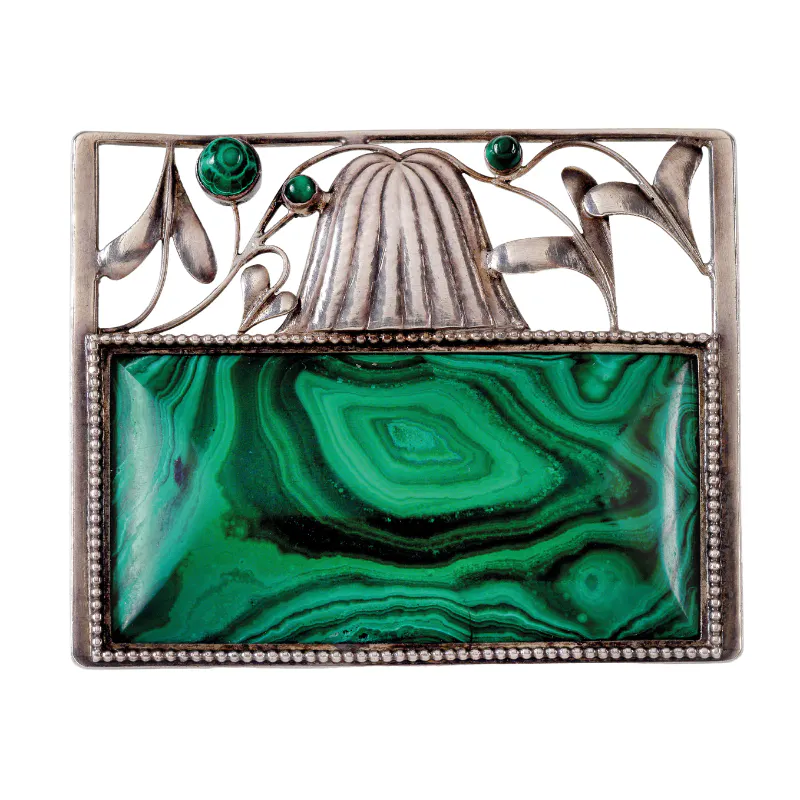
Gemstones were chosen for their aesthetic rather than their monetary value, their colour and hue playing a decisive role. Generally stones would be left en cabochon (un-faceted) with simple settings, and similarly pearls were chosen that were not purely formed or of the usual creamy colour. This allowed for the jewellery to be more affordable, as well as giving the craftsmen greater freedom, aesthetically allowing them to make the design of the utmost importance rather than spotlighting a single gemstone.
3. The art of enamelling
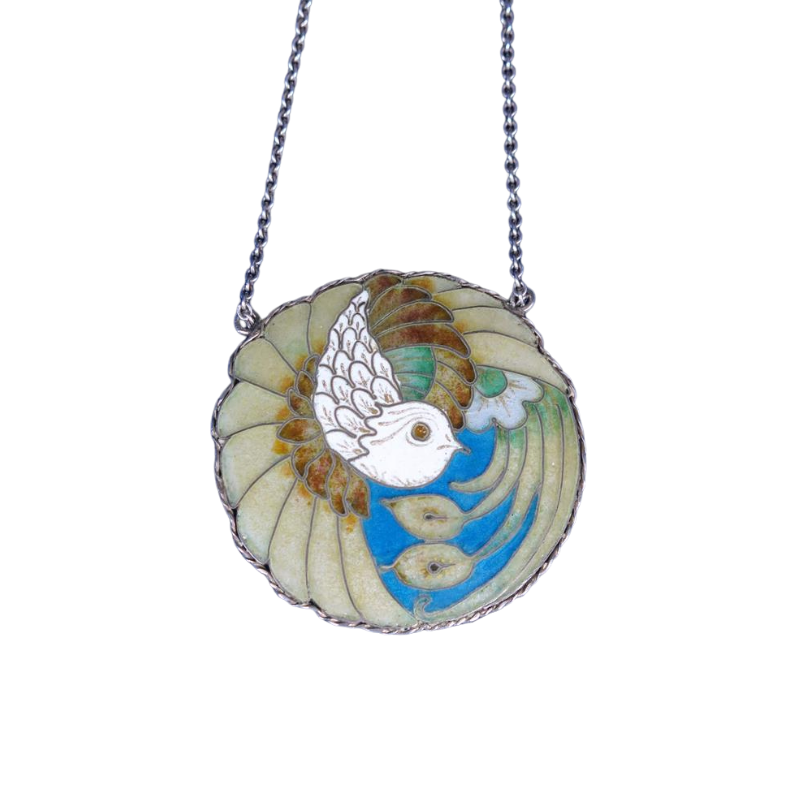
A Renaissance practice, enamelling came back into fashion in the Arts & Crafts period and became one of the central and foremost features of the jewellery of this period. It could take a number of forms – champlevé, cloisonné, limoges and slightly less often plique-a-jour, producing vibrant colours that craftsmen could work with and playoff against each other.
4. The consideration of cost
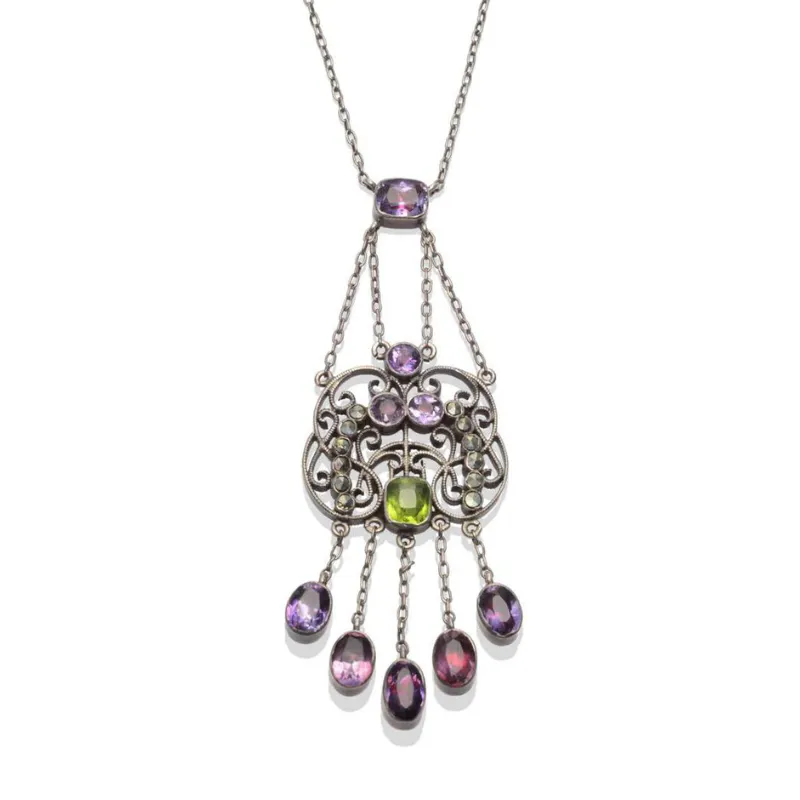
Rather than just appealing to those at the very height of society with the greatest wealth, Arts & Crafts jewellery allowed those with more moderate means to buy pieces. This also meant that the jewellery became closely associated with the women's suffrage movement and it was known that Emmeline Pankhurst, the suffragette leader, supported Arts & Crafts jewellery.
5. The jewellery as art
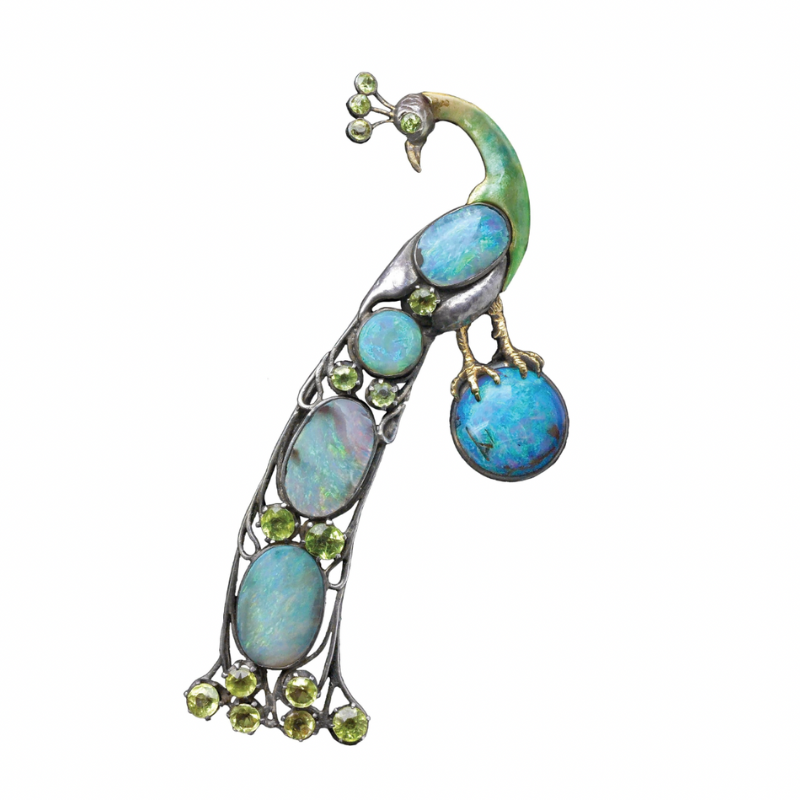
Ashbee treasured the pure design element of each piece – the 'art' was of the utmost important and the visibility of the hand of the craftsman critical. The peacock and the galleon were both favourite motifs of Ashbee that harked back to the Medieval and Renaissance periods, and they became themes that reoccurred frequently in Arts & Crafts metalwork and jewellery, epitomising the revival of a pure art form.
See also: Designer Costume Jewellery: The Favourite Accessory
Finally, it was jewellery to be worn with the new free-flowing style of dress – brooches, pendants, clasps, bracelets and buckles – romantic and full of symbolism. Ashbee and his principles of Arts & Crafts jewellery were influential both within the national movement and internationally (the American Arts & Crafts Movement, Scandinavian Design and the Austrian Secession including the Wiener Werkstatte all took inspiration from him) and it laid the foundations for the modern crafts movement.
Today, the designs of Ashbee and his fellows go at auction for not-so-modest prices, with an Arts & Crafts plique-a-jour enamel and gem-set brooch by the British designer selling for £81,923. Most of Arts & Crafts jewellery, however, thanks to its choice of common stones, still keeps prices relatively low for these pieces of the highest craftsmanship and creativity.
Read more articles in Barnebys Magazine
This is an updated version of an article originally published on 8 March 2016.


