![Paul Henry, ‘Western Landscape' [detail], oil on canvas. Photo: deVeres](https://images.prismic.io/barnebys/afe2d2e7-ac03-494d-9d8c-28b9d1b7a440_Cover+2.jpg?auto=format,compress)
An exceptional collection of high quality Irish art, comprising pieces from extensive private collections, is heading to auction at deVeres on Tuesday 8 December.
“2020 has proved an eventful year but the art market has performed extremely well, people responding very positively to the push to online auctions,” says a representative from the Dublin auction house. “Viewing at our gallery has been restricted but being able to offer clients detailed condition reports and additional images means that viewing remotely can be done with confidence.”
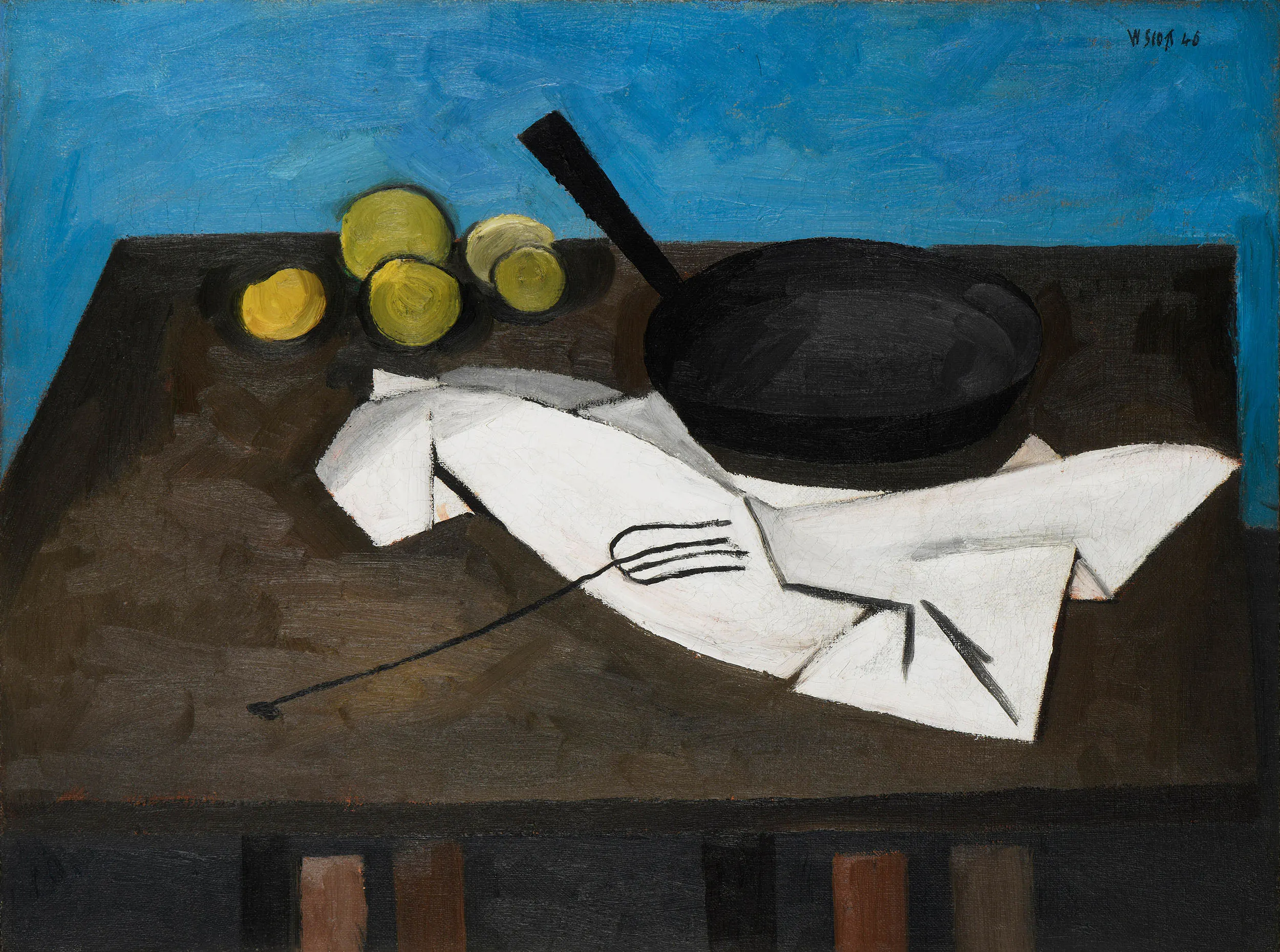
Among the several highlights of the sale is 20th-century artist William Scott’s Still Life with Frying Pan. Painted in 1946, this work is one of the artist’s earliest still-life compositions to include a frying pan. Though many of Scott’s later works were highly abstracted, their roots were typically formed of objects from a simple Irish country kitchen: pots, toasting forks, knives, crockery and, of course, frying pans.
These simple, unpretentious objects reflect a distinct Northern Irish austerity (the artist was born in Scotland but his Donegal-born father moved the family to Enniskillen, Northern Ireland, in 1924). Within Scott’s canvas, everything is carefully placed, huddled around a central point while simultaneously drawing eyes away from this to draw balance, as with the corners of the cloth and the fruit. The main event, though, is the visual dialogue between the handle of the skillet and handle of the fork, each of which spring out at opposing angles.
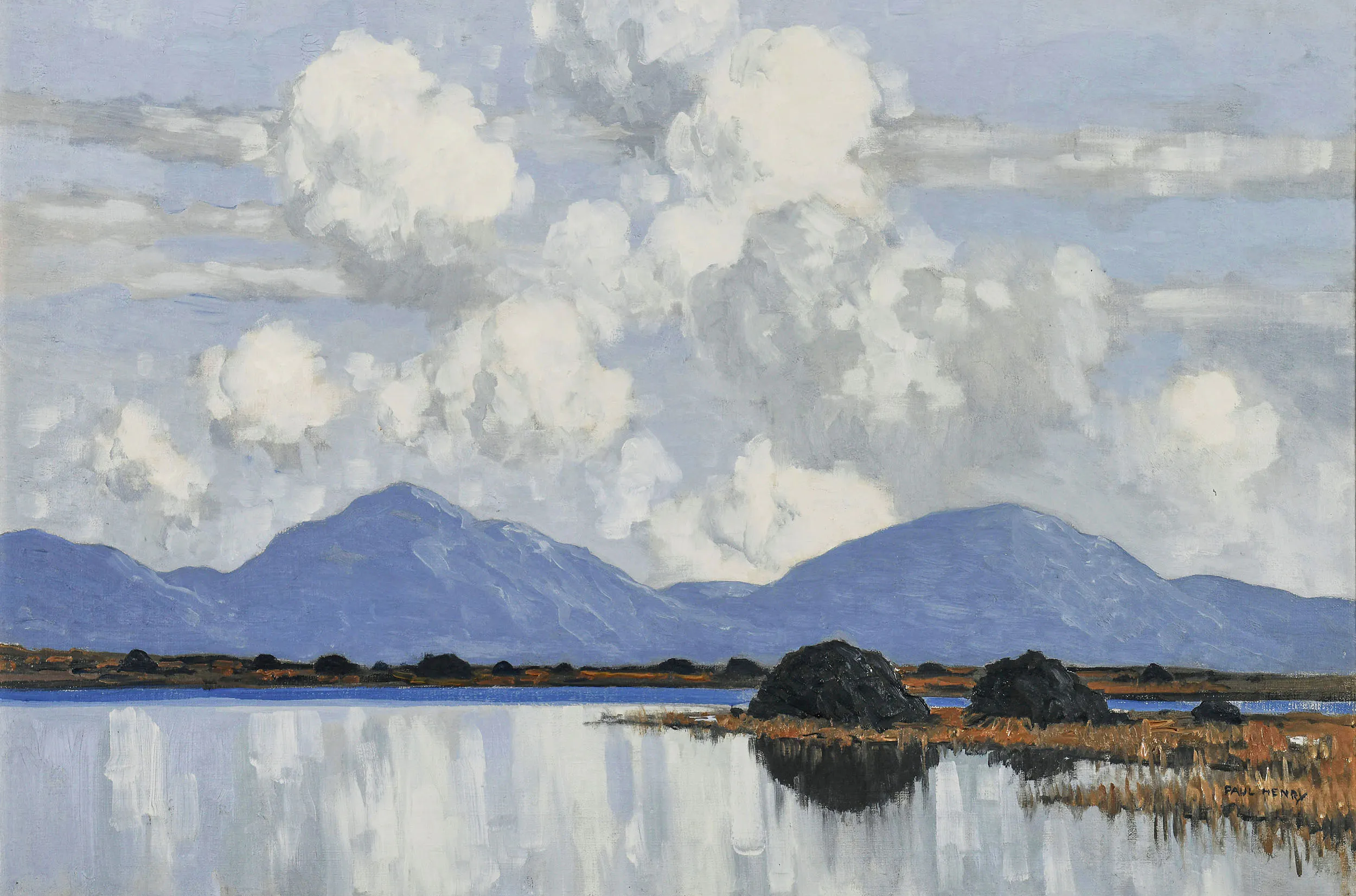
This exquisite panoramic view is of Kylemore Lough, near Letterfrack, Co, the mountains in the background being the Maumturks viewed south-eastwards. Paul Henry painted this work in the period between 1932 and 1935 when his palette, like his mood, lightened as his domestic problems – final separation from his first wife, Grace, and financial difficulties – were overcome. The landscape remains supreme, with the panoramic view inviting the viewer in and showing Henry at his most Impressionistic, where he paints with bravura confidence. The bold impasto strokes that render the reflections on the lake are indicative of an artist by now completely at ease with both his subject and medium. It is a spellbinding work that leaves you longing for the lakeside.
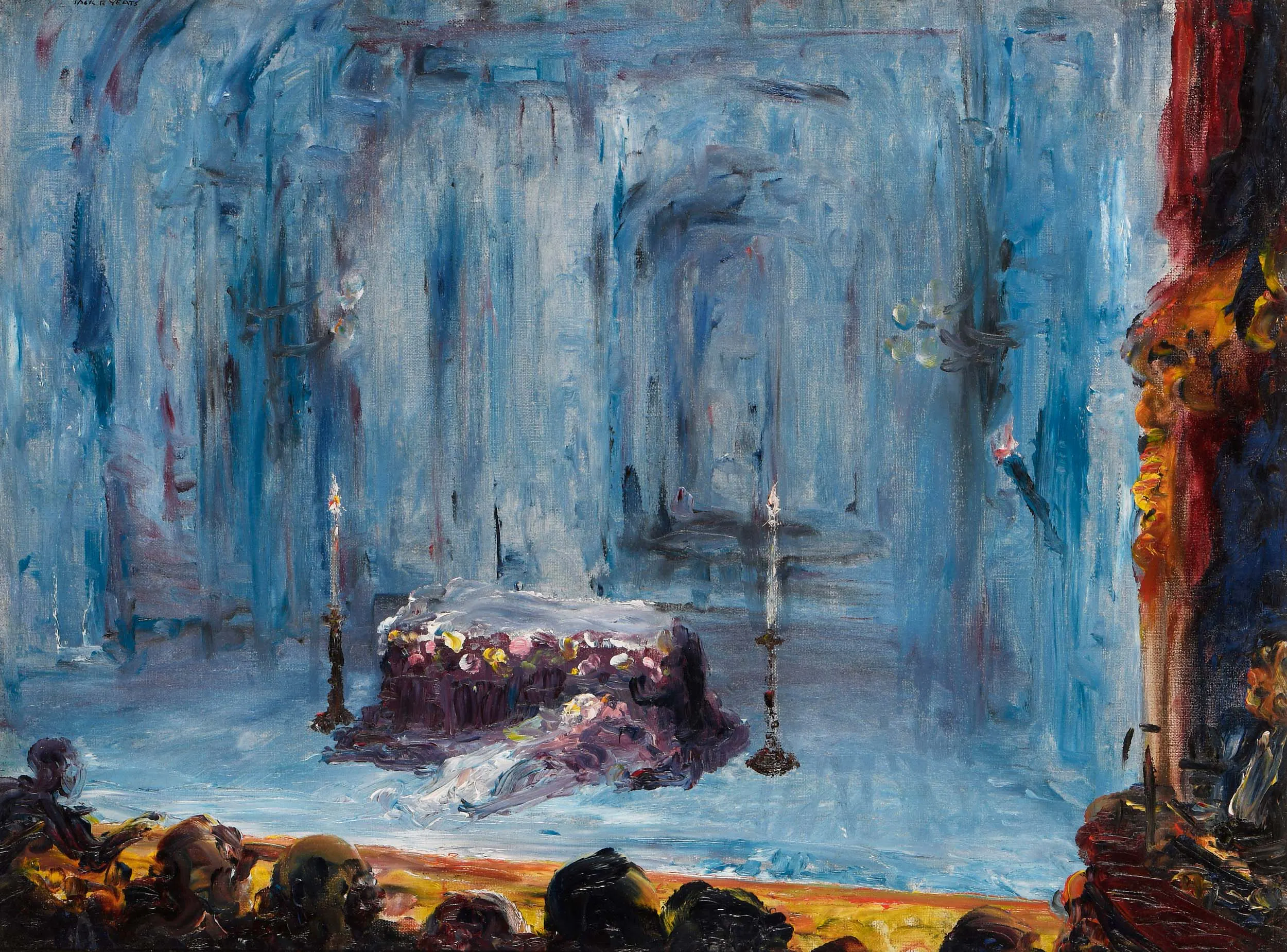
Romeo and Juliet was performed in the Gaiety Theatre in Dublin on 2 March 1926. Irish artist Jack B Yeats was in attendance and outlined the scene depicted in the painting in his sketchbook. He was an avid theatre goer and playwright and in fact wrote several plays for children in the early 1900s. His later experimental plays Harlequin’s Positions, La La Noo and In Sand were staged at the Abbey Theatre between 1939 and 1949. Several of Yeats’ paintings are inspired by his experiences of the theatre.
The figure of the conductor can be seen in the painting on the far left. His head is held high and his arms extended as he conducts the notes of Guonod’s score. The heads of the front row of the audience fill the bottom of the composition, and on the right hand side the towering interior structure of the theatre throws the perspective of the stage into stark relief. The elaborate gilt and maroon decoration is richly conveyed by loose swirls of deep colour, which take on an organic quality, suggestive of movement and warm reflected light. A spectator is shown seated in the darkened theatre box looking at the performance. This unusual perspective emphasises the collaborative nature of live theatre in which the performers, musicians and spectators share in the illusion of the drama. It also draws attention to the artificiality of the set and the theatre itself as an extraordinary site where the human imagination is enabled to take flight. Overall, Yeats’ canvas is a wonderful and, appropriately, theatrical painting.
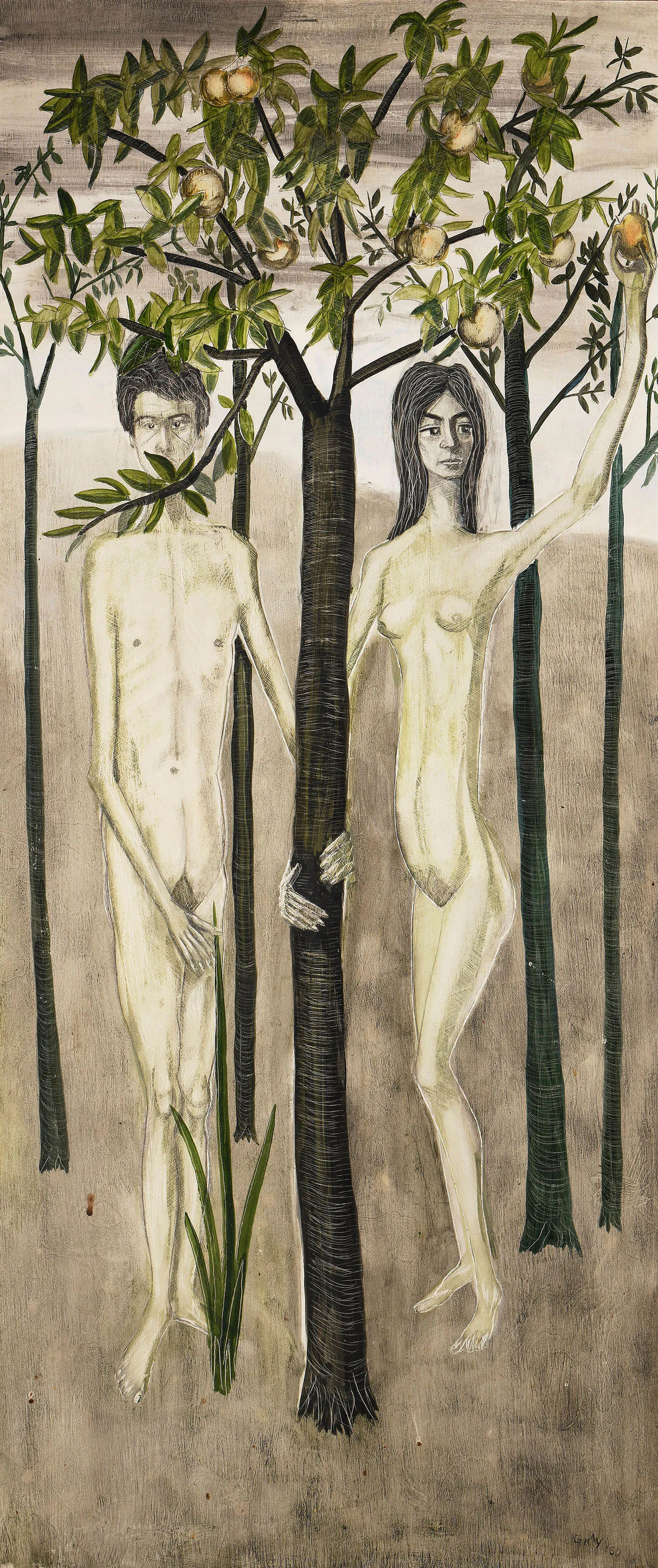
A number of works by Irish artist Reginald Gray are for sale, including the depicted Adam and Eve. Little of Gray’s work has come to auction, though he briefly attended The National College of Art and Design and he lived and worked with the London School of Lucien Freud, Francis Bacon and Patrick Swift.
In November 1958, Gray met Catherine Hall whom he married a month later at Caxton Hall Registry Office in Westminster. Catherine featured in much of his output between 1959 and 1962 and is the woman depicted in Adam and Eve (1960), Two People (1960/61) and Girl at Screen (1961). All three of these paintings are painted in egg tempera, which he began to use after arriving in London and which continued to be his medium of choice for the remainder of his career.
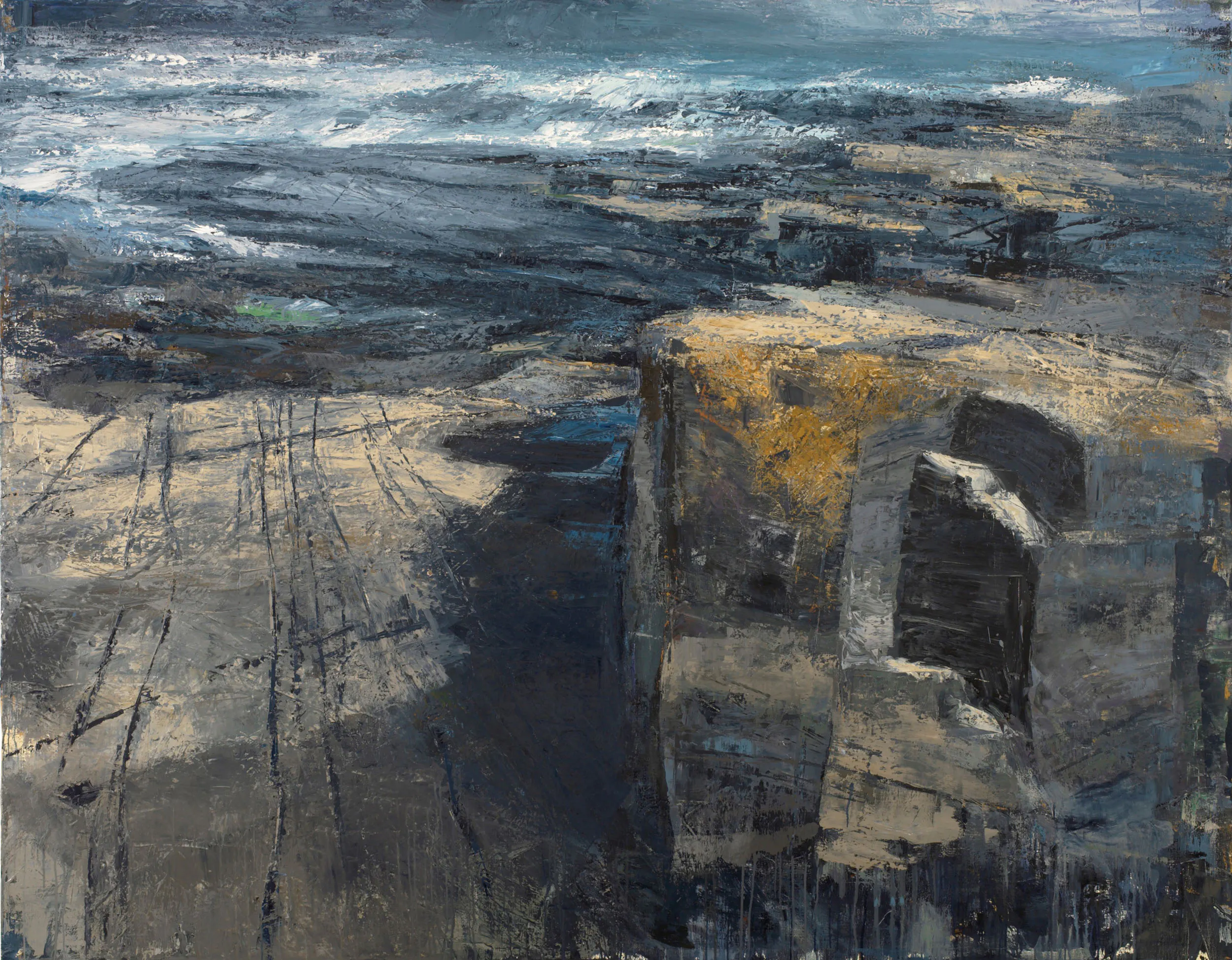
Donald Teskey’s Coastline Narrative III is a large-scale act of attention to the ferocious clash of land and ocean. Teskey has spoken about his art as ‘chasing the light’: he follows it into the nooks and crannies of the rocks, tracing the fault lines and defects which reveal their ultimate character.
Exact and evocative, this painting enacts every detail of the drama of the waves’ assault on the shore’s abrupt edge and, by pitting such elemental powers against each other, conjures that conundrum of physics – the unstoppable force and the immovable object. Yet for all the uproar, the effect is rather calming.
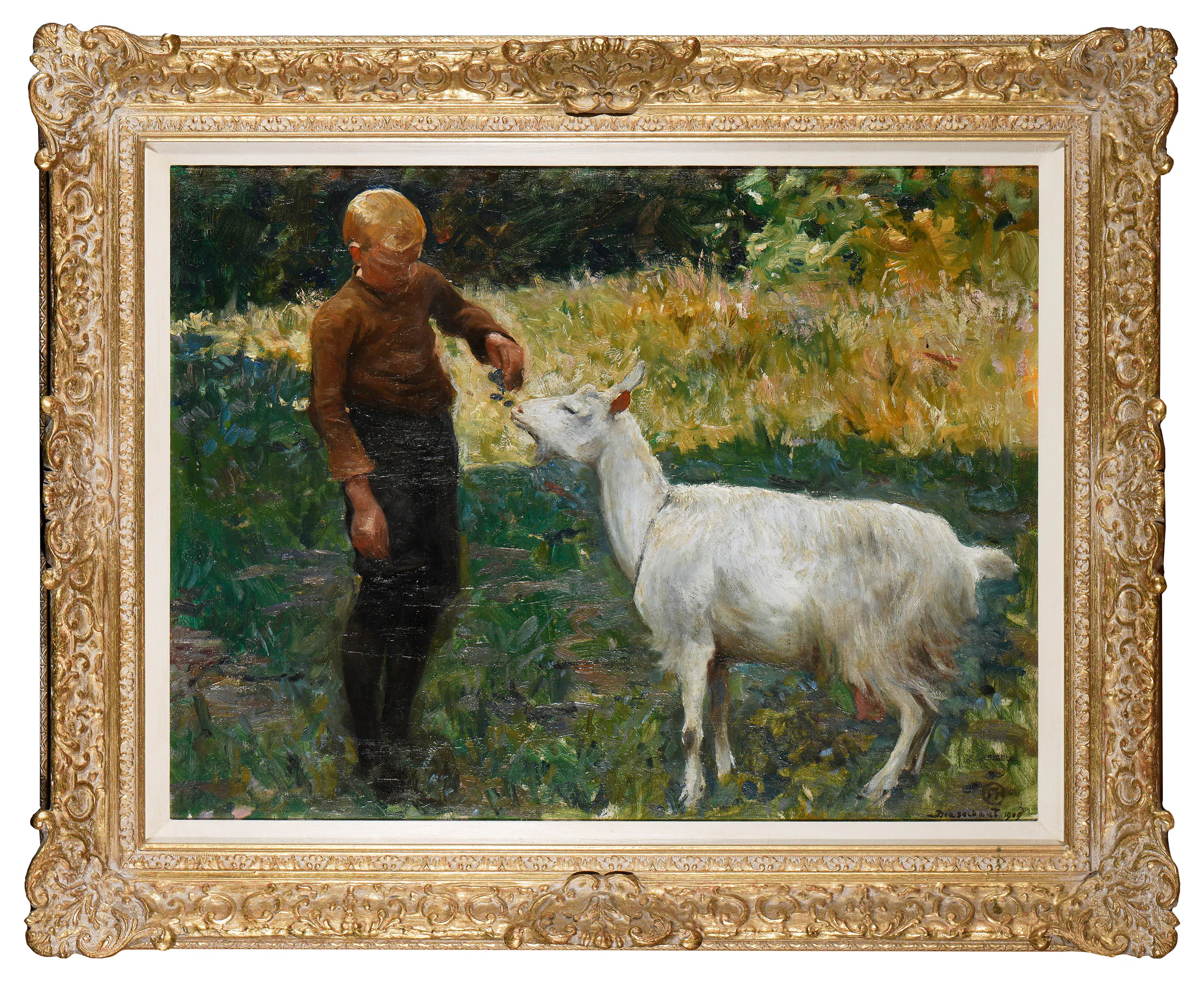
Moving away from Ireland, we find Antonius Matthias Hirschig who was born on 18 February 1867 in Naarden, a town in the province of North Holland in the Netherlands. Hirschig occupies a unique position in the history of Modern Art. He lodged with Vincent van Gogh at the Auberge Ravoux in the country village of Auvers-sur-Oise, 30 kilometers from Paris, until shortly after van Gogh's death on 29 July 1890. This quiet hamlet lured many 19th-century artists from Paris to its sunlit wheat fields, clear skies and charming homes and gardens. Manet, Cézanne, Renoir, Camille Pissaro and Vincent van Gogh all lived there for a time.
Hirschig had been introduced to the scene by van Gogh’s brother, Theo, and he occupied the attic room next to van Gogh's. The day van Gogh shot himself in the chest – a fatal wound – Hirschig summoned the physician and also notified Theo who arrived in time before the van Gogh died. Hirschig remained at van Gogh’s bedside before returning to his neighbouring bed. “He was lying in his garret under a zinc roof. It was terribly hot... He shouted all night, shouted a lot!" he recalled in a letter in 1911. Hirschig subsequently assisted at van Gogh’s funeral and left Auvers for good shortly after.
As a reminder, deVeres’ not-to-be-missed auction is taking place on 8 December.