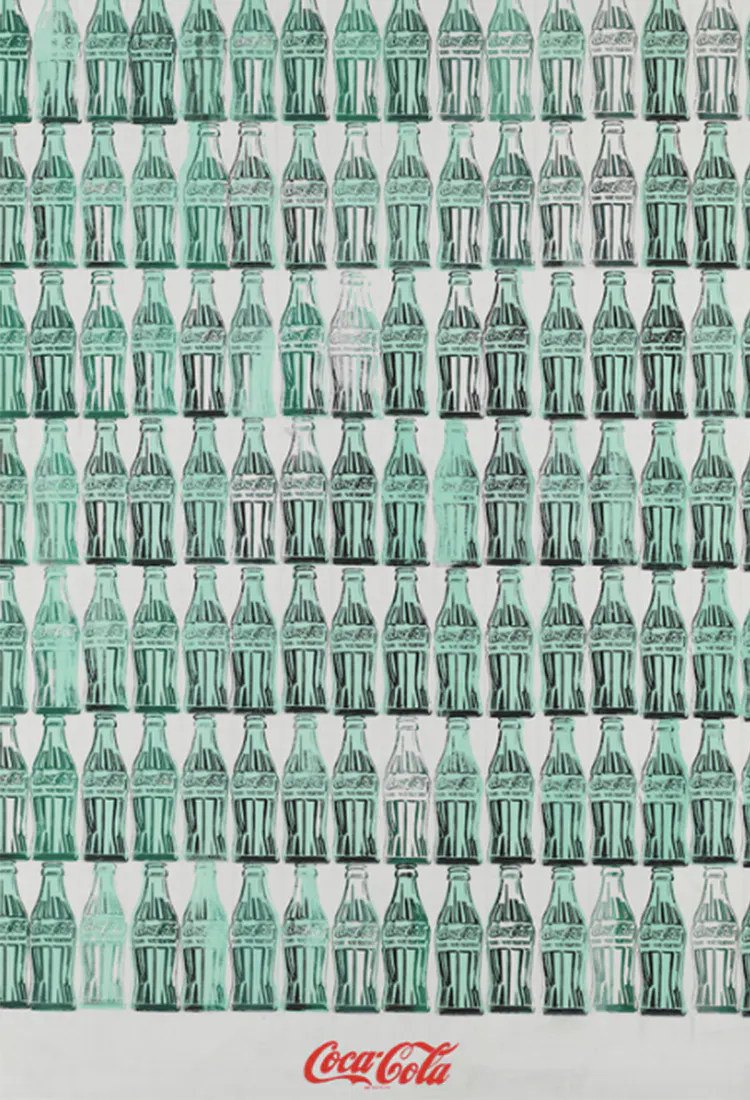
You can be watching TV and see Coca-Cola, and you know that the President drinks Coke, Liz Taylor drinks Coke, and just think, you can drink Coke, too.
Drink Coca-Cola was the slogan in 1886 when Coca-Cola was first served at a pharmacy in Atlanta, Georgia. It was marketed as a non-alcoholic beverage that was a response to the area's prohibition laws and the temperance movement. Served from a soda fountain, the drink was invented by Dr John Pemberton and was actually considered a tonic as it contained an extract from the coca plant and cola nut, which was used in folk cures as a remedy for indigestion, fatigue and other maladies. The two came to form the Coca-Cola name, which was later also trademarked by its nickname 'Coke.' The sweet and carbonated beverage steadily became popular, with nine drinks per day sold in the first year.
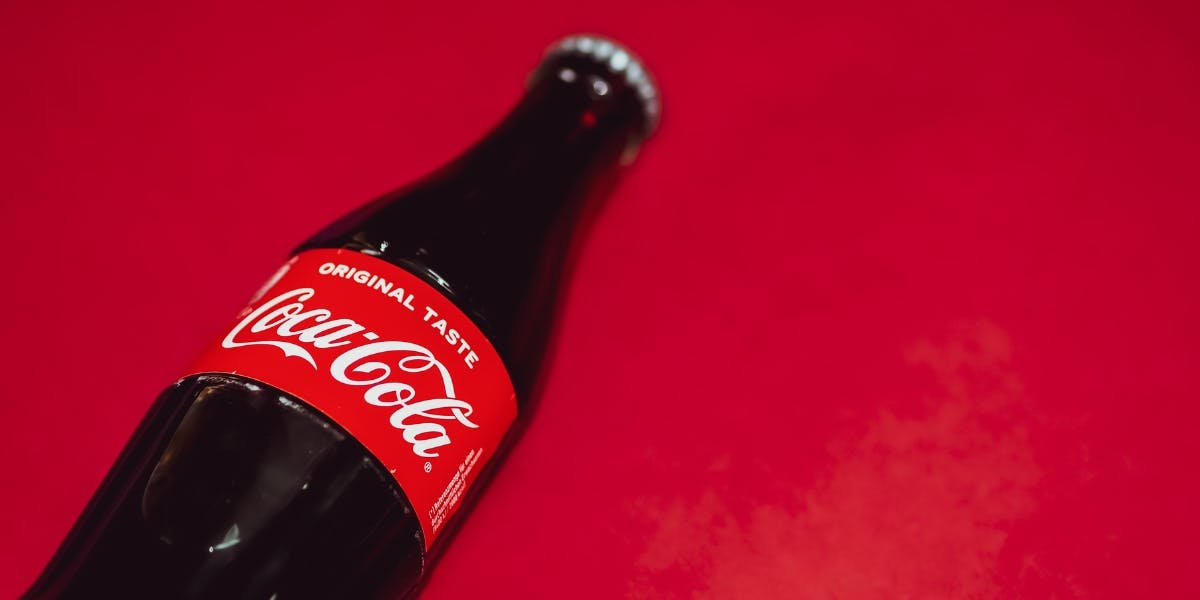
By 1899, the drink was served in cylindrical Hutchinson bottles with stoppers, but it wasn't until 1915 that the iconic 'contour' bottle so associated with the beverage today came into being. It was referred to as a 'Hobble Skirt' design based on the shape of a popular skirt. It was also referred to as the 'Mae West' bottle, after the American actress Mae West known for her hourglass figure.
See also: Champagne: The Sparkling Drink of Luxury and Celebration
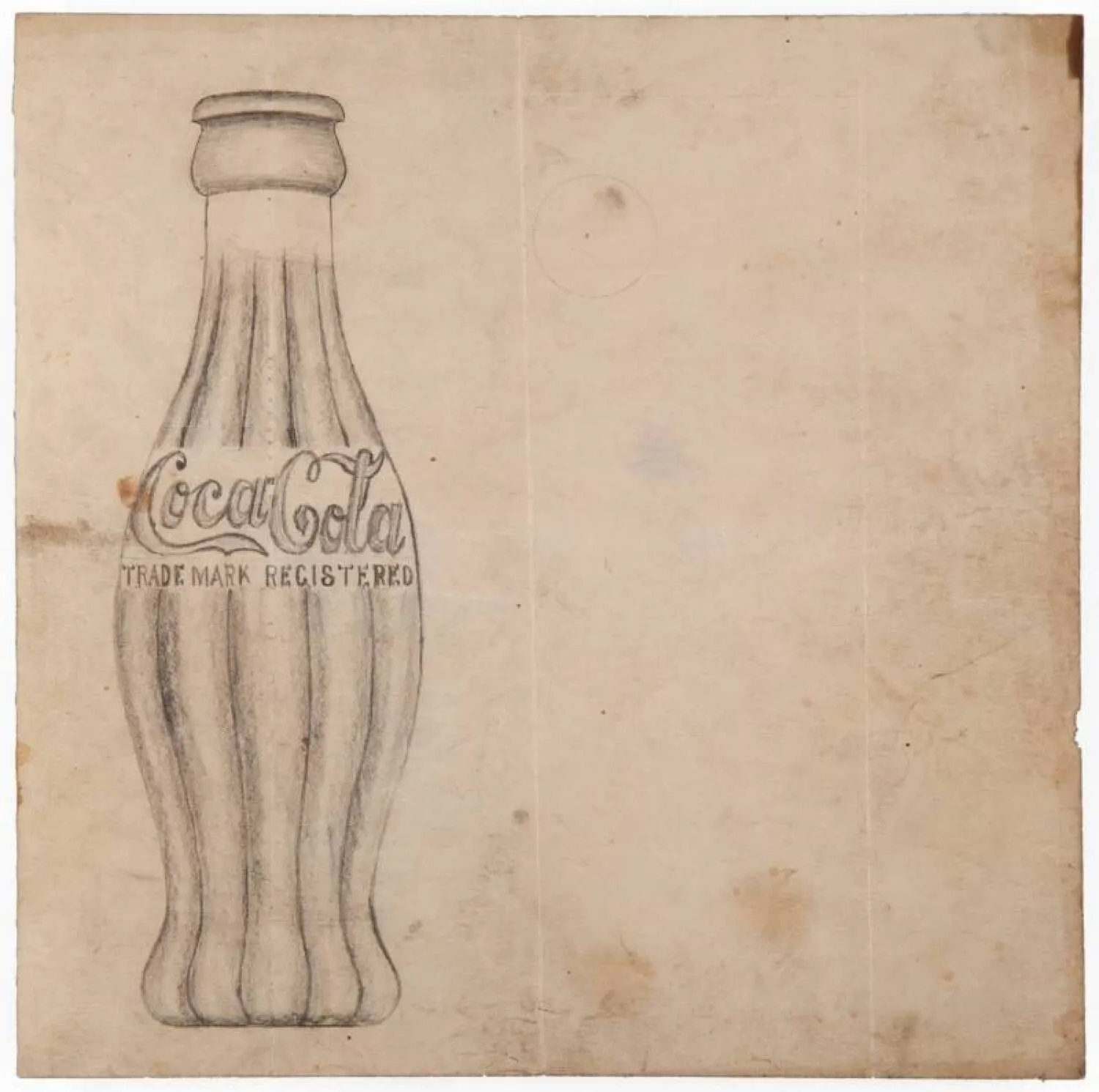
The design was sketched by Earl Dean of the Root Glass Company in Indiana. Dean won the Coca-Cola Company's competition to create a glass bottle design that would distinguish Coca-Cola from other drinks. The first prototype originally had a rounded middle based on the shape of the cocoa pod, but it would be unstable on conveyer belt so it was slimmed down to the contoured shape. The unique and shapely design helped set Coca-Cola apart from other soft drinks at the time with the iconic Coca-Cola script across the rounded middle.
See also: Culinary Antiques: The Art of the Restaurant
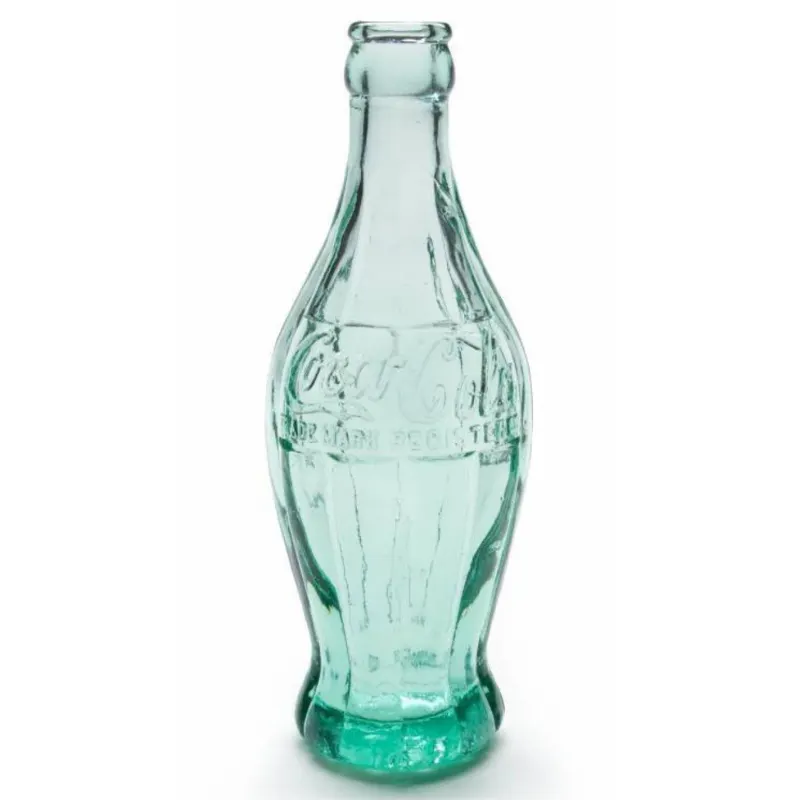
The Coca-Cola bottle design as we know it today got trademark status by the United States Patent Office in 1923 and is easily recognisable as the Coca-Cola bottle. The bottle held about 6.5 fluid ounces, and from 1886 until 1959 was sold at the fixed price of 5 cents. The affordable price was a leading reason why Coca-Cola became so popular through the tumultuous first half of the 20th century, marked by two World Wars, the Great Depression, Prohibition and more.
Want more articles like this straight to your inbox? Subscribe to our free newsletter!
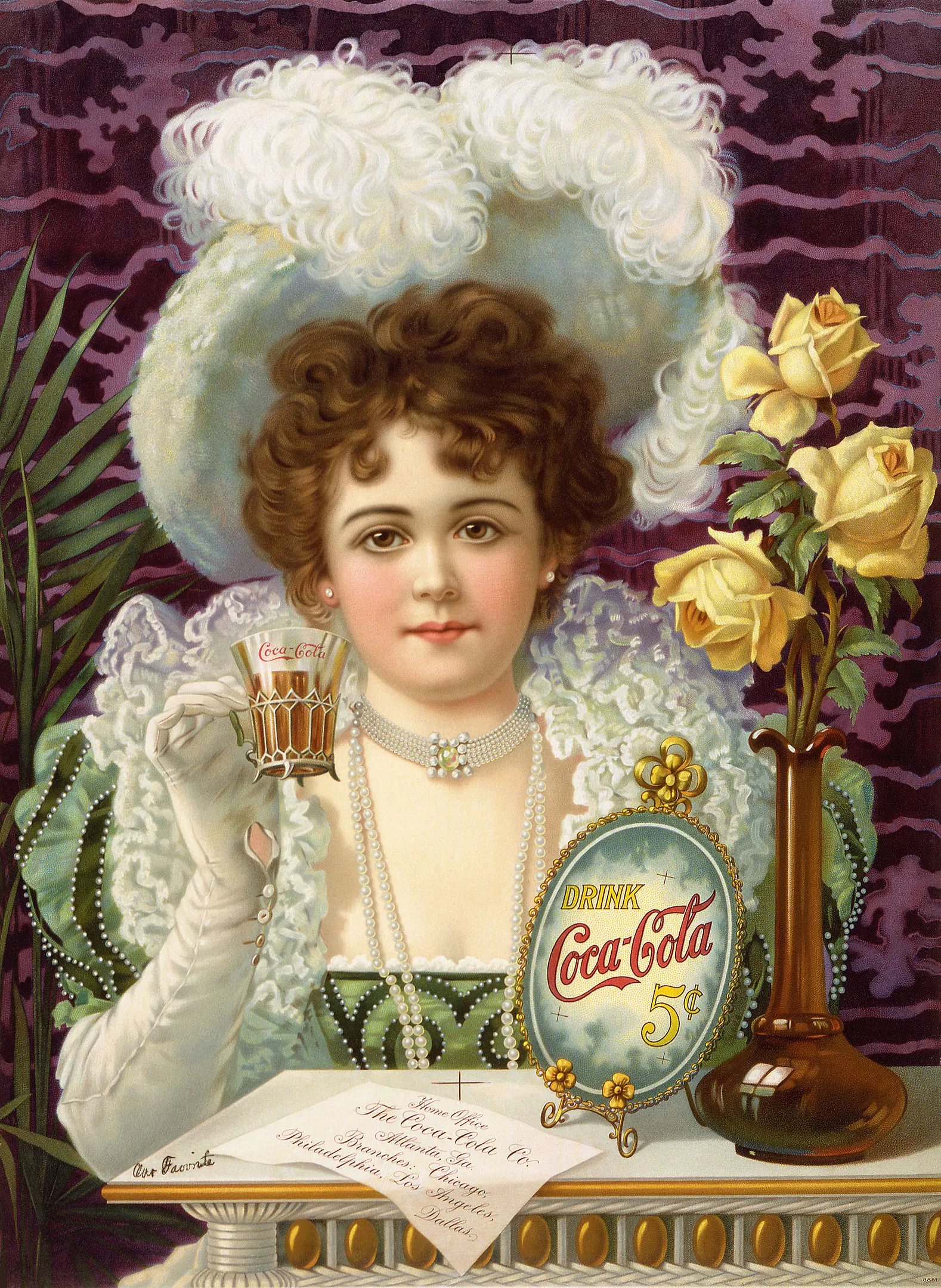
Coca-Cola's popular advertising campaigns also helped cement the drink as a ubiquitous American brand. Since the 1890s, Coca-Cola allotted a generous advertising budget that increased exponentially over the 20th century as the company's owner Asa Candler envisioned the growth of the brand through clever marketing. Coca-Cola originally used a young actress, Hilda Clark, in their advertising as early as 1895.
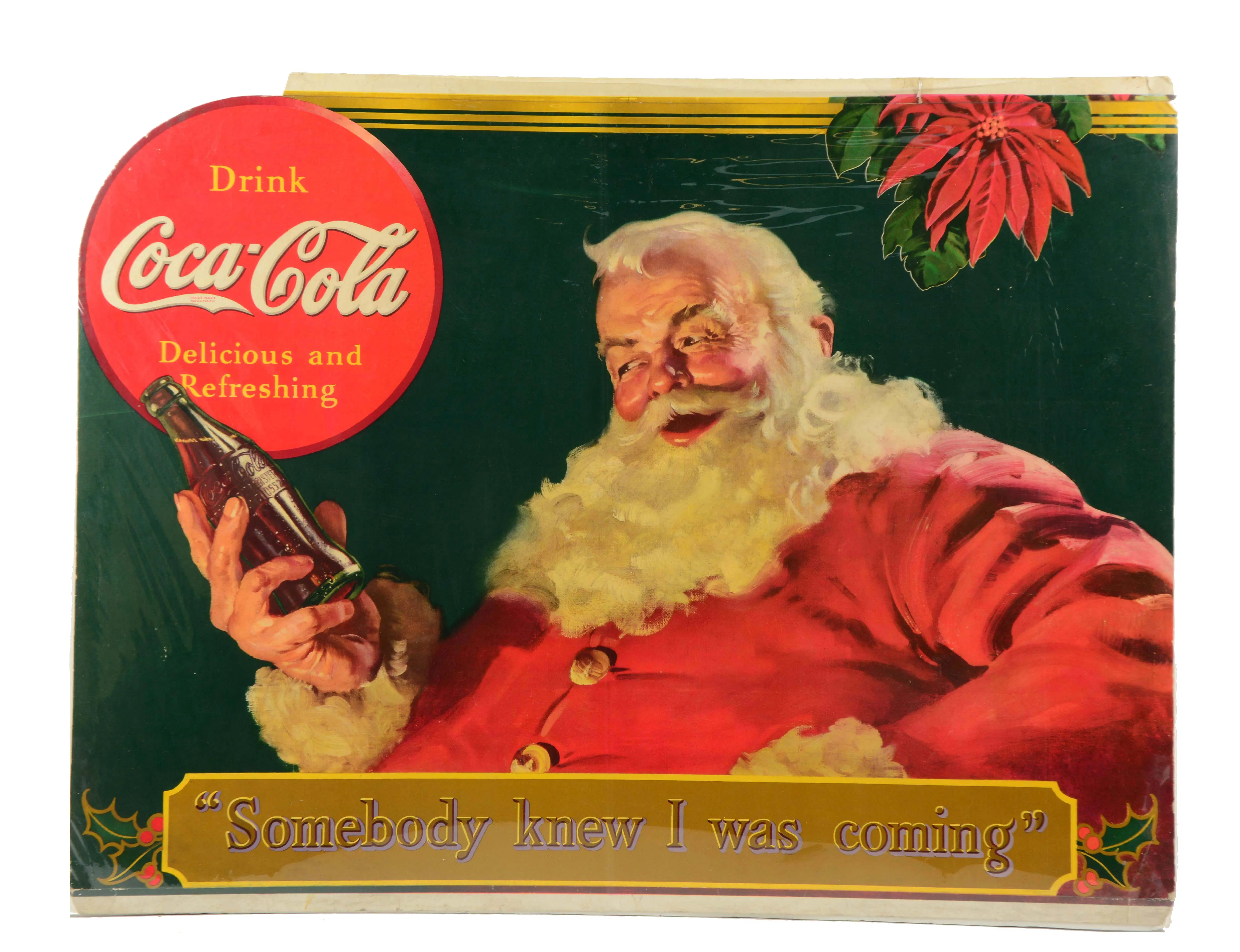
In the 1930s, artist Haddon Sundblom introduced the Santa Claus advertising that has become an iconic symbol of the brand, showing Santa enjoying a Coke. While the jolly, white-haired man with a red suit is associated with Santa today, it wasn't until Sundblom's artwork as part of Coca-Cola campaigns that this became the standard image of Santa, the Americanised version of Saint Nicholas or Father Christmas.
See also: The Art of Advertising: Collecting Memorabilia
In 1971, the company launched what was at the time the world's most expensive commercial, titled 'Hilltop', with the song I'd Like to Buy the World a Coke. The one-minute video pans through a crowd of people of all different ethnicities holding Coca-Cola bottles and singing the jingle on a hilltop in Italy. It became an instant hit and was played on radios worldwide, showing how the drink was truly a global favourite. The Company has collaborated with many celebrities and athletes over the decades for ad campaigns and has sponsored major sporting events such as the Olympics and the World Cup. Towards the end of the 20th century, the company expanded their product offerings, including Diet Coke in 1982 and Cherry Coke in 1985.
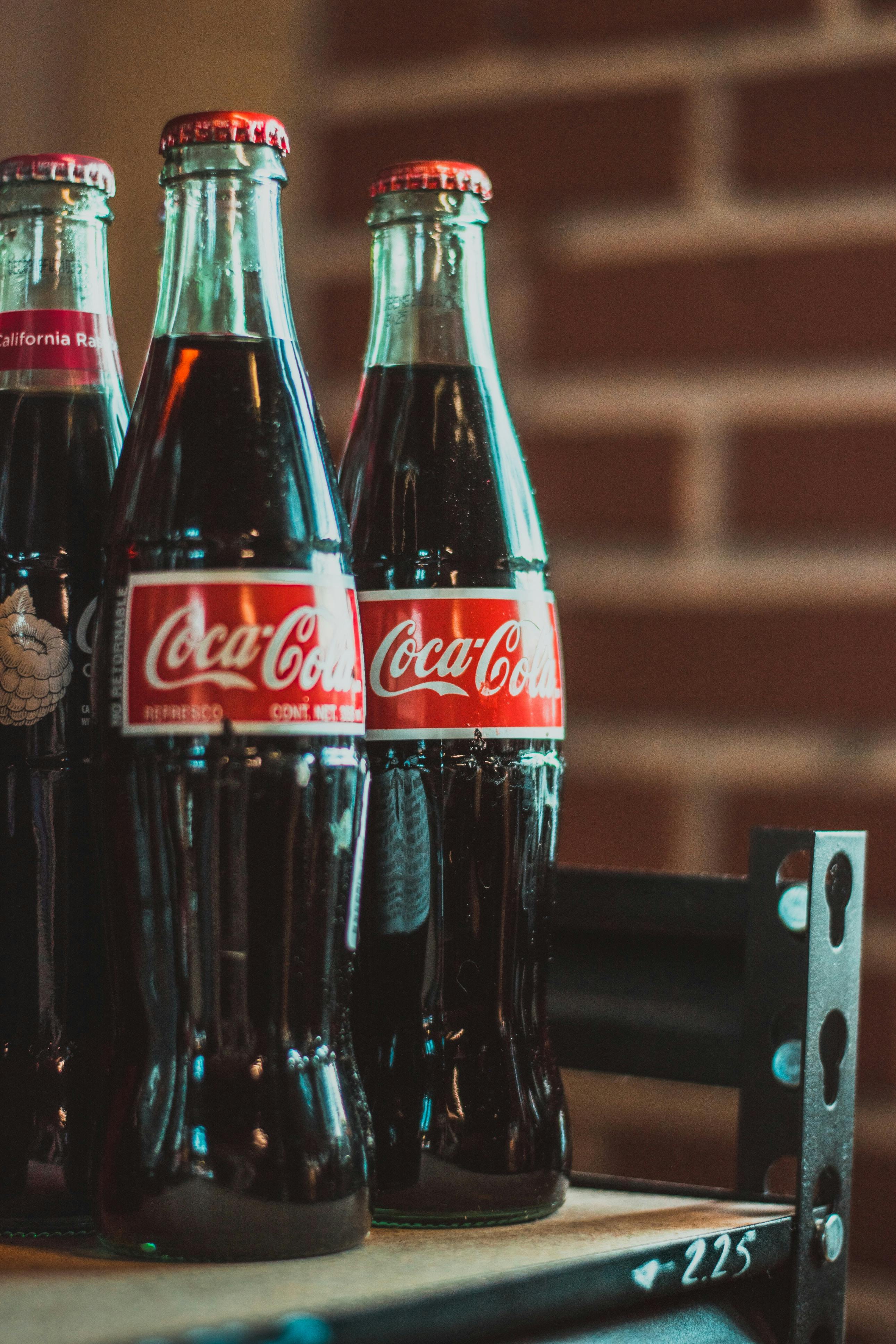
Though the Coca-Cola glass bottle had been in use for half a century, in the 1960s, the Coca-Cola aluminium can was introduced as a recyclable and portable alternative to the glass bottle. In 1977, the plastic bottle, in the same contour shape as the original, was launched. The glass contour bottle is still a symbol of American nostalgia for days gone by and is sold today for a few dollars at most grocery stores and markets. However glass bottles from the original release can fetch well into the six figures on the secondhand market.
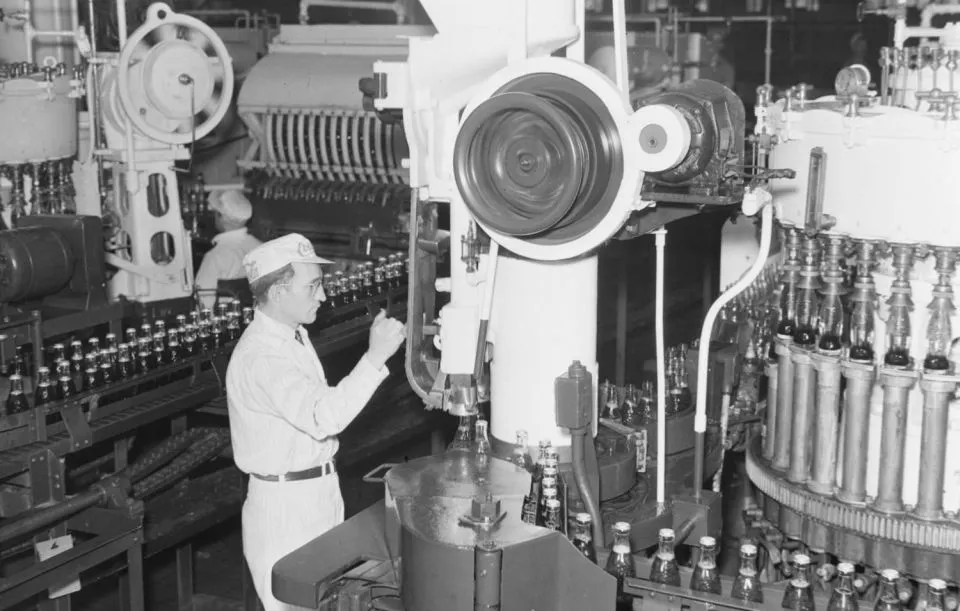
Over the years, Coca-Cola memorabilia, from ad signs to antique bottles, has come up at auction and achieved record-breaking prices. The most expensive sale was the original prototype for the 1915 Root Glass Co. bottle which sold for $240,000 (about £193,200) in 2011 at Julien's Auctions. An original sketch of the Earl Dean's bottle design also sold for $228,000 (about £182,100) at the same sale.
Do you have any Coca-Cola memorabilia? Find out what it's worth with ValueMyStuff!
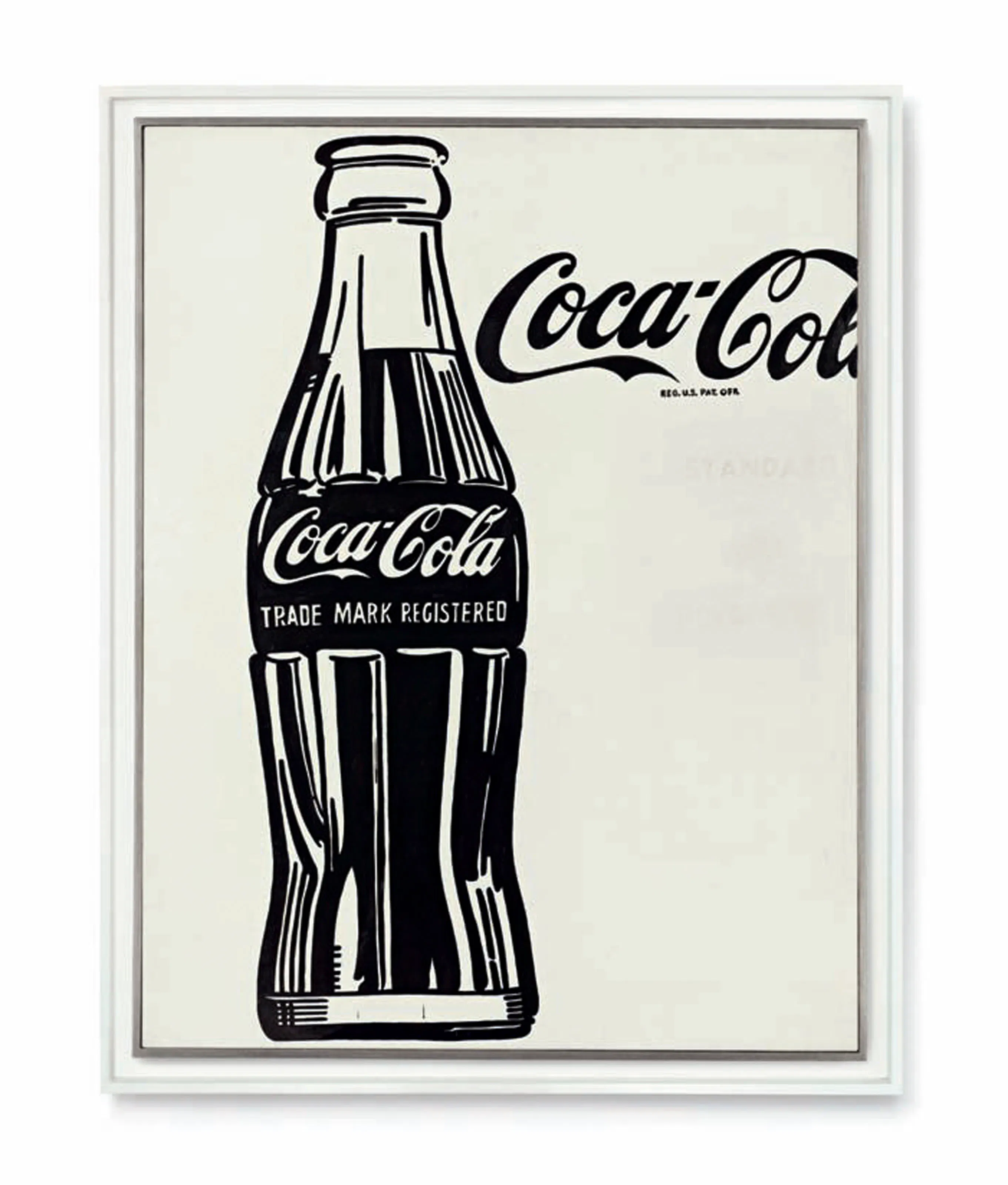
The company's association with American pop culture has also attracted artists. Perhaps the most famous artist to be inspired by Coca-Cola is Andy Warhol, who used Coke bottles as a recurring motif in his famous silk screens. He once said, "You can be watching TV and see Coca-Cola, and you know that the President drinks Coke, Liz Taylor drinks Coke, and just think, you can drink Coke, too. A coke is a coke and no amount of money can get you a better coke than the one the bum on the corner is drinking. All the cokes are the same and all the cokes are good. Liz Taylor knows it, the President knows it, the bum knows it, and you know it." A Warhol Coca-Cola (3) from 1962 sold for $57.8 million (about £35.6 million) at Christie's in 2013.
See also: Andy Warhol: The Pope of Pop
In 1963, Jasper Johns made a mixed media work on paper Untitled (Coca-Cola) with a "Coca-Cola: Refreshes You Best" sign that sold in 2002 for $559,500 (about £283,800).
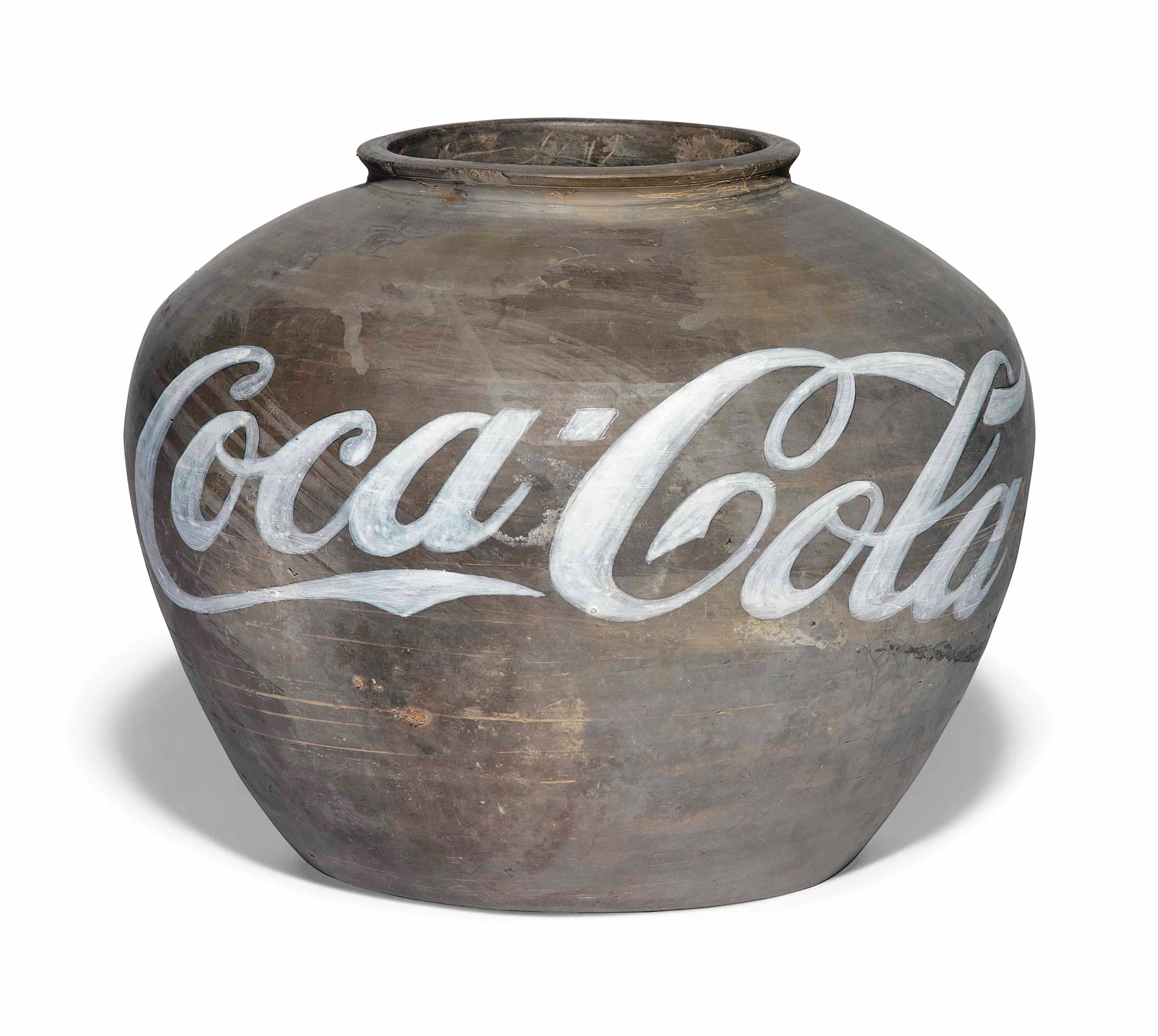
More recently, Ai Wei Wei was also inspired by the famous American soft drink, painting the sweeping Coca-Cola script on Chinese neolithic vases in 2011. The most expensive sold in 2014 for $665,000 (about £415,600) at Phillips.
See also: Podcast Ep #39 Capturing the Past & Collecting the Future
Coca-Cola's iconic contour bottle and visionary advertising has made it an American staple that can be found worldwide with 1.7 billion products consumed per day. According to Barnebys' 2022 Trend Report, items that conjure nostalgia are increasing in popularity at auction. The simple joy of an icy and refreshing Coke, which often brings back many memories and convivial times, continues to inspire the high prices of Coca-Cola branded products on the secondhand market.