
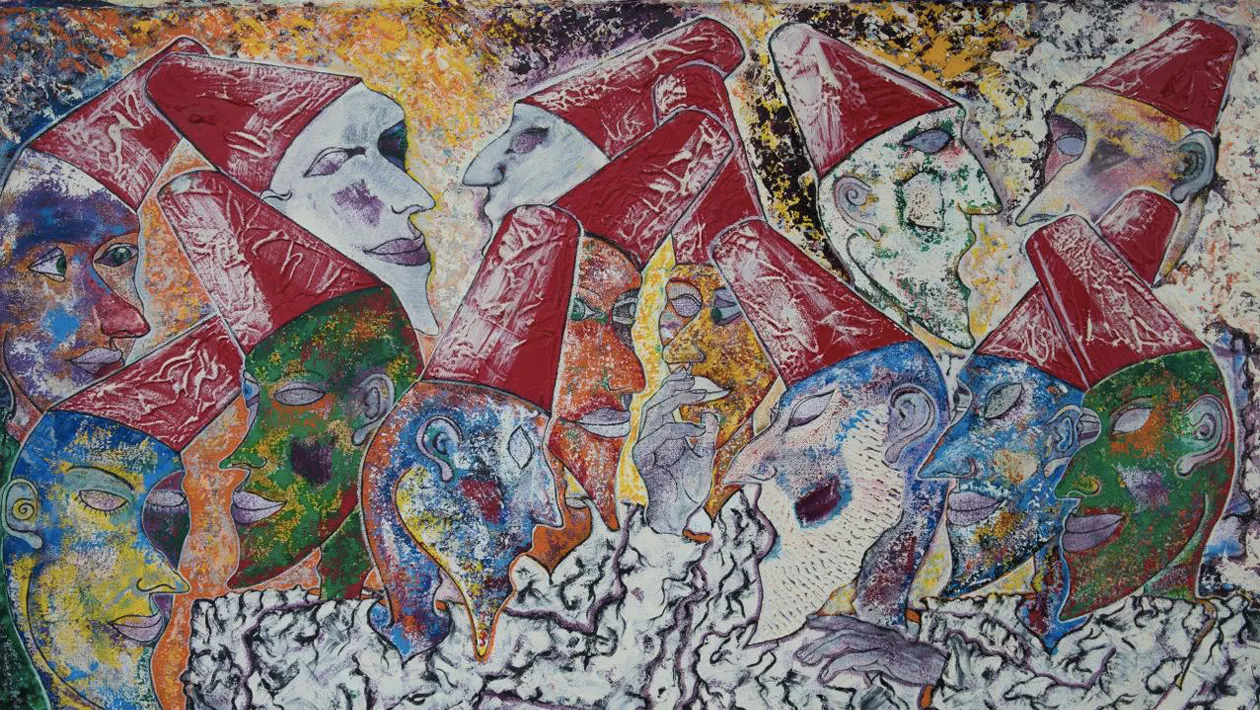
A contemporary of Warhol, Haring and Basquiat when living and painting in New York in the 1980s, Sax Berlin is a sure exponent of modern art.
The Manchester-born, Cornish-based artist has eight distinct and separate styles of art (Manhattan Period, The Fools of God, High Classical Period, Buddhist Icons, School of Paris Period, Women Without PJs, Spacial Relations, Neo-Nouveau 2009), though a unification can be found among them in their soft figures and forms, distinct lines and strong use of colour.
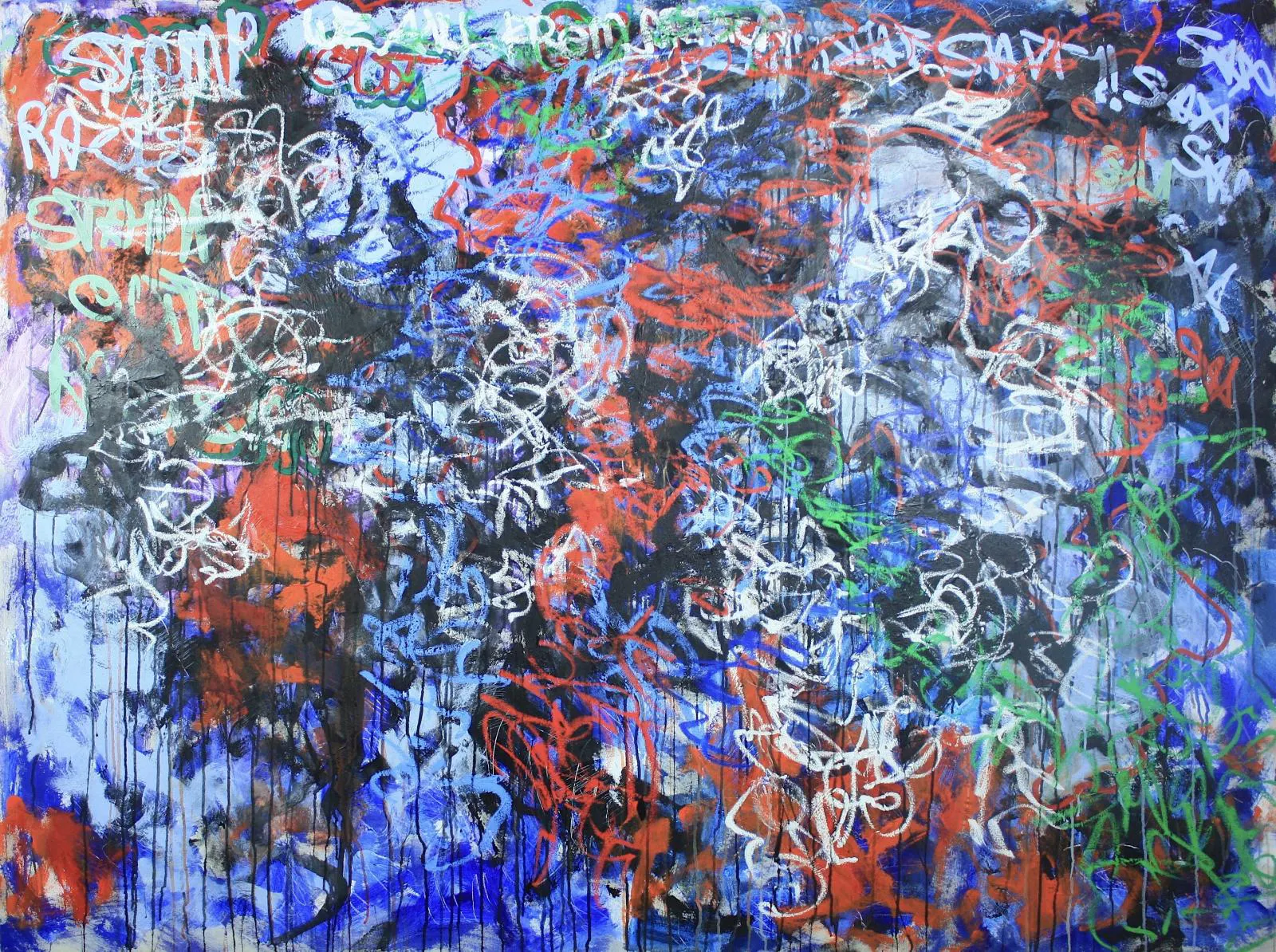
Whatever it is that draws you to Sax Berlin’s work – his dream-like composition, vibrance and saturation of colour, dynamism of form, textural quality, or rejection of tradition before him – there is undoubtedly something to delight all.
Within the works themselves, one is able to find a swathe of influences: Ancient Greece, the Renaissance, Buddhism. Though in combining such an amalgamation of historic sources, the result is resoundingly unique: a clear departure from any one, singular artistic style.
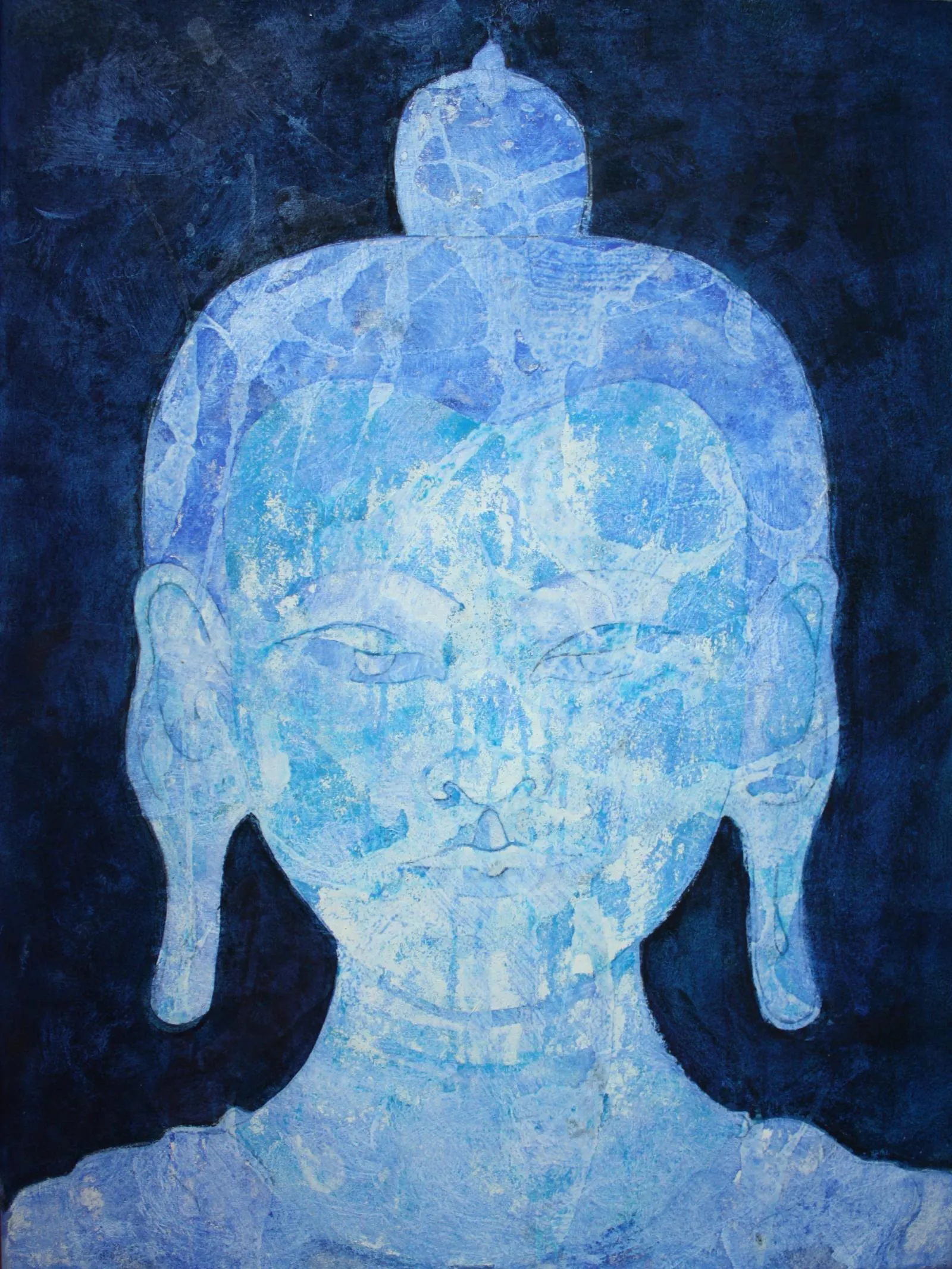
Berlin is known to travel to Nepal, which we see in his experimentation with gold and silver leaf, though this is created rather unique through his distortion and use of a more geometric and abstract approach.
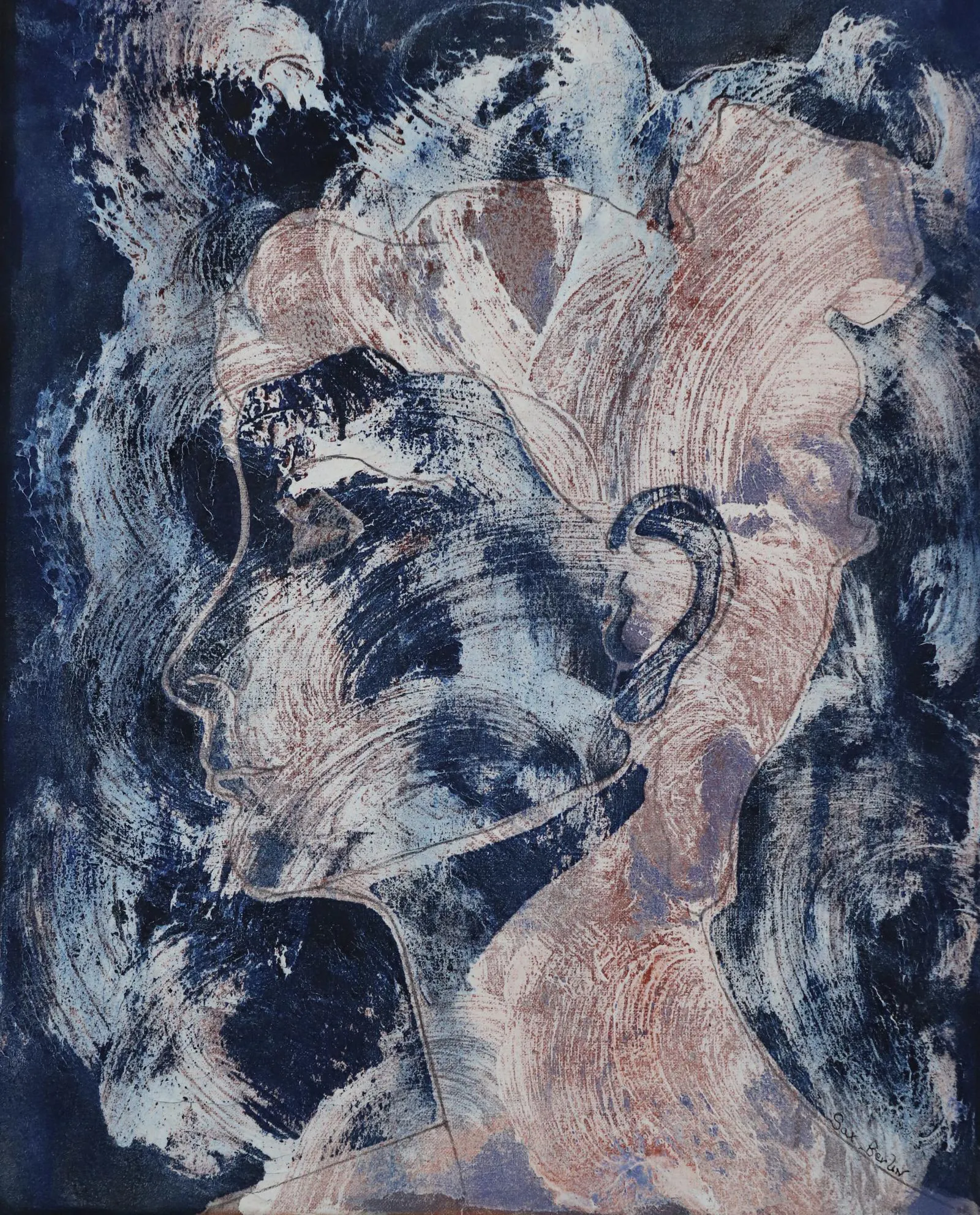
Day-to-day, one can find Berlin in Cornwall in his studio, his caravan retreat (where you might happen upon him in a dressing gown), or else cycling through country lanes. At times, Berlin, a keen saxophonist, might even be making music. This eccentricity and variety of life is undoubtedly imbued within his style and portfolio
Dubbed ‘The Master’ by his students, the artist is represented by White Court Art, where one can find all of Berlin’s work available in its true splendour.