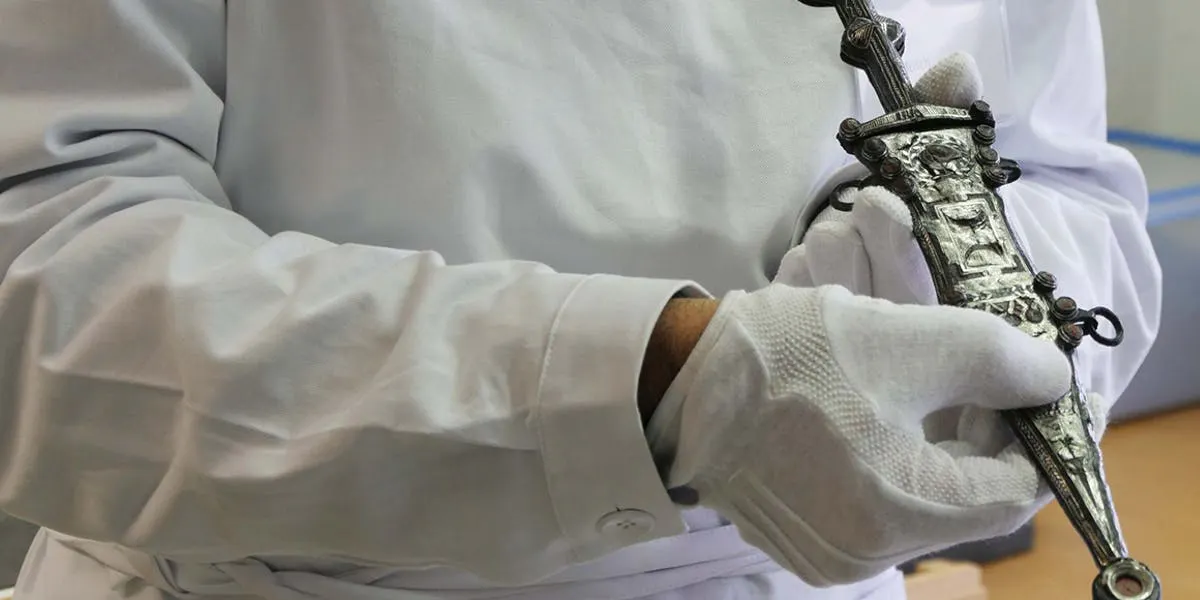
During the excavation campaign of the Westphalia-Lippe Landscape Association (LWL) on the burial ground of the former Haltern Roman camp, 19-year-old intern Nico Calmund made a sensational find in April 2019: a dagger including sheath and belt remnants of a Roman legionnaire.
The iron dagger was heavily corroded when it was found – a case for fibre optic restorer Eugen Müsch, who, after the first computer tomographic examinations, spent nine months carefully removing corrosion layers.
See also: Archaeologists Discover the World's Oldest Illustrated Book
A double-edged puglio (the usual secondary weapon of the Roman legionnaire) emerged, the handle and scabbard of which are adorned with complex designs made of sheet iron in the form of half-moons, diamonds and leaves. In addition, there are fine wires and sheets made of silver and brass, as well as inserts of red enamel and glass.
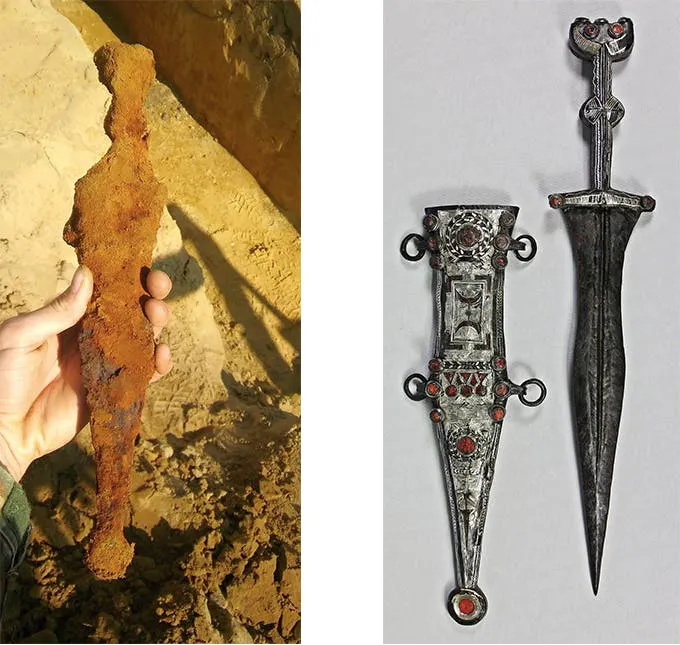
"Of course, we cannot make a 2,000-year-old object appear as new. However, the black, silver, red and gold colours largely correspond to the former look," explains Eugen Müsch.
See also: Exceedingly Rare Work by Isaac Newton is Discovered
The Haltern Roman Camp was one of several military camps that the Romans built along the Lippe River around the time of Christ's birth in order to invade free Germania. This plan came to a standstill a few years after the Varus battle (AD 9). The warehouse in Haltern was also abandoned.
The camp, which consisted of several areas, was rediscovered in 1816. Archaeological excavations have been carried out since 1899. The dagger was discovered on this camp's burial ground. Romans burned their dead and buried them in urns covered by a mound of earth.
The dagger was not found in the urn itself, but in the mound. "This site is very unusual for a classic grave addition," comments LWL Roman expert Dr. Bettina Tremmel.
See also: The Oldest Drawing of Venice is Discovered
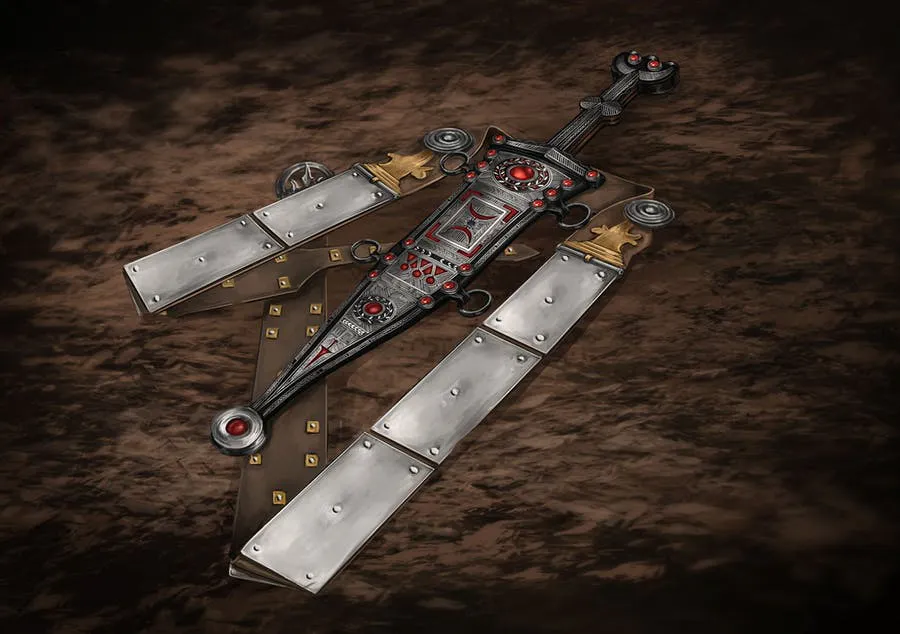
But it is not only the place of discovery that is of great interest. "The combination of the fully preserved blade, scabbard and weir belt, including the important information about the exact location, has not been compared so far," says LWL chief archaeologist Prof. Dr. Michael Rind. So far, no such find has been found in such a good state of conservation in Europe.
The sensational find is to be exhibited at the LWL Roman Museum in Haltern am See in March 2022 as part of the archaeological exhibition of North Rhine-Westphalia in Rome.