
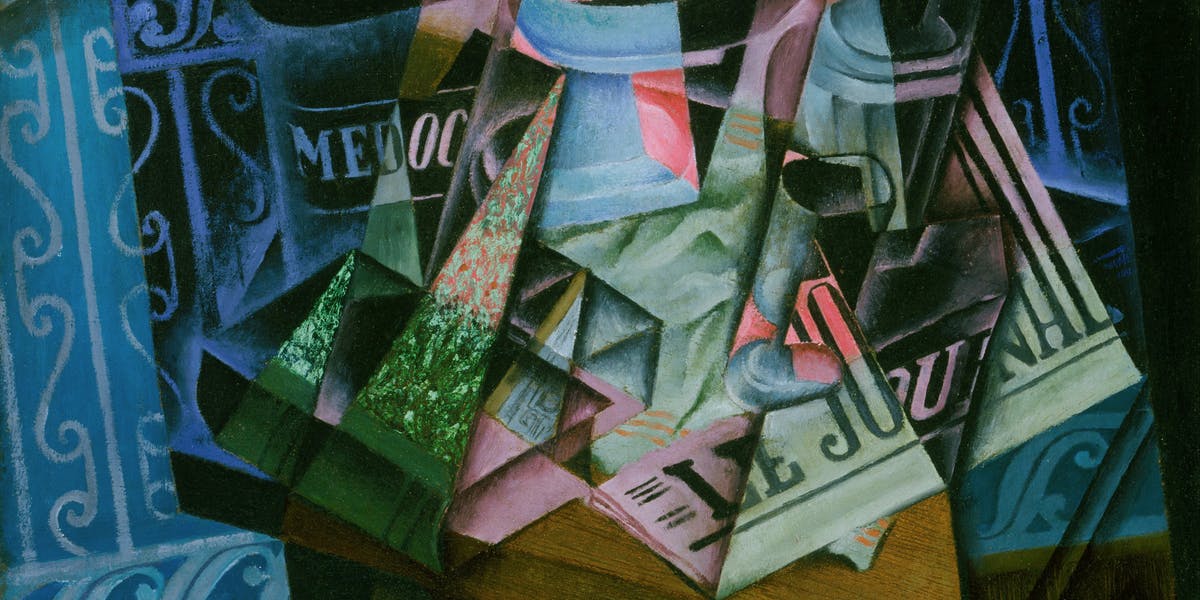
Born José Victoriano Carmelo Carlos González-Pérez in Madrid in 1887, Juan Gris was the thirteenth of fourteen children. He began studying industrial design at the Escuela de Artes y Manufacturas, then joined the studio of the academic painter Moreno Carbonero. He moved to Paris in 1906 and settled at the Bateau-Lavoir, where he met Pablo Picasso, Georges Braque, Fernand Léger, Henri Matisse and Amedeo Modigliani. The Fauvist movement broke out in the capital, but the style did not spark Gris’ interest. He worked as an illustrator for various magazines, including The Butter Plate, Charivari, and Le cri de Paris.
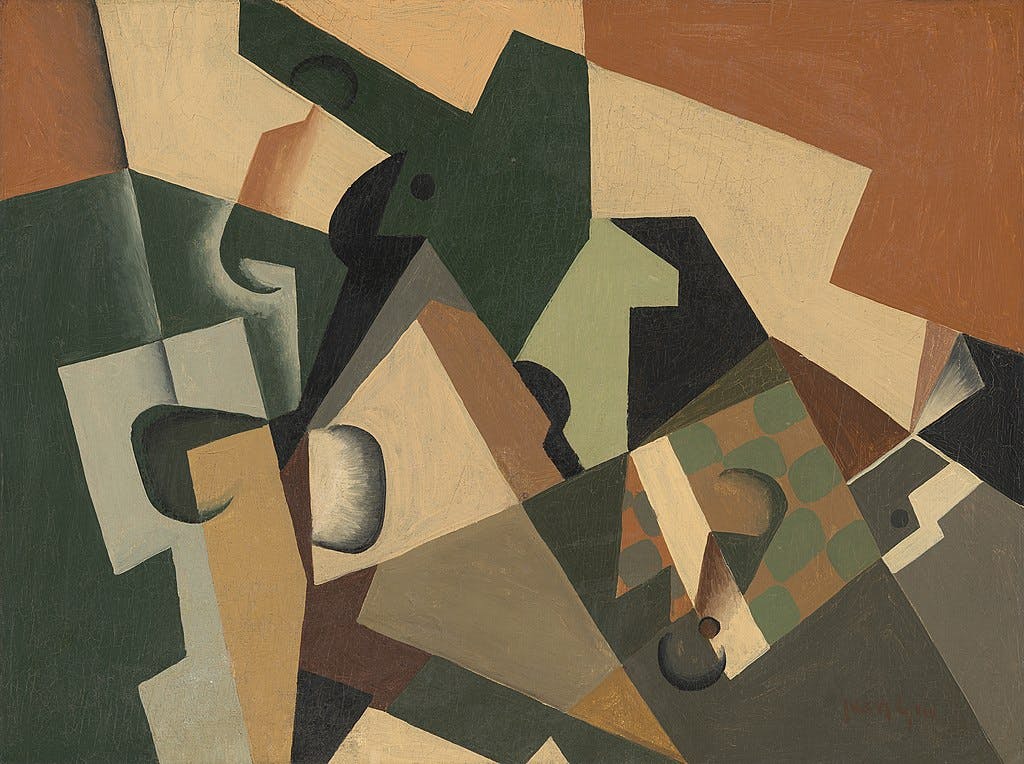
The 1907 Paul Cézanne retrospective at the Grand Palais had an impact on many of the artists who saw it. The same year, Braque painted Le Grand Nu/Large Nude, and Picasso painted Les Demoiselles d’Avignon, both pieces stylistically cementing the beginning of Cubism. Deeply influenced by Cézanne’s voluminous approach as well as the new Cubist style, Gris began his career as a painter in 1910.
See also: Picasso's Hidden Talent
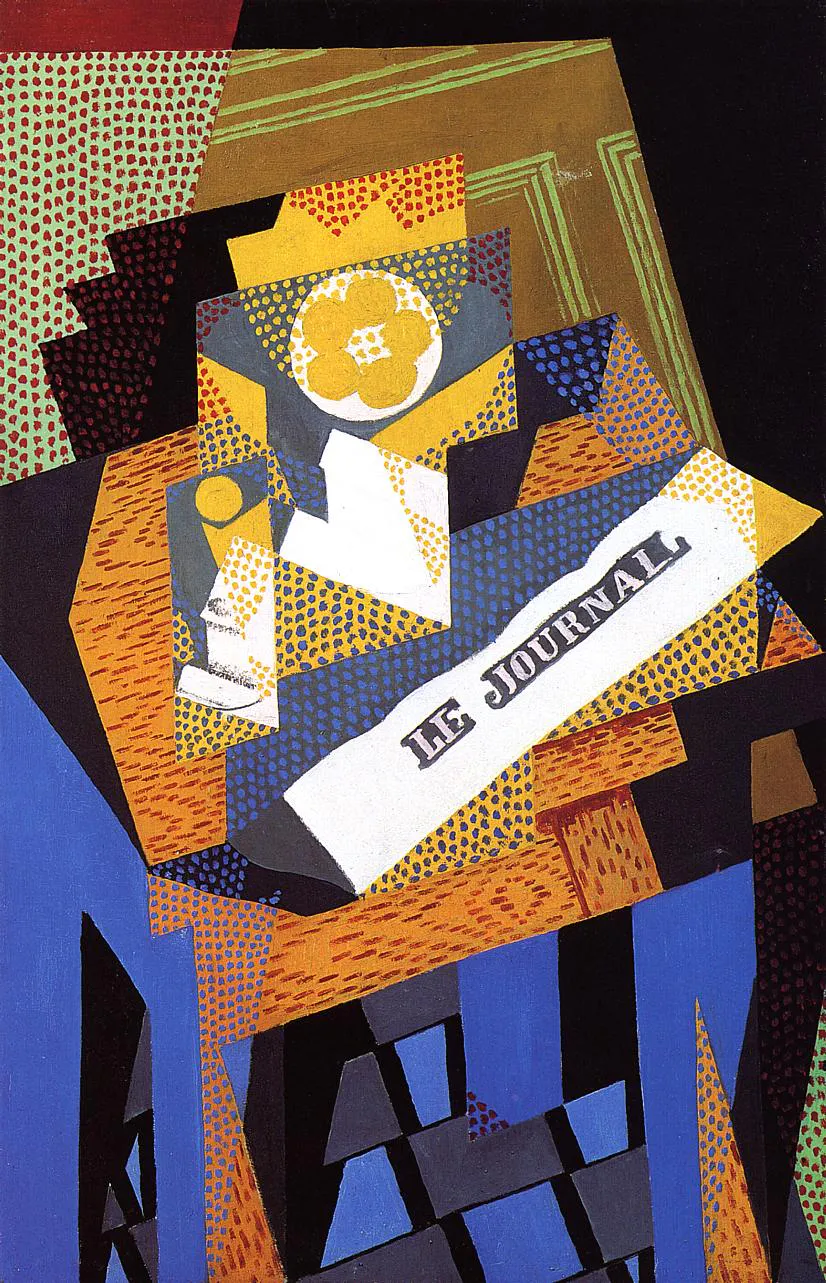
His first works show a clear aesthetic and a palette of blurred tones, as in Le Livre (1911). The sharply contoured drawings are reminiscent of his training as an advertising designer. Already, light is clearly an essential element. Encouraged by his entourage (and perhaps jealous of Picasso), Gris painted many still lifes, both in colour and in monochrome. This theme evokes the heritage of the classical masters, which he studied at the Louvre. Some of his compositions from this time come close to Futurist aesthetics, such as Still Life with Bottles and Knives (1912).
See also: The Colours of Controversy
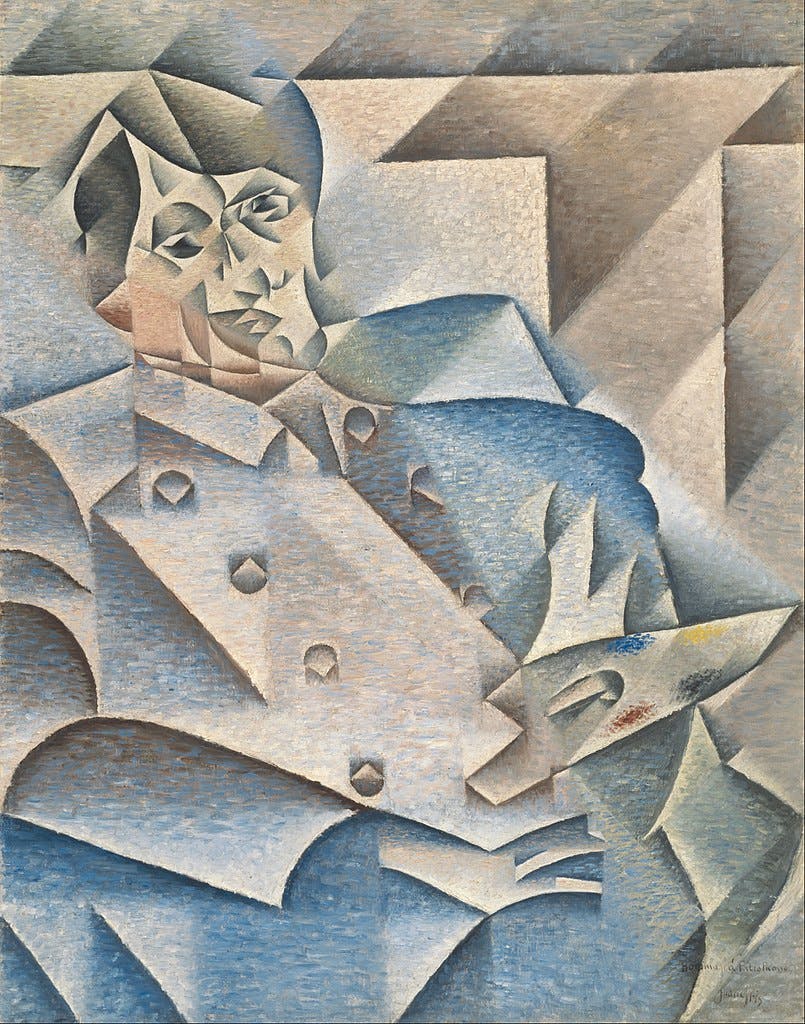
In 1912, Gris exhibited his painting Portrait of Pablo Picasso at the Salon des Indépendants. Within it, the art critic Guillaume Apollinaire saw the expression of ‘integral Cubism’. Gris’ paintings attest to great maturity, drawing from Analytic Cubism with their deconstruction and simultaneous viewpoints of objects. His individual style is distinguished by a more regular fracturing of shapes, with geometric forms constrained to a diagonal framework, which creates an almost crystalline structure. The interplay between form and substance, between rhythm and space, served a poetic imagination that heralded the future Surrealist movement. In the words of the critic Stéphane Mallarmé, the idea was to paint “not the thing, but the effect it produces”.
Want more artist biographies straight to your inbox? Sign up to our free newsletter
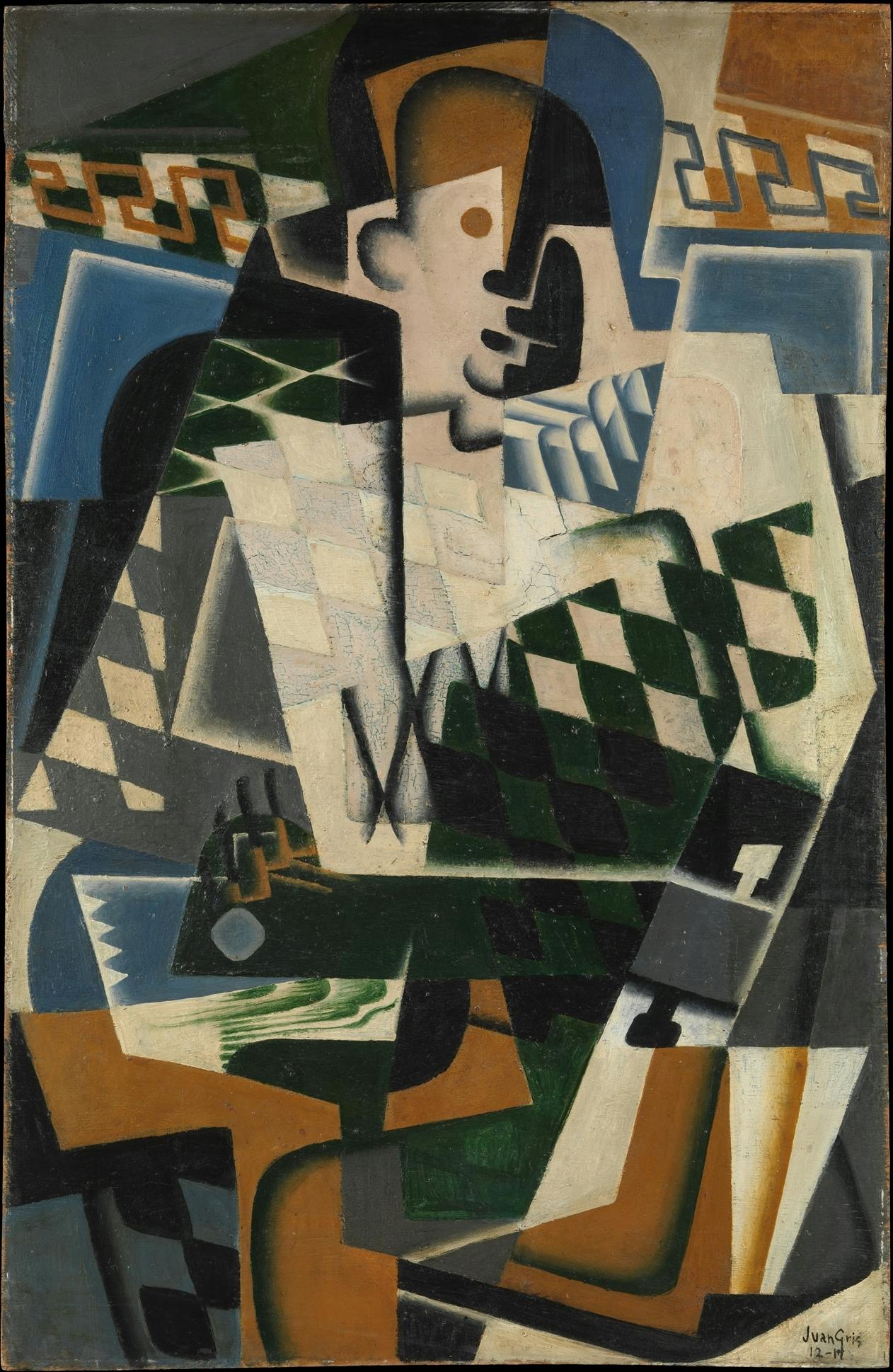
Gris stood out at the salons where he exhibited, and soon began showing works in galleries in France and Spain. During World War I, Gris and Picasso were not mobilised as Spain was neutral. The artists withdrew from the larger cities, and Gris moved to Collioure, France, where he spent time at Matisse’s studio. Gris’ series of windows seems to be directly inspired by the French master, and the end of the 1910s was the height of his artistic ability. He created masterful paintings such as Le Tourangeau (1918) and his series of pierrots and harlequins (1919). His still lifes at this time exploded in pastel colours in compositions that reflected a rare aesthetic achievement.
See also: 8 Patrons of the Parisian Avant-garde
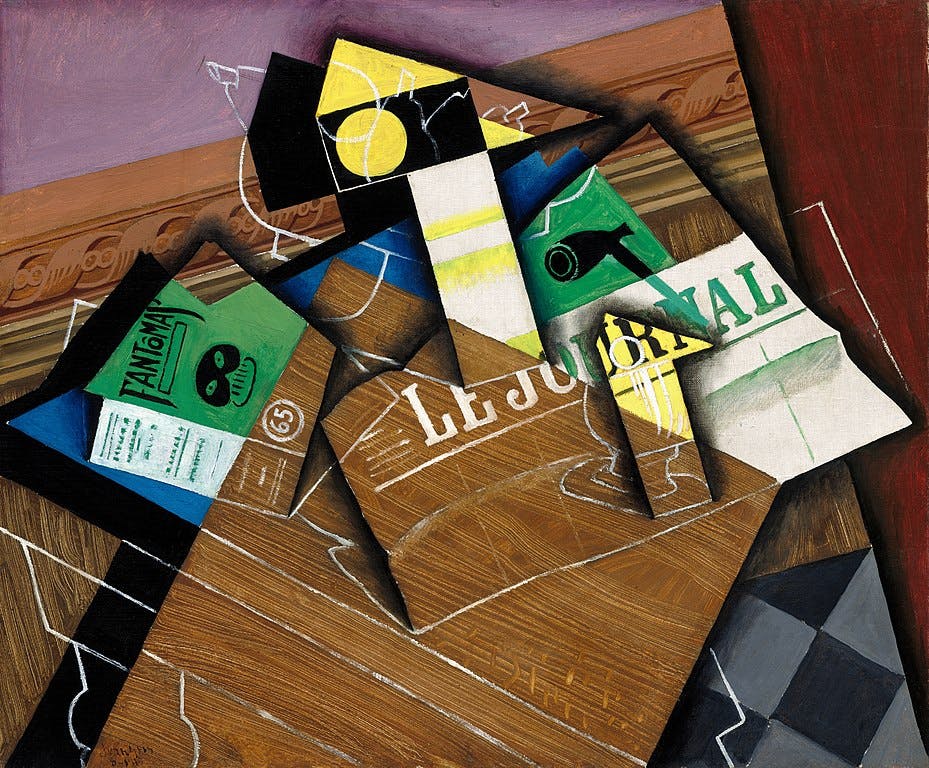
After 1918, while Picasso and others moved away from Cubism in favour of more speculative forms of abstraction or surrealism, Gris still practiced it. He designed sets and costumes for Sergei Diaghilev’s Russian Ballets, portraying the dancers in Monaco but soon returning to Paris. His paintings opened up to a more poetic spirit that draws comparisons with Giorgio de Chirico. Gris was finally recognised as a true master of the Cubist movement, and a major exhibition was dedicated to him at the Simon Gallery in 1923. In 1924, he organised a reading of his theories at the Sorbonne. Falling seriously ill, he passed away in 1927 of kidney failure at the age of forty, leaving behind his wife and young son. His premature death forces us to wonder how his art would have developed further had he lived longer, and what else he might be known for today.
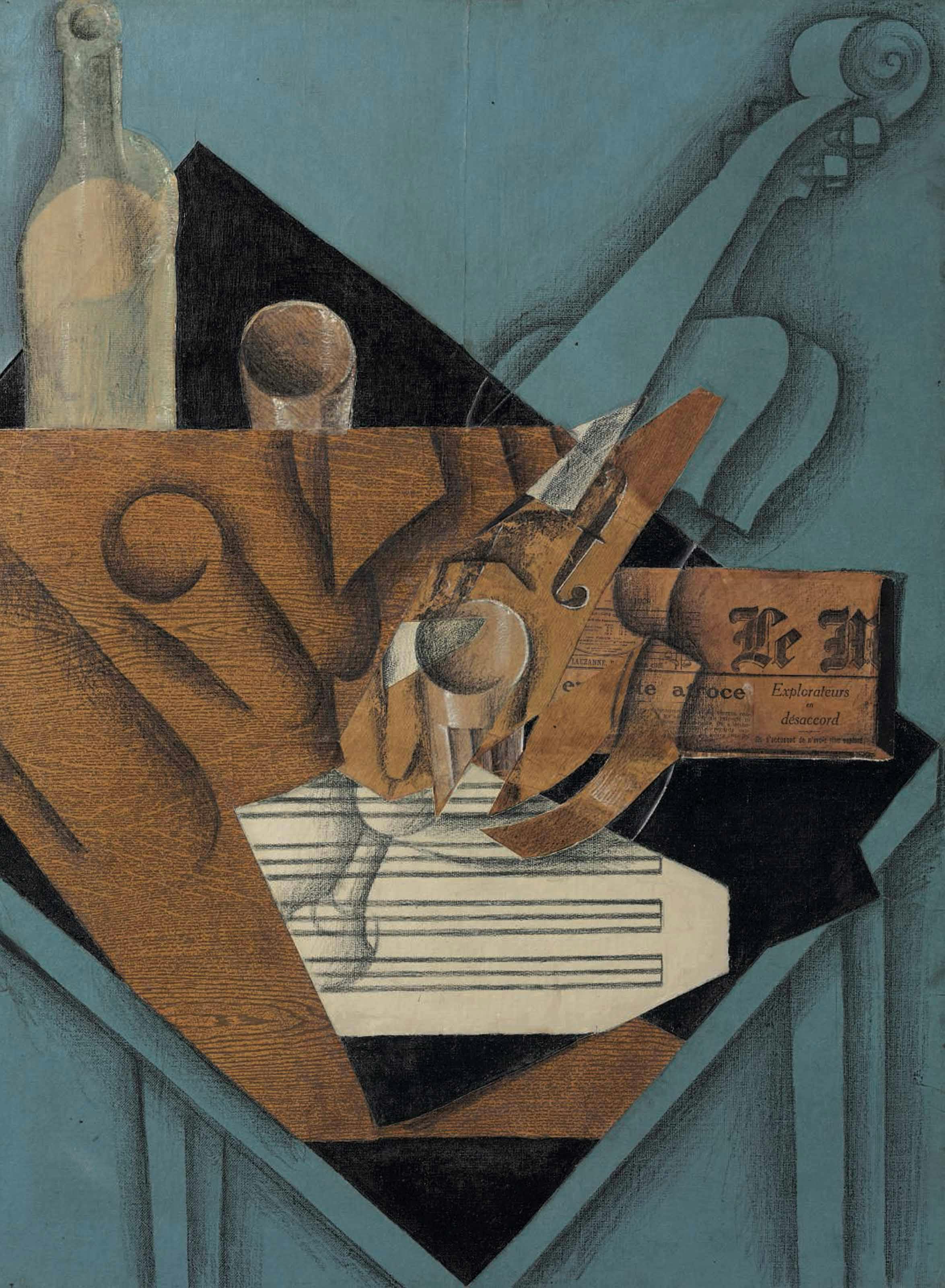
Gris’ talent inevitably reflects on his current reputation, as well as the prices his pieces draw at auction. In 2014, the sublime painting Still Life at the Checkered Table (1915) reached US$35 million (£27 million) at Christie’s London. In 2018, several of his works were on display during the dispersion of the Rockefeller collection, and The Musician’s Table (1914) was sold by Christie’s New York for US$31 million (£24 million). However, if your pocketbook isn’t quite full enough to purchase your own, Gris’ works can be enjoyed at many museums, including the Tate Modern in London, the Museo Nacional Centro de Arte Reina Sofía in Madrid, and the MoMA in New York.
Find more artist biographies with Barnebys Magazine
This is an updated version of an article originally published on 18 November 2019.