
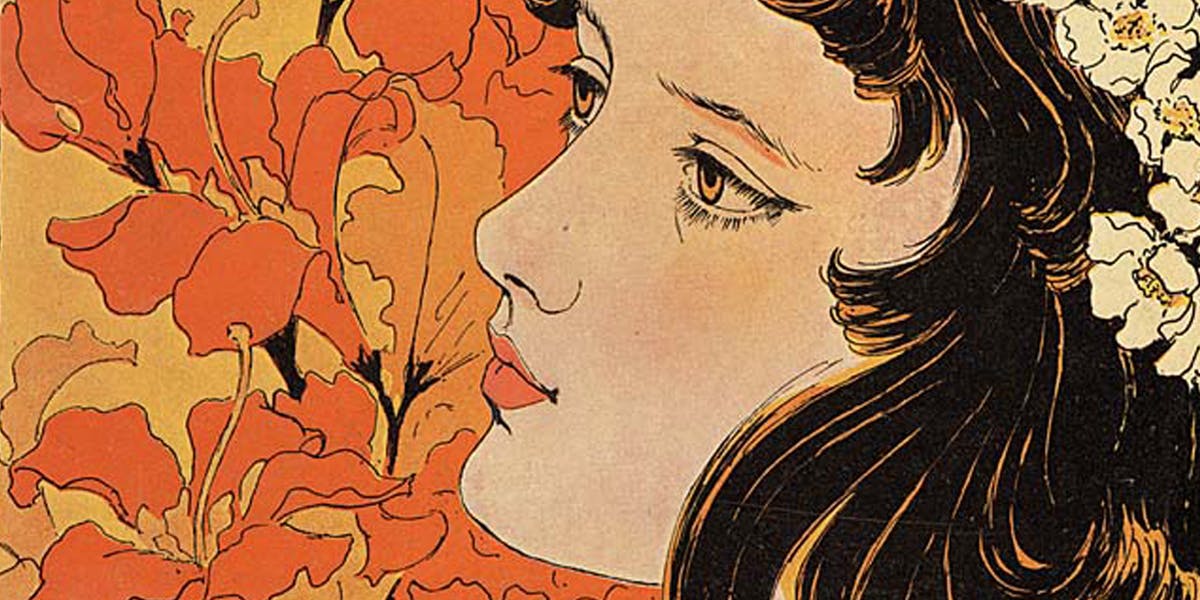
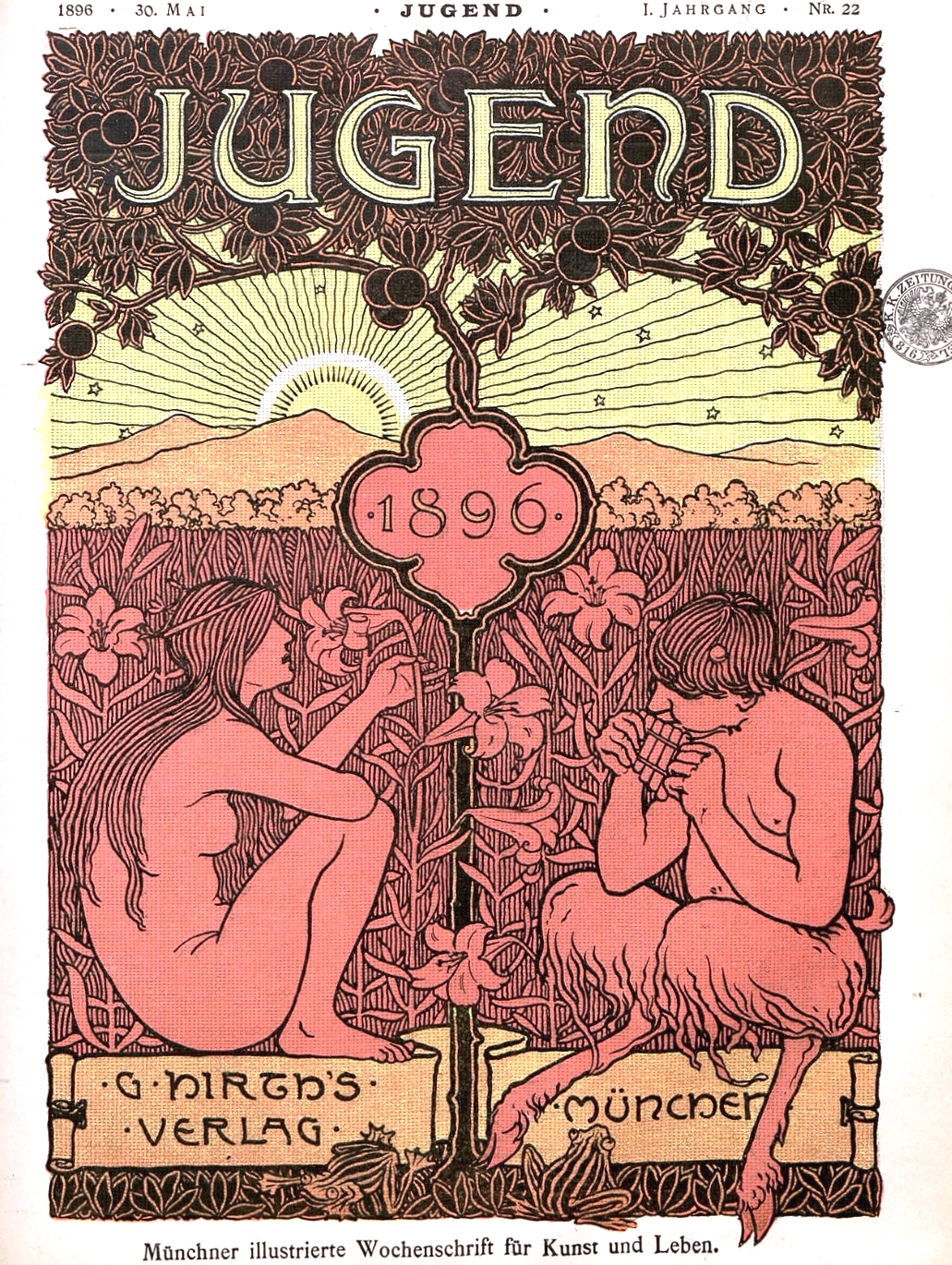
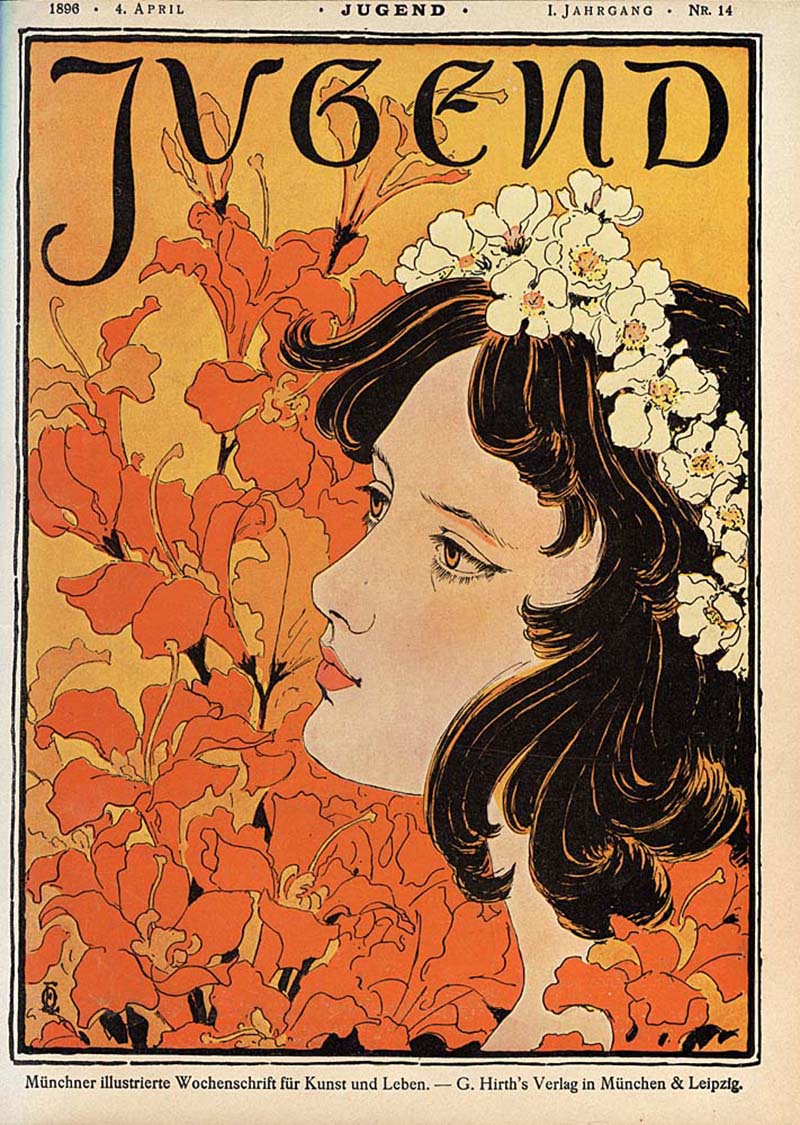
Few magazines can claim to have contributed to the birth of an artistic movement as Jugend (meaning 'Youth’ in German) did. Indeed, it was from the name of this magazine that the Jugendstil, the German equivalent of Art Nouveau, was formed at the end of the nineteenth century, propagating its modernist aesthetic to all the arts and in all of Europe.
See also: 7 Facts to Know about Alphonse Mucha
Founded by journalist and publisher Georg Hirth, Jugend began publication in 1896 in Munich. In this youthful and vibrant German city, as well as in all of Bavaria, an intense artistic battle was being played out between the custodians of a so-called ‘official art’ and the representatives of the emerging and reformist currents of the time, namely Impressionism and Symbolism. Fritz von Uhde, Wilhelm Trübner, Franz von Stuck or even Eugène Spiro and Arnold Böcklin: all these ‘furious’ visual artists were part of this new generation who wanted nothing to do with the prevailing conformism and sterile routine. Jugend was born precisely with the aim of supporting these artists, by helping them to infuse their joyful, dissident vision to the public, freed from the shackles that weighed down the public's minds at the end of the nineteenth century under the reign of William II.
This magazine wasn't the only one to carry these values and this thirst for novelty, nor to perceive the aesthetic revolutions born in reaction to industrialisation. In Germany, publications like Pan, Ver Sacrum and Simplicissimus were also excellent propaganda organs for graphic revival, but they never quite reached the notoriety and longevity of Jugend.
See also: Wildlife Meets Watercolour: Inside Audubon’s Birds of America
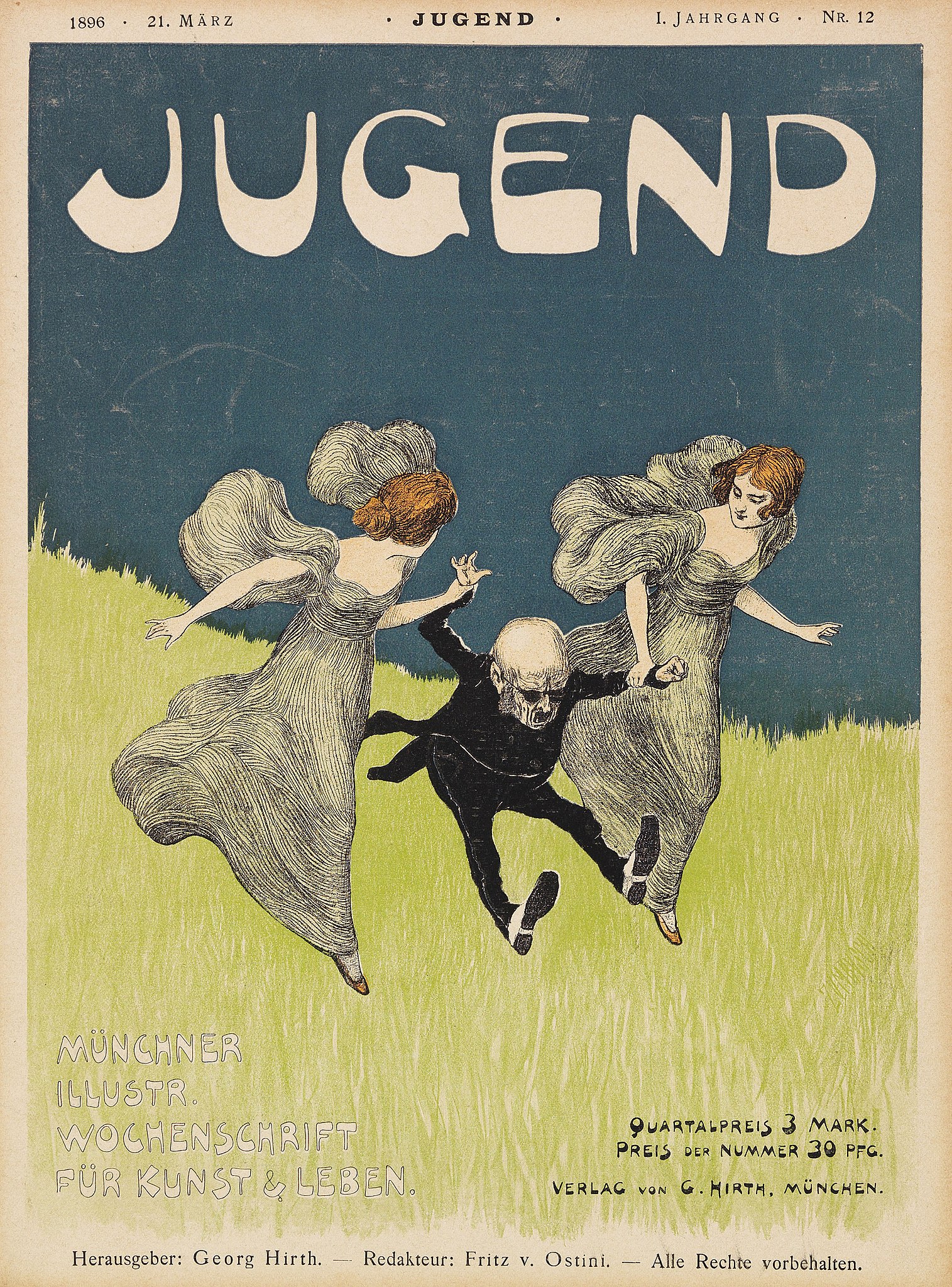
Published every week without the slightest interruption until 1940, this illustrated periodical was read throughout Southern Germany, and also in Berlin and Vienna. It was usually about a dozen pages, alternating between rich colours and black and white, and was mostly flipped through at cafés. At the request of its creator, it was intended to bring together all the graphic and literary styles related to Art Nouveau, then emerging throughout Europe from sketches to photography, including caricatures and stories in pictures.
See also: Franz Marc: A Creative Powerhouse
Ambitious and often daring, in form and sometimes in word (like most leading emerging German artists of the time), it quickly became a real phenomenon of society because of its liberal convictions and whimsical but also patriotic and contemptuous take on censorship and conservatism. As it was close to the theosophical movement, Jugend often illustrated naked youth in an idealised environment, something very uncommon in the magazines of the time. Another of the characteristics of the publication was its boisterous and assumed anticlericalism, a bias all the more disturbing as the figure of the angel regularly showed up in its pages, but there for the purpose of sanctifying art.
See also: Paul Jacoulet, French Master of Japanese Prints
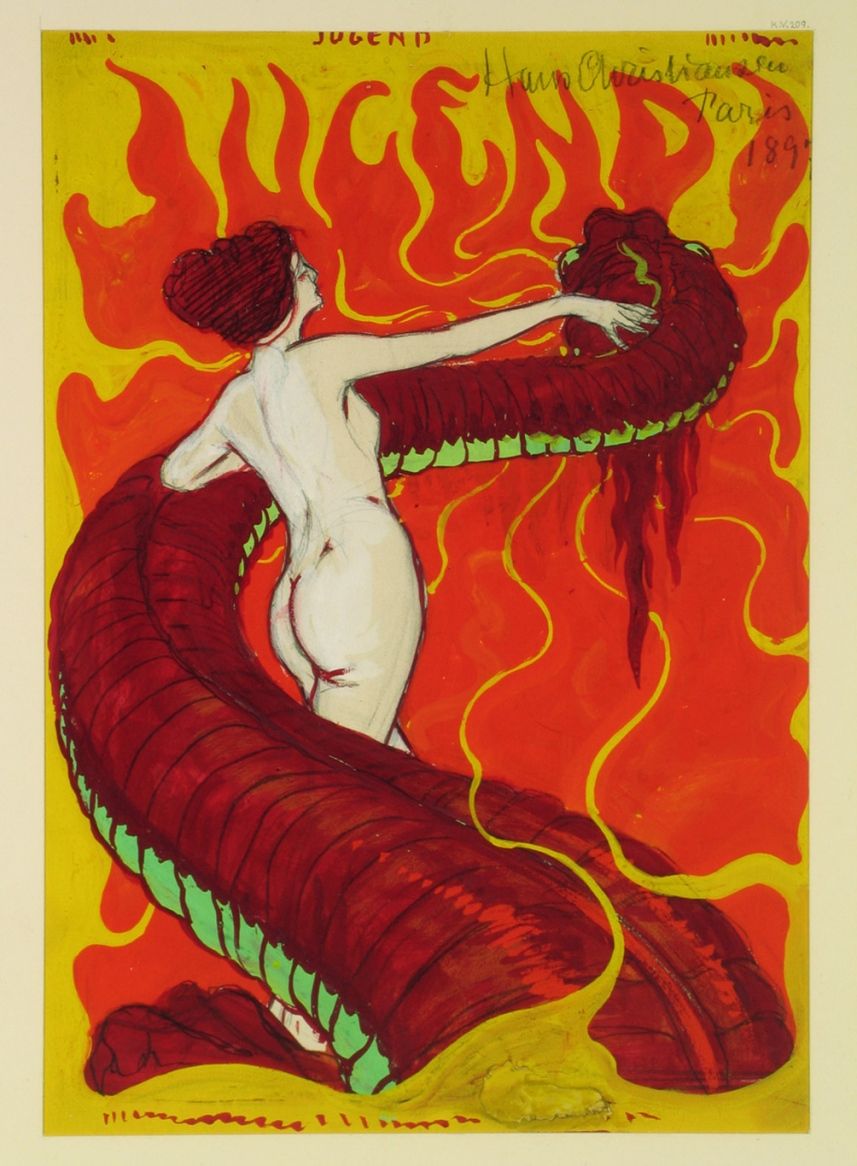
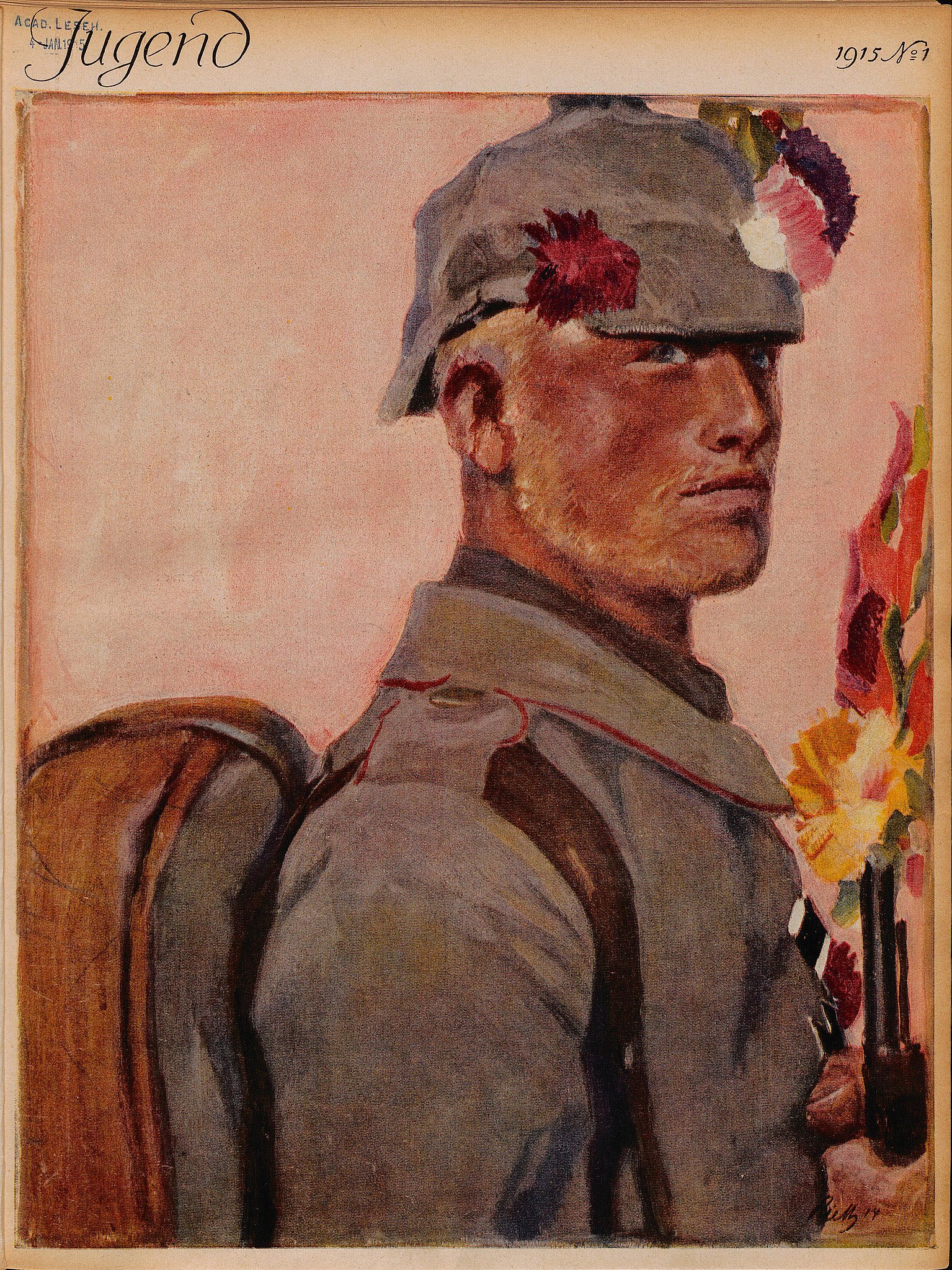
To retain its readership largely made of the enlightened bourgeoisie, its owner and creator Georg Hirth had no shortage of innovative ideas. Banking on the ‘collection’ effect, it regularly offered luxurious bindings as well as accompanying products, such as card games or even beautiful covers designed by renowned artists, such as Otto Eckmann's vignettes or the plates of colour by Hans Christiansen, whose spirit perfectly matched the motto published in the first issue: "All that is old-fashioned is excluded". We can see there the beginnings of what would later be called advertising marketing, which contributed to the success of the distribution of Jugend, particularly significant at the dawn of the First World War (with 20,000 copies per week).
To receive our latest articles straight in your inbox, sign up to our newsletter
Thereafter, its notoriety slowly declined, certainly partly due to the evolution of its content, sometimes a little bland, and even downright kitsch at times. The final blow was finally struck in the 1930s, when the magazine aligned itself with certain aesthetic positions of the Third Reich. Despite this, just before being completely under this control, Jugend showed insolence until the very end, in particular by presenting the texts and drawings of all the most 'degenerate' artists of the interwar period, just to remind everyone of the values that animated it at the time of its foundation.
Almost eighty years after its disappearance, it is now possible to dive back into the forty-four years of history of this unique journal by flipping through all the issues available online on the University of Heidelberg website.




