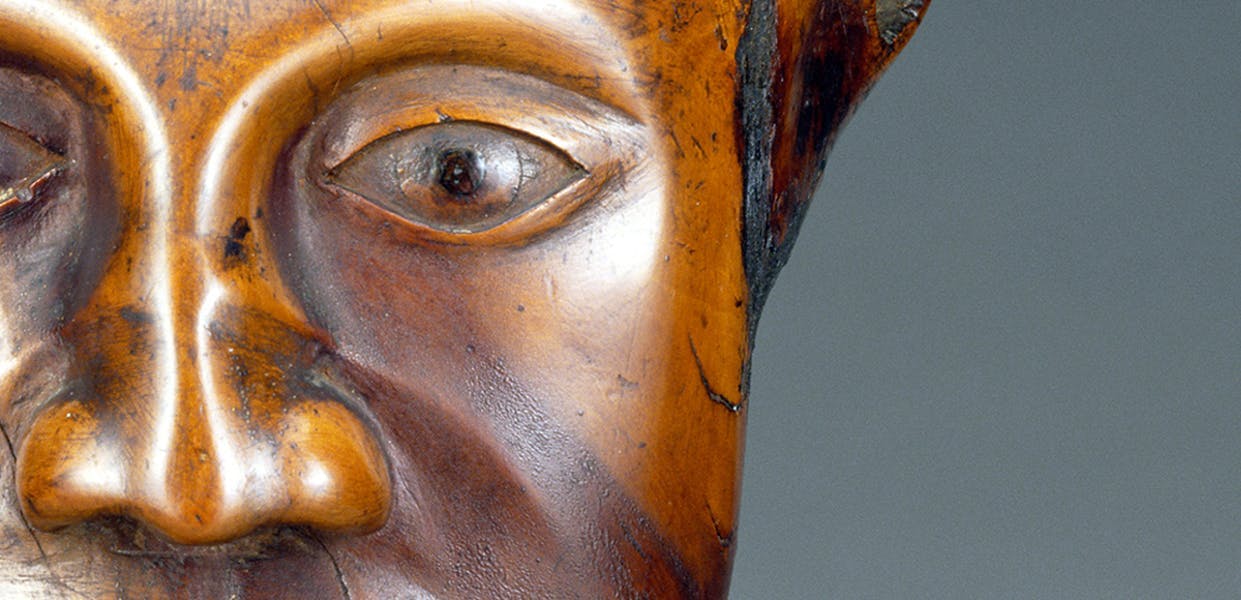
The J. Paul Getty Museum has been forced to confront and deal with their sculpture originally thought to be by Paul Gauguin, the emblematic Tête à Cornes (Head with Horns), acquired in 2002 for US$3 million (£2.3 mil) and exhibited in many international museums since. The work, which some considered a symbolic self-portrait of the post-impressionist painter, was the then most expensive price paid for a sculpture by the artist. It now rests in the museum’s storeroom, reported The Art Newspaper.
“In December 2019 the museum changed the attribution of the sculpture Head with Horns to ‘unknown’ . This decision was based on scholarly research over recent years by Getty professionals and other experts in the field, including significant new evidence that was not available at the time of its acquisition," a Getty spokesperson told The Art Newspaper.
Explore all prices Gauguin’s work has sold for at auction
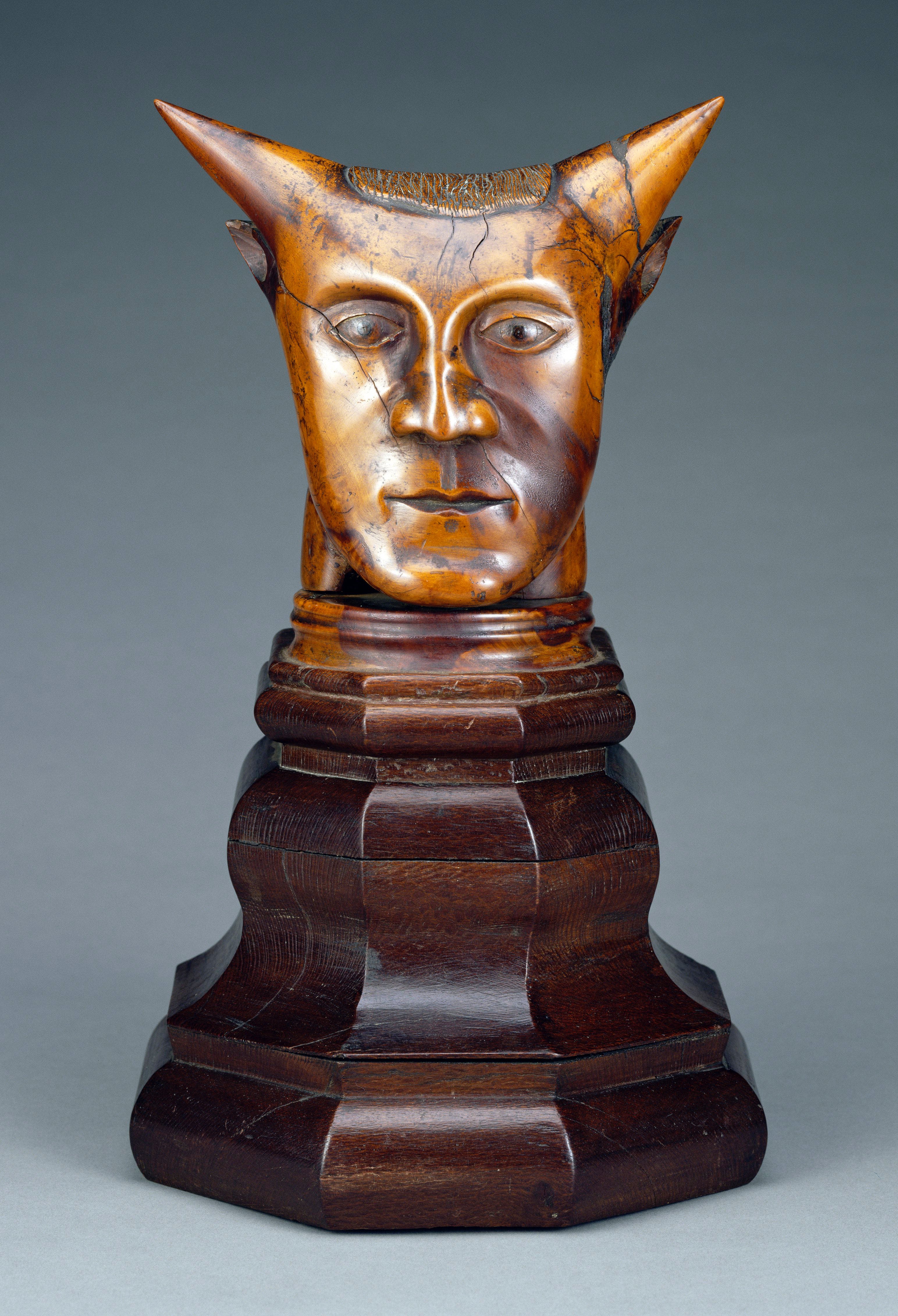
When the work was acquired by the Getty in 2002, the Director at the time, Deborah Gribbon, said: "Sculpture by Gauguin is exceedingly rare, and this intriguing work stands out as a superb example". The horned head, mounted on a solid base, was dated 1895-97, when the artist was living in Tahiti. If Gauguin tried his hand at woodcarving during his Polynesian stay, few works are as large and ambitious as the Getty’s example.
Tête à Cornes was featured in exhibitions across several major institutions, such as the Tate Modern, the Museum of Modern Art (MoMA), and the Museo delle Culture, Milan, and it remained in the Getty's permanent exhibition the rest of the time.
The museum has since confirmed that the work came from the Wildenstein Gallery in New York, where it originally would have been acquired from a private Swiss collector. The Getty never discloses the prices of its acquisitions made in the private sphere, but, at the time, a sale at more than US$3 million was spoken about, a record for a sculpture by the artist.
No signature or monogram appears on the sculpture, but the catalogue raisonné, written by Daniel Wildenstein himself, seemed to be sufficient proof for the Getty of the work’s authenticity. Having a major interest in finalising the sale, the institution had given its blessing. The Getty, who recently asked Wildenstein about the provenance of the work, learned nothing substantial, except that it was bought from an anonymous Swiss private collector in 1993.
Have a Gauguin work or print and wonder what it’s worth? Try Value My Stuff
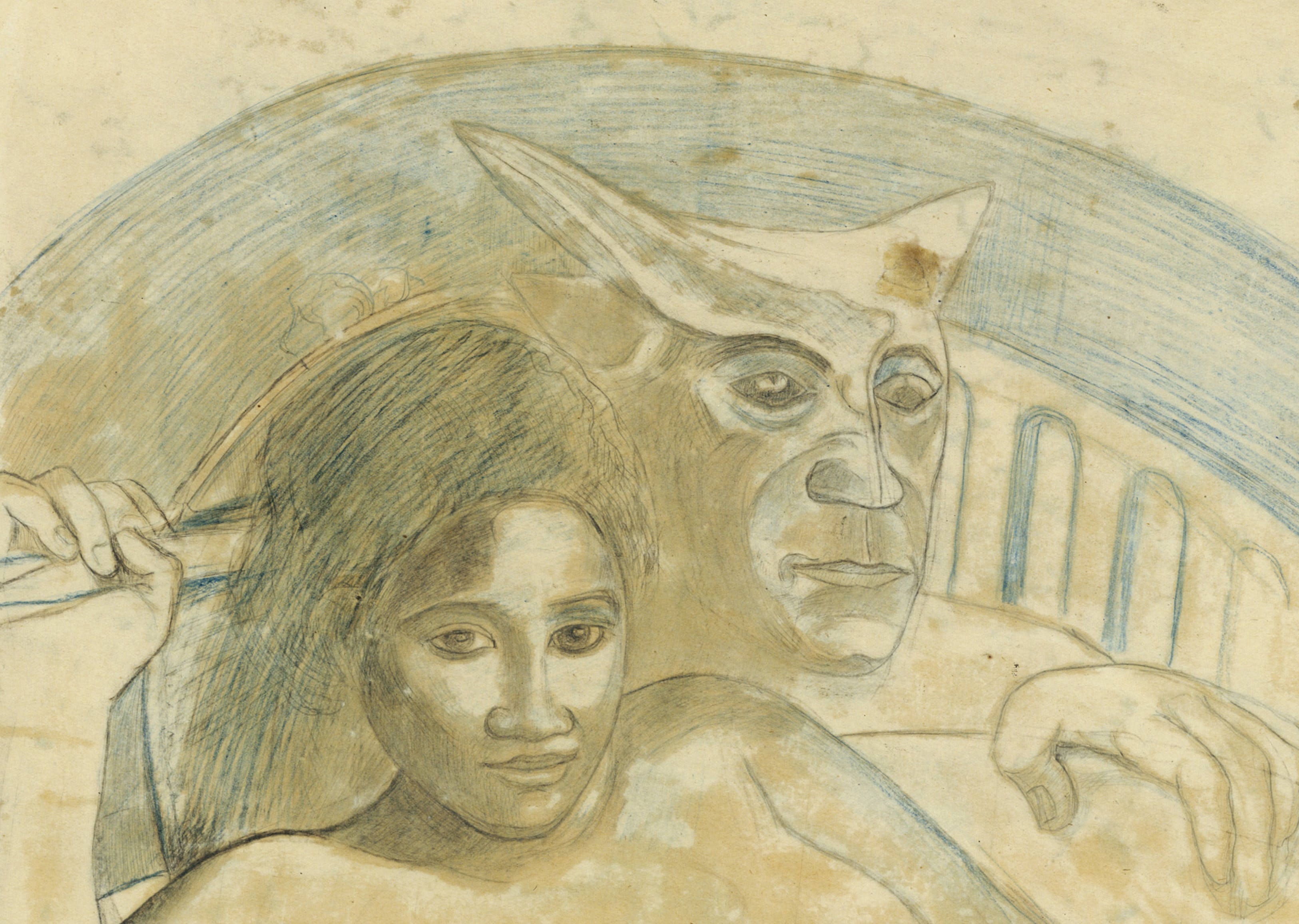
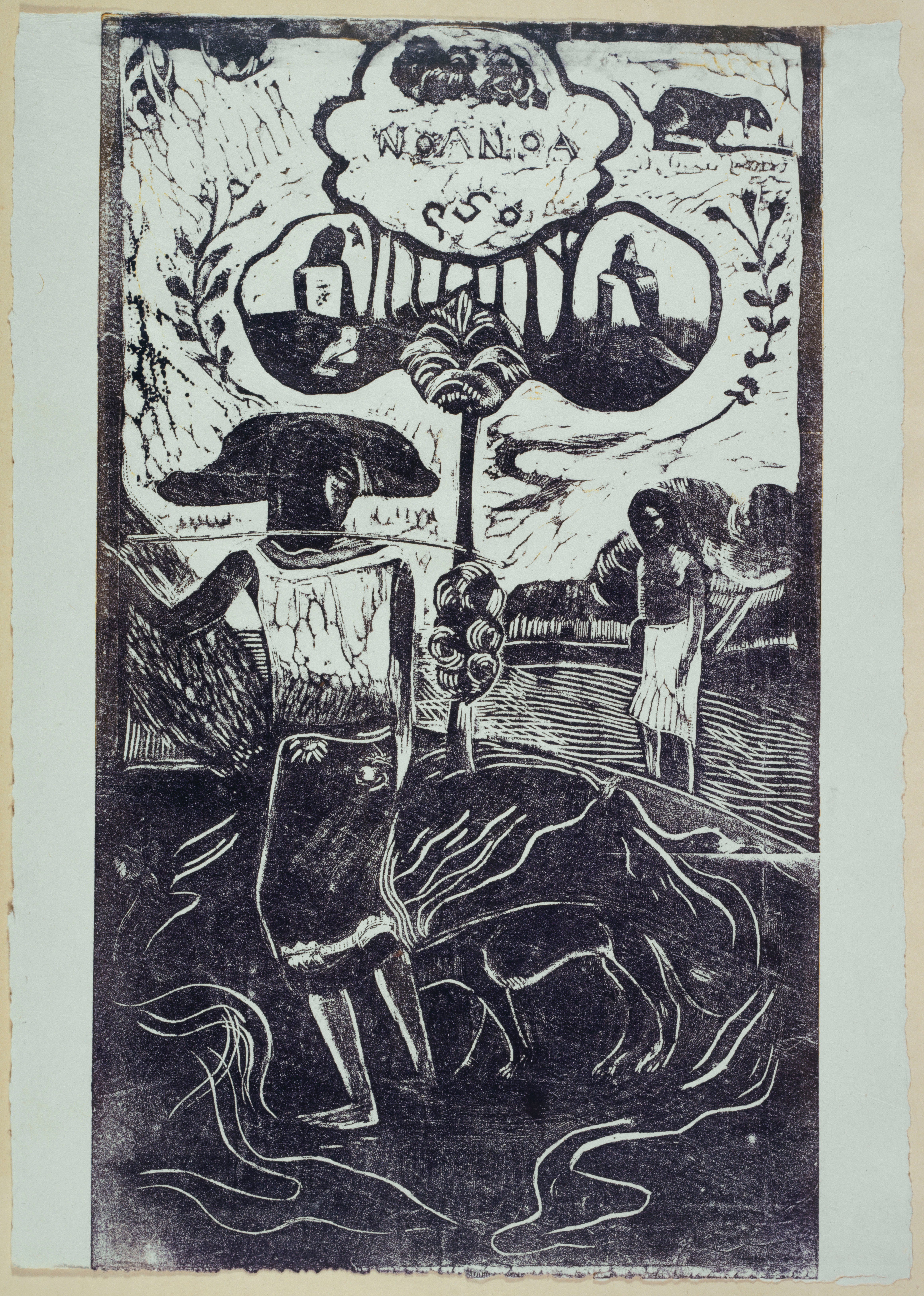
Historians had assumed Gauguin executed the work in Tahiti because two photographs of Tête à Cornes appear in Gauguin’s journal Noa Noa (kept at the Louvre museum), and the horned face appears in several of his drawings.
Anne-Lise Desmas, Director of Sculpture and Decorative Arts at Getty, expressed doubts when joining the museum in 2008. "No other sculpture by Gauguin has such a pedestal" and, strangely, for such an important sculpture of the artist, it has not been signed.
Shortly after its acquisition, many specialists began to question its authenticity. Notably, art critic Fabrice Fourmanoir highlighted, in a photographic album by Jules Agostini (acquired in 2015 by the Musée du Quai Branly), a photograph of the sculpture with the title Marquisian Idol. According to Agostini, the work was produced by an indigenous sculptor from the Marquesas. Analysis of the album suggests that the photograph was taken between November and December 1894, a time when Gauguin was in Paris.
See also: 5 Stolen Paintings Returned to a German Castle
According to another Fourmanoir theory, Head with Horns was sculpted "by a European sailor on a whaling ship which stopped at Tahiti", where the sculpture was sold. A careful examination of the provenance of the various wood (sandalwood for the head and wood-lace for the base) could also help to determine where the sculpture was created.
The famous sculpture was taken off display last year, and is now expected to remain in the museum’s storage.