The greatest desire of a war photographer is unemployment.
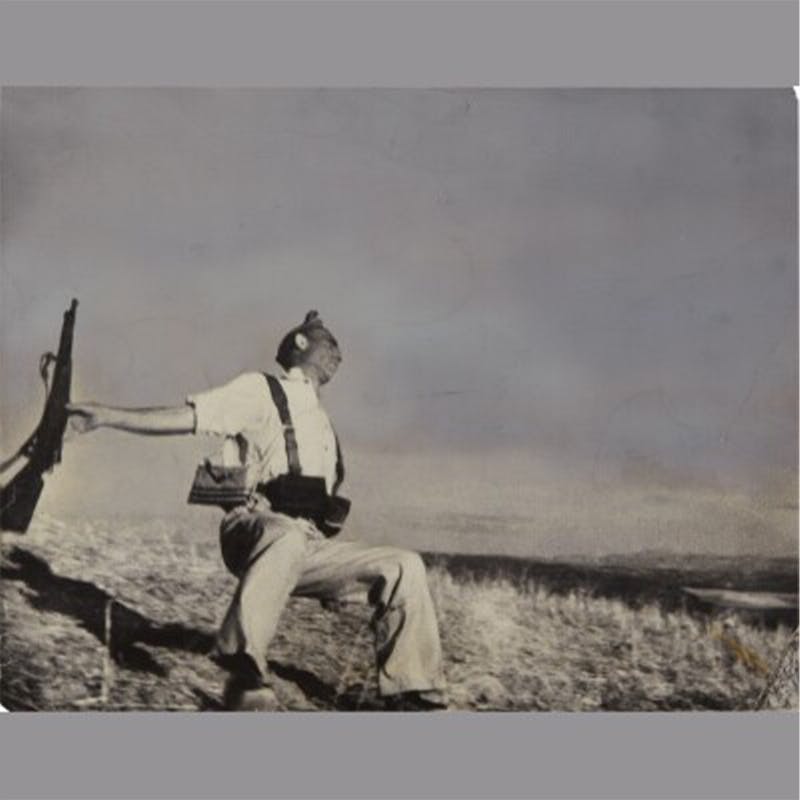
This sentence was quoted in LIFE Magazine and summarises in a few significant words the meaning of Robert Capa's work as a war photographer. His Death of a Loyalist Soldier image, taken on 5 September 1936 and later published in LIFE, was printed numerous times with slightly different titles (Loyalist Soldier, Falling Soldier, Loyalist Militia and Death of a Militia Man). It is considered to be one of the best documentary photographs ever taken.
See also: Surreal Glamour: The Photography of Angus McBean
Capa took the shot during the Spanish Civil War while he was in the trenches with Republican soldiers. The photographer was deeply involved in the anti-fascist movement. In a 1947 radio interview, Capa described how Republican soldiers left the trenches to shoot the enemy with their old, obsolete rifles. To take the photograph, Capa didn't bother looking through the viewfinder, but instead held the camera high over his head and continuously pressed the shutter. The result was this shot that shows the precise moment of the death of a soldier on the desolate battlefield. The image is full of drama and movement, capturing the soldier suspended in midair just before he falls to the ground.
Want more articles like this straight to your inbox? Subscribe to our free newsletter here
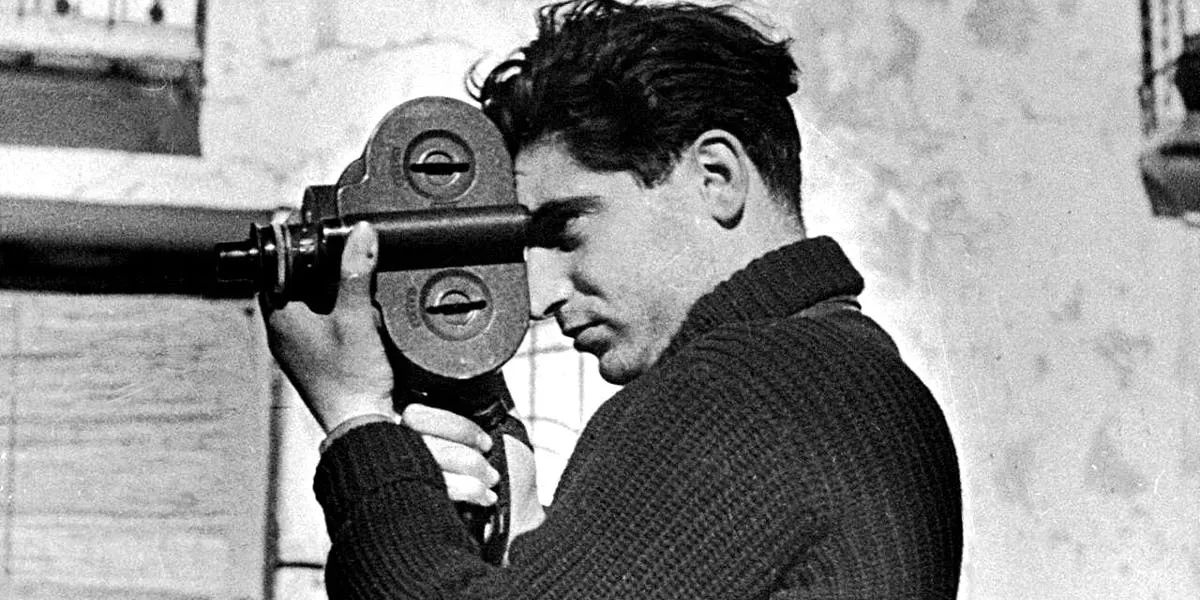
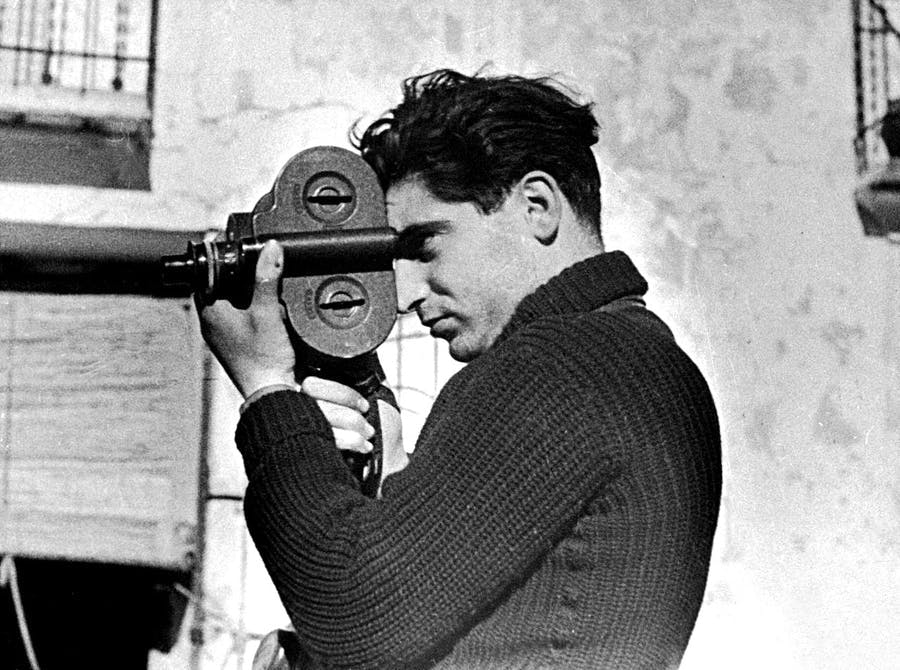
Born as Endre Ernö Friedmann in Budapest on 22 October 1913, Robert Capa was a Hungarian-American war photographer and photojournalist. He is considered by many to be the greatest combat photographer in history.
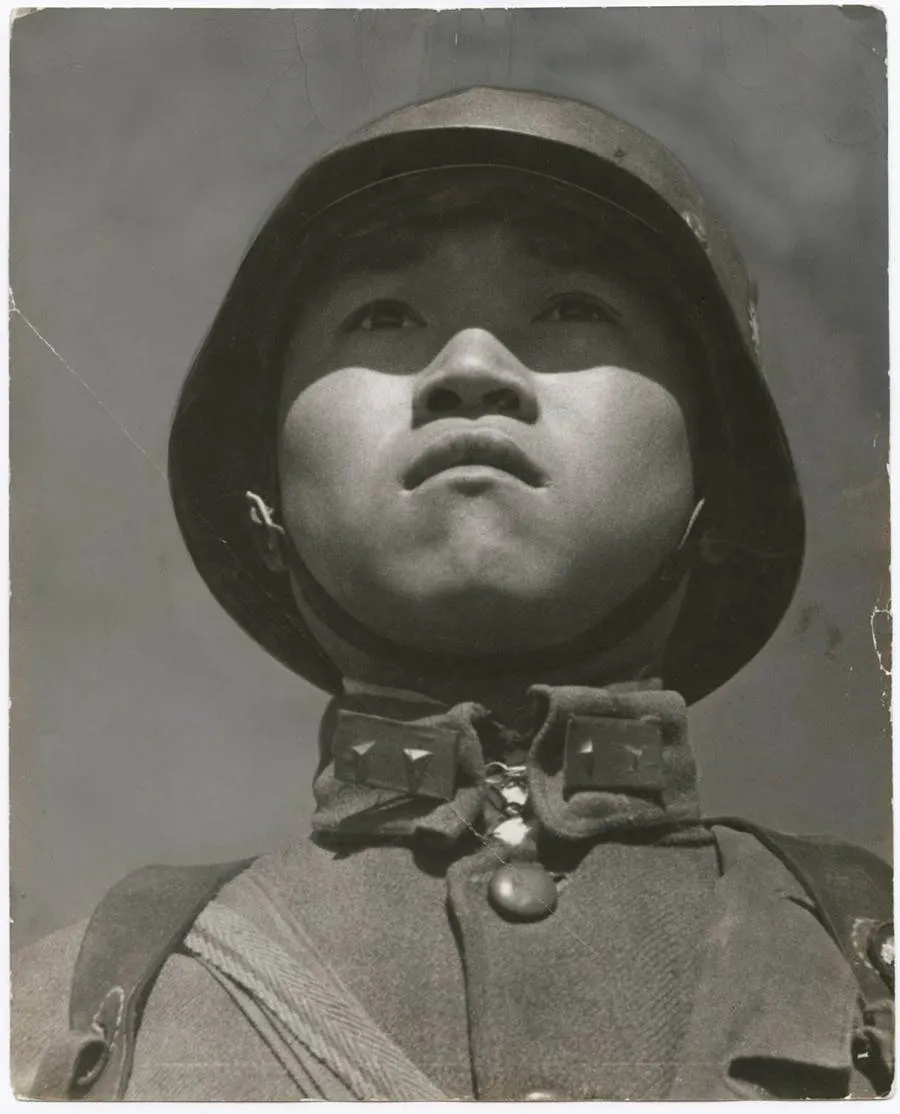
In 1938, Robert Capa went to the Chinese town of Hankou, now part of the Wuhan territory, to document the resistance to the Japanese invasion. He later sent his pictures to LIFE, which published a selection in the 23 May 1938 issue.
See also: Peter Beard: Into the Wild
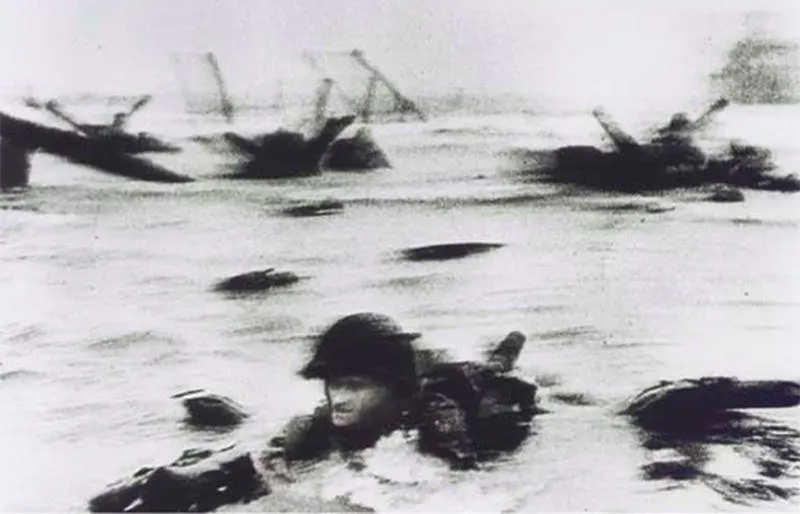
Another important group of images was known as 'The Magnificent Eleven', taken by Capa on D-Day, when he was assigned to the 16th Infantry Regiment, 1st Infantry Division ('Big Red One') in Omaha Beach, Normandy. These photos were published by LIFE on 19 June 1944.
His other well-known shots are To invade, with a newspaper clipping recalling the fighting in Normandy during World War I, and Snowy field, published in LIFE in January 1945, which shows an American soldier cautiously advancing through a snowy field to where a Nazi fighter lies. The soldier keeps the weapon ready for use, not yet knowing for sure if the other is alive or dead.
See also: The 11 Most Expensive Photographers
In 1947, together with Henri Cartier-Bresson and others, Capa founded the Magnum Photos cooperative in Paris, which became the first freelancer photographer agency.
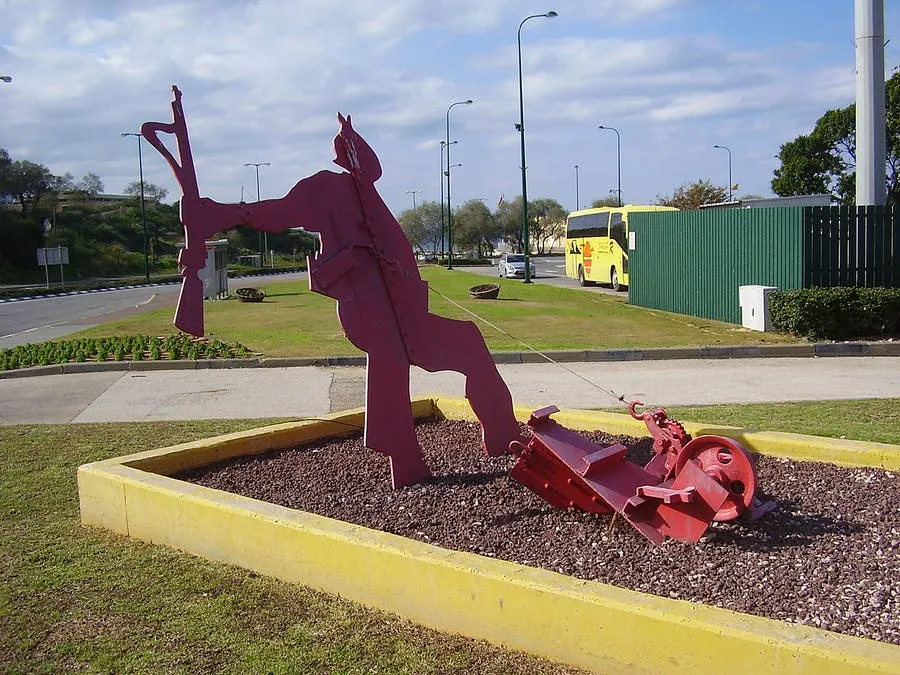
His bravery and passion for photography, however, led him to his premature death at the age of forty. On 25 May 1954, during the First Indochina War, he accidentally stepped on a mine in Vietnam while photographing a column advancing in a particularly dangerous area and consequently lost his life.
The enormous impact that Robert Capa has had on photography cannot be underestimated. His iconic photography showed the horrors of war from right in the trenches, and redefined the future of war, documentary and photography.