
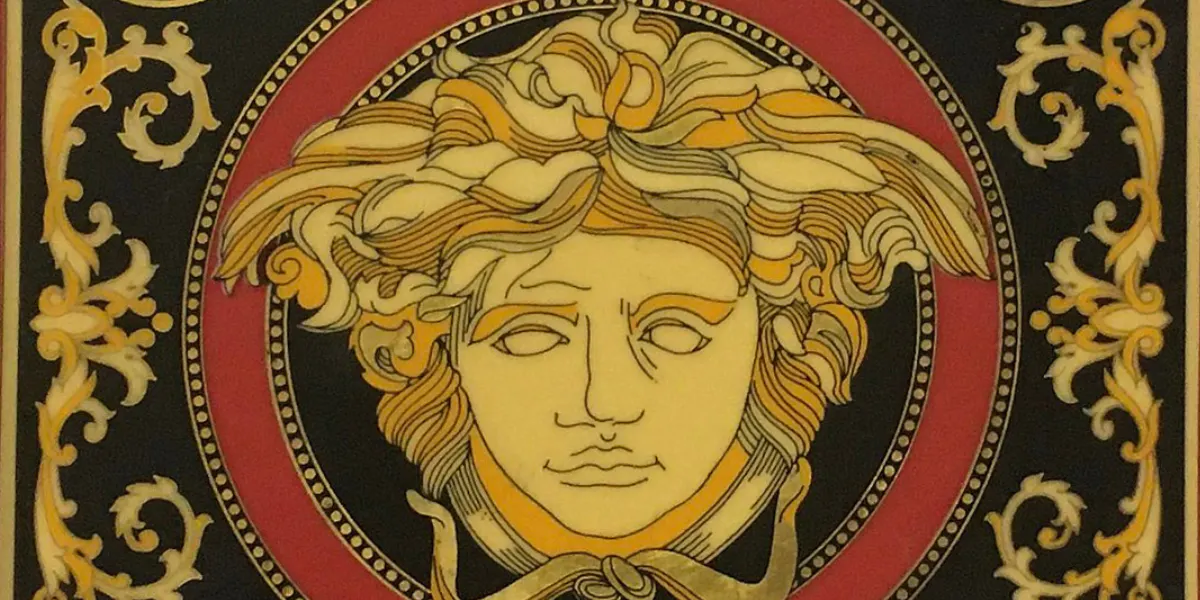
The collaboration between German porcelain manufactory Rosenthal and Italian fashion brand Versace marries the traditional craftsmanship of Rosenthal with the iconic style of Versace, resulting in tableware collections that embody the opulence, glamour and refinement of the two. The Versace Rosenthal pieces are loved by design enthusiasts and are often used for special occasions to add a touch of luxury to any table.
See also: Rosenthal: Art at the Table
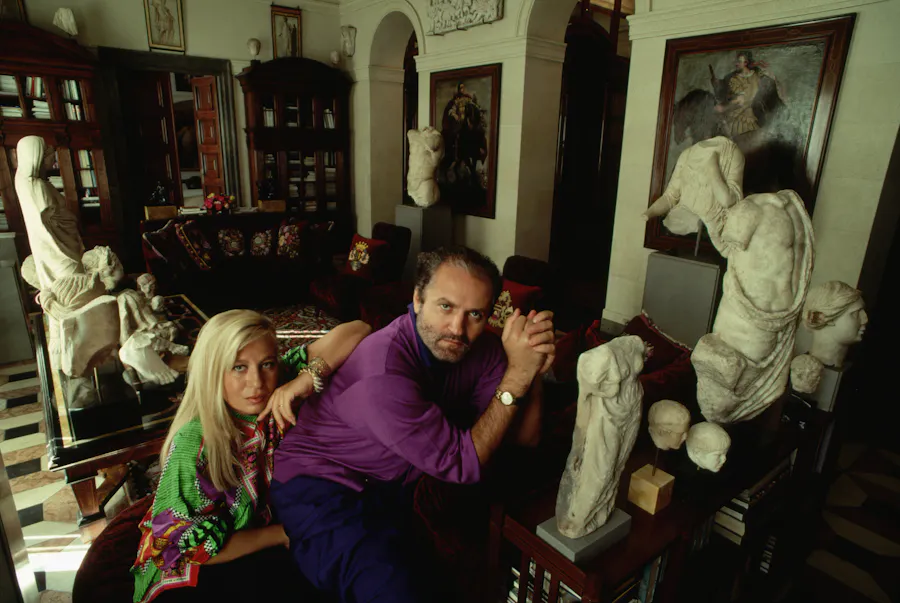
Gianni Versace was one of the first fashion designers to understand the importance of creating a true lifestyle brand. The collaboration between Rosenthal and Versace began in 1992 and resulted in a series of iconic collections. The first collection, launched in 1993 and named Medusa, features the legendary logo of the fashion house, the head of Medusa, chosen by Gianni Versace for its mythological meaning. Surrounded by expressive Baroque decorations and warm colours, the Medusa pattern by Gianni Versace reflects the undeniably rich and colourful universe of Versace.
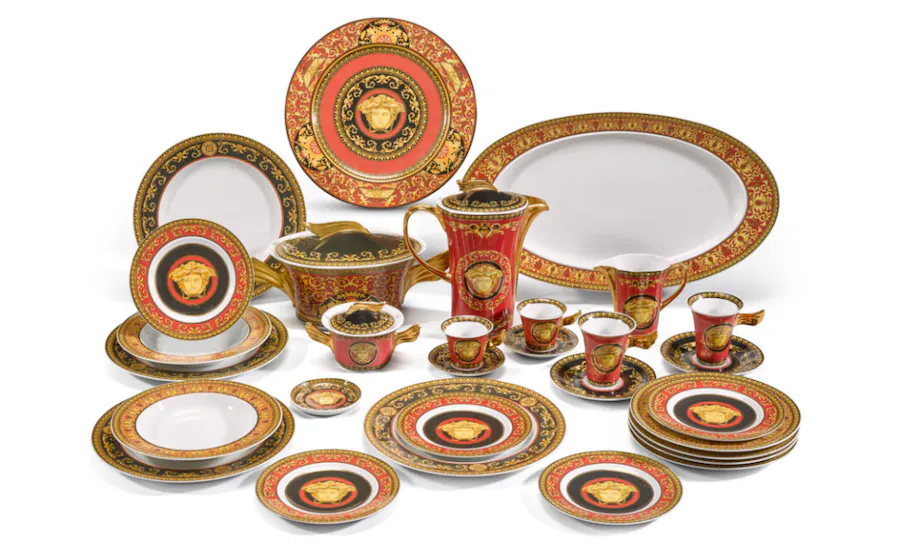
The same year, other iconic collections emerged, such as The Voyage of Marco Polo and The Sun King, inspired by the desire to travel and Baroque art respectively.
See also: Culinary Antiques: The Art of the Restaurant
Gianni Versace further explored his love for the Baroque through iconic tableware collections. In 1994, the Barocco service revealed sumptuous patterns inspired by this period, combining black and gold with Versace's characteristic rocaille. The same year, Les Trésors de la Mer celebrated the richness of the ocean with marine motifs adorned with gold.
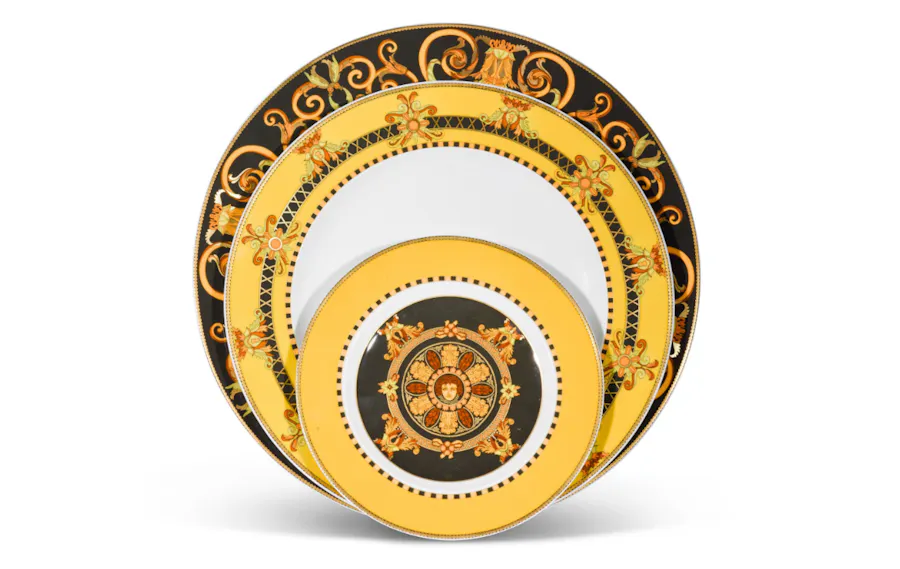
In 1996, Le Jardin de Versace evoked spring romance with its delicate floral motifs, while Gold Ivy, in 1997, offered contemporary luxury with plant ornaments inspired by ancient art.
See also: Flora Danica Porcelain: Serving the Art of Botany
After the death of Gianni Versace in 1997, collaborations between Rosenthal and Versace continued, featuring designs adorned with floral motifs. In 1999, with the Marquetrie decor, Donatella Versace succeeded in combining the characteristic opulence of Versace with a new, simpler elegance. Versace's bold colours are replaced by black and white, providing the perfect contrast with the sumptuous patterns of the Baroque era and the iconic graphic elements of the House of Versace. Other floral designs followed, such as Floralia Blue in 2000, Wild Floralia in 2002, and Green Floralia in 2003.
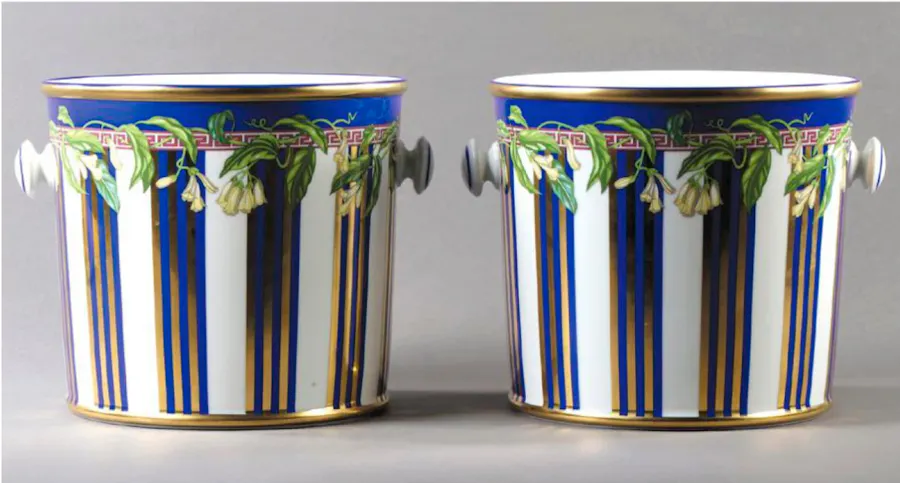
However, Gianni Versace's iconic motifs remain at the heart of the collaboration's aesthetic. Gianni, famous for reinterpreting the Baroque by transforming angels into golden chains and adorning them with leopard skins, left an important legacy. These motifs, present in Vanity in 2006 and Rêves Byzantins in 2010, perfectly embody the brand's characteristic opulence.
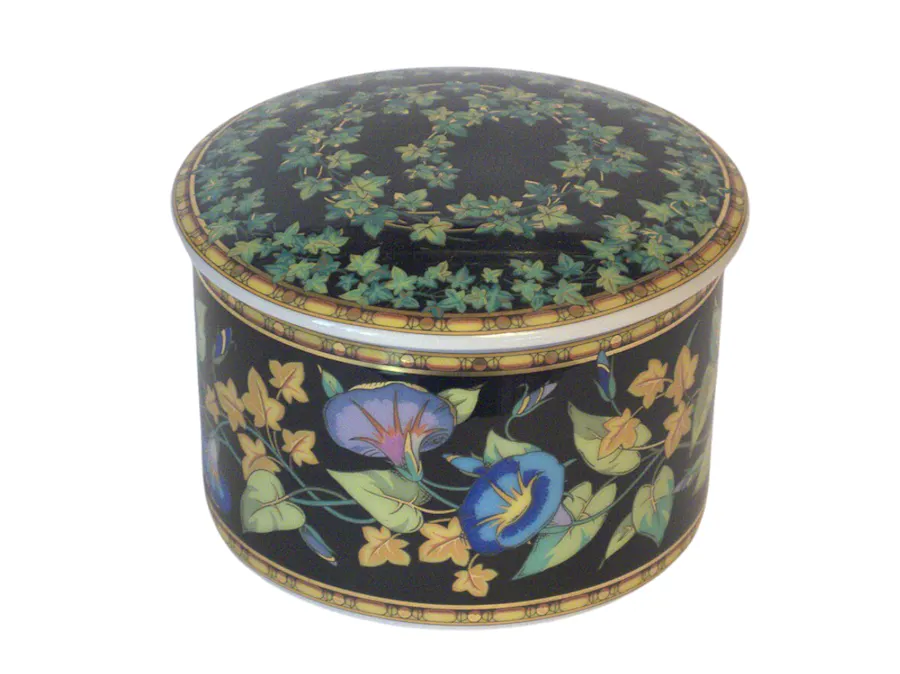
Today, the creations, as unique as they are extravagant, are designed by Donatella Versace, artistic director of Versace. In 2020, a new pattern made its debut: Jungle Animalier, which combines animal motifs and details inherited from the Medusa motif. This creation is inspired by the pattern presented during Versace's spring-summer 2020 fashion show.
Want to receive more articles like this straight to your inbox? Subscribe to our newsletter!
This tableware is highly prized on the auction market, but its prices can vary greatly. The Le Jardin de Versace collection sold at Sotheby's in August 2023 for more than £5,600, comprising a total of 97 pieces.
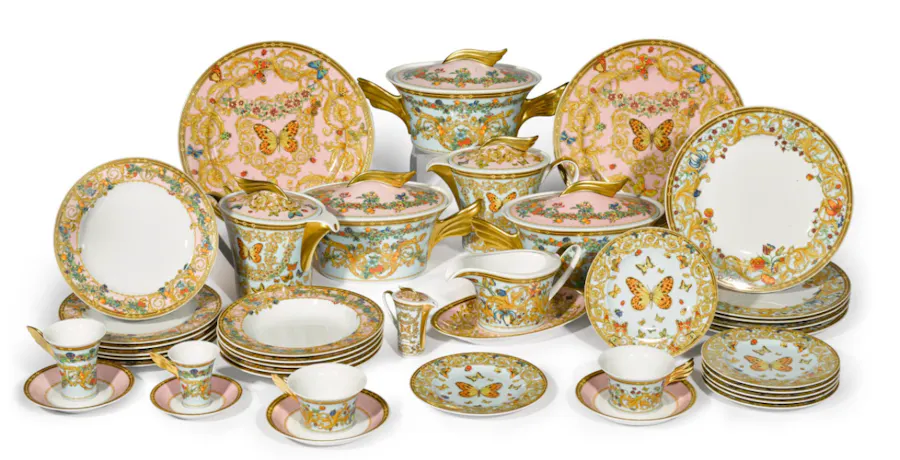
A Marco Polo table set of 176 pieces was sold at Christie's in January 2018 for more than £20,000. While these prices can be spectacular, it's important to note that prices fluctuate widely depending on the model and how items are sold, whether individually or in a set.
A spectacular auction will take place in March 2024 at the Luxembourg auction house Kanerz where the focus will be on Versace Rosenthal porcelain. If you still own Versace porcelain from Rosenthal that you would like to sell, the auction house is still looking for consignors.