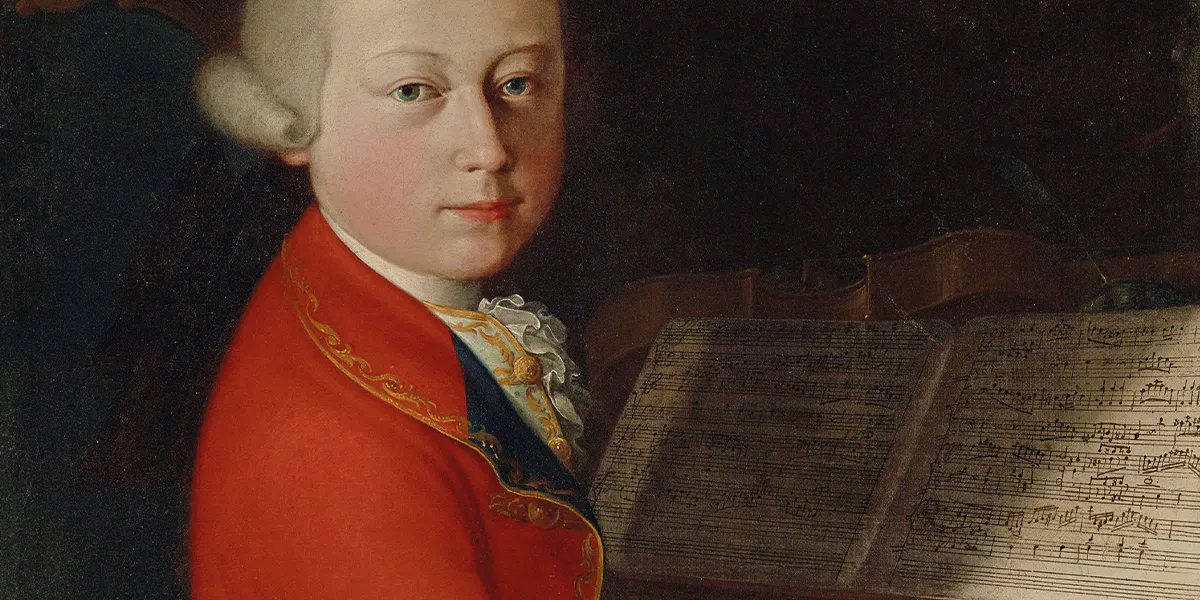
The short life of Wolfgang Amadeus Mozart (1756-1791) was devoted to music from beginning to end. His father Leopold recognised his son's extraordinary talent early on, and taught him to play the piano and violin and compose by the age of four. Concert tours followed, where the child prodigy and his no less talented sister Maria Anna (1751-1829) caused a sensation from Vienna to Paris and London.
The cause of Mozart's death on 5 December 1791 at the age of 35 is still unknown to this day, which has led to all sorts of assumptions, from a severe illness to being poisoned by a rival musician. This mystery, his virtuoso genius and fascinating life have been revisited throughout time, such as in Miloš Forman's 1984 film Amadeus and in Falco's 1985 song Rock Me Amadeus.
Here are the top five Mozart-related objects that have been particularly successful on the auction market:
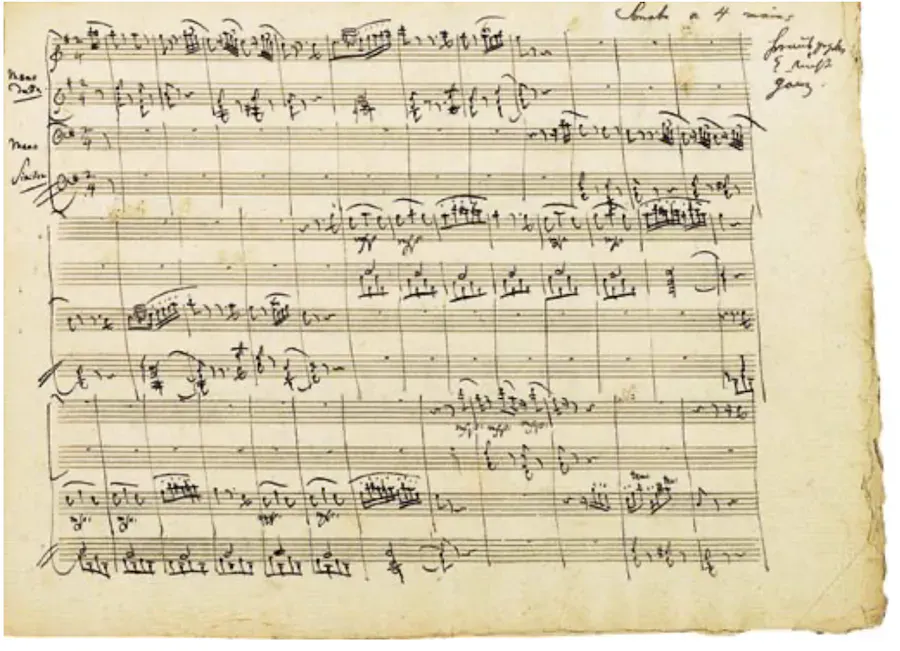
5. An unfinished manuscript from 1791
Number 5 takes us straight to the end of Mozart's life: the unfinished handwritten movement of a piano composition in G major for four hands. Listed on 6 June 2001 at Christie's in London for £50,000-70,000, the manuscript, executed in brown ink, changed hands for £355,750. With this piano piece for two players, which Mozart worked on shortly before his death, Mozart came full circle to his early years as a child prodigy.
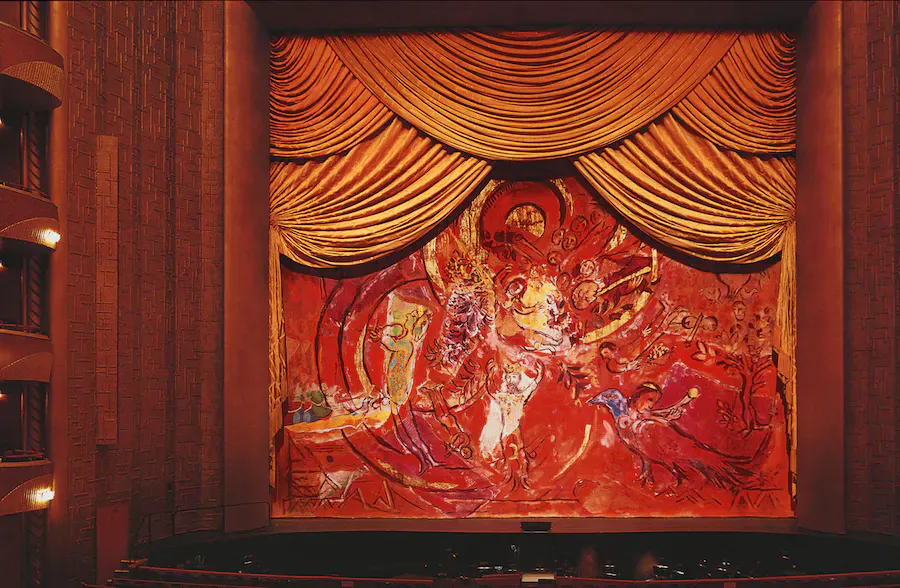
4. Chagall's stage curtain for The Magic Flute
A great artist is not only regularly visited by the muse, but is sometimes also the muse to others. In 1964, Marc Chagall was commissioned by the Metropolitan Opera in New York to design the sets, props and costumes for a production of Mozart's The Magic Flute. Chagall worked on the project for three years, which resulted in a wonderful work that brought a crescendo of imaginative figures onto a bright red background.
See also: 10 Little Known Facts About Marc Chagall
On 17 November 2020, the 65-foot-high stage curtain for the final scene of the opera went under the hammer at Bonhams in New York with an estimate of $250,000-450,000 and sold for $990,312 (about £796,000).
3. A manuscript of the final scene of The Marriage of Figaro
The final scene of another popular Mozart opera, The Marriage of Figaro, ranks third on this list. Once again we are dealing with a manuscript by the composer, but in this case a finished one. The opera buffa was Mozart's first collaboration with the Italian librettist Lorenzo Da Ponte, with two more to follow with Don Giovanni and Così fan tutte. The socio-critical piece La Folle Journée ou le Mariage de Figaro ('The Mad Day or The Marriage of Figaro') by Beaumarchais served as a template from 1778, which is why some softening of the text was necessary in order to perform the play with imperial approval. The premiere took place on 1 May 1786 in Vienna. The manuscript of the final scene was auctioned at Sotheby's in 2001 for £751,250.
See also: From Haydn to Hip-Hop: Music for Collectors
2. A manuscript with 9 symphonies
Not just one, but nine compositions by Mozart are in second place. They are the symphonies 22 to 30, which were composed in the 1770s and span a total of 510 pages. It was probably his father Leopold Mozart (1719-1787) who had the pages bound in the 1780s. The nine collected works went under the hammer at Sotheby's in London on 22 May 1987 and sold for around £2.37 million making them the most expensive music manuscripts in auction history at the time.
See also: Collecting Opera and Ballet in Art
1. His portrait from 1770
The most expensive Mozart object in auction history to date was sold at Christie's 'The Exceptional Sale' in Paris on 27 November 2019, where it achieved €4,031,500 (about £3.53 million).
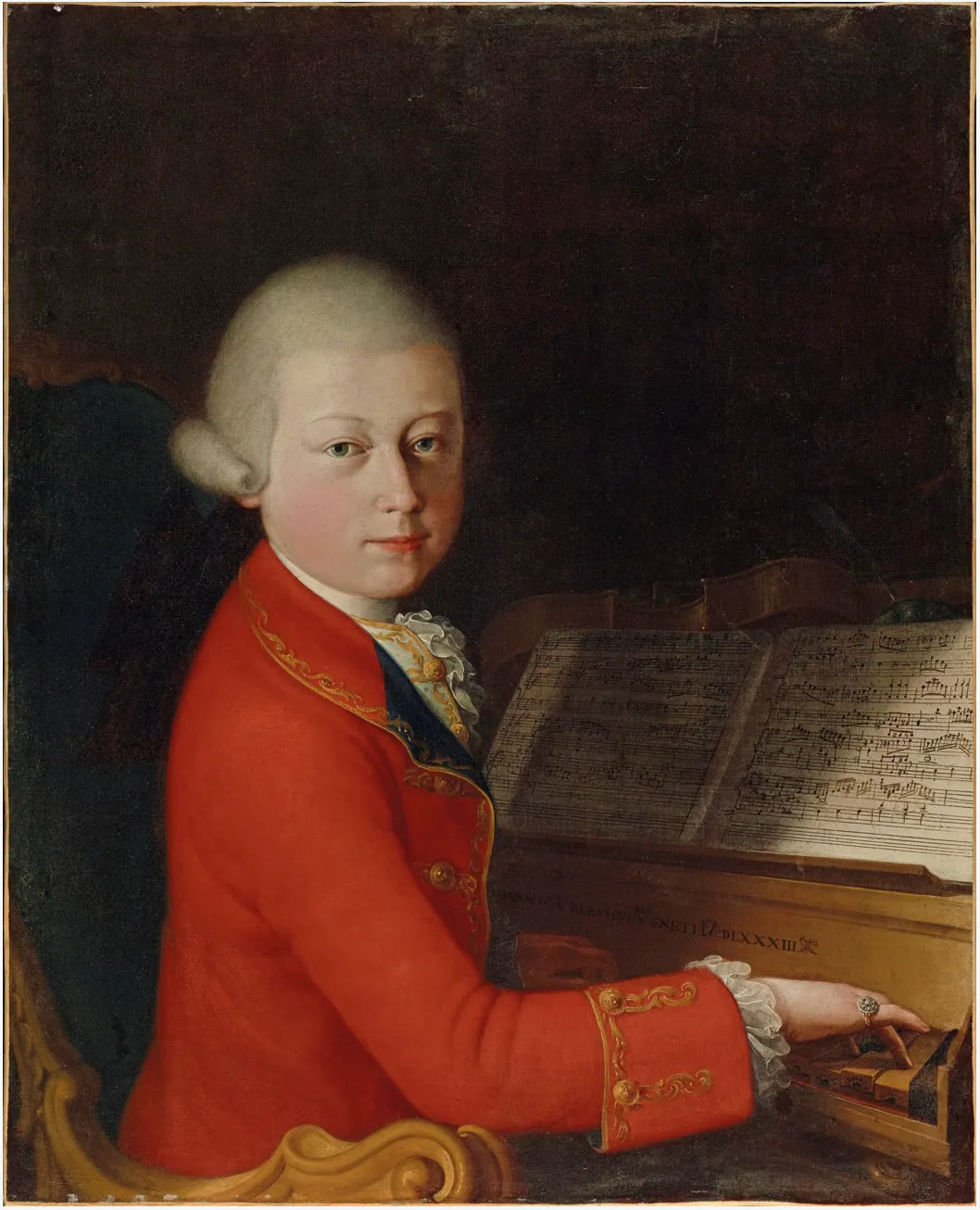
The coveted object was a portrait created in 1770, which depicts the then 13-year-old Wolfgang Amadeus Mozart seated at a harpsichord. The portrait was created in Verona, which was one of the stops on the first trip to Italy that Mozart undertook together with Leopold, his father and manager.
Want more articles like this delivered straight to your inbox? Subscribe to our free newsletter!
As far as employment was concerned, his trips to Italy were unsuccessful, but Mozart composed diligently and played impressive concerts. He finally found work in his hometown of Salzburg before settling in Vienna in 1781 as a freelance composer. In the following ten years, Mozart composed symphonies, concertos for various instruments, the serenade Eine Kleine Nachtmusik, and unforgettable operas such as The Marriage of Figaro (1786), Don Giovanni (1787) and The Magic Flute (1791), which are still celebrated today.