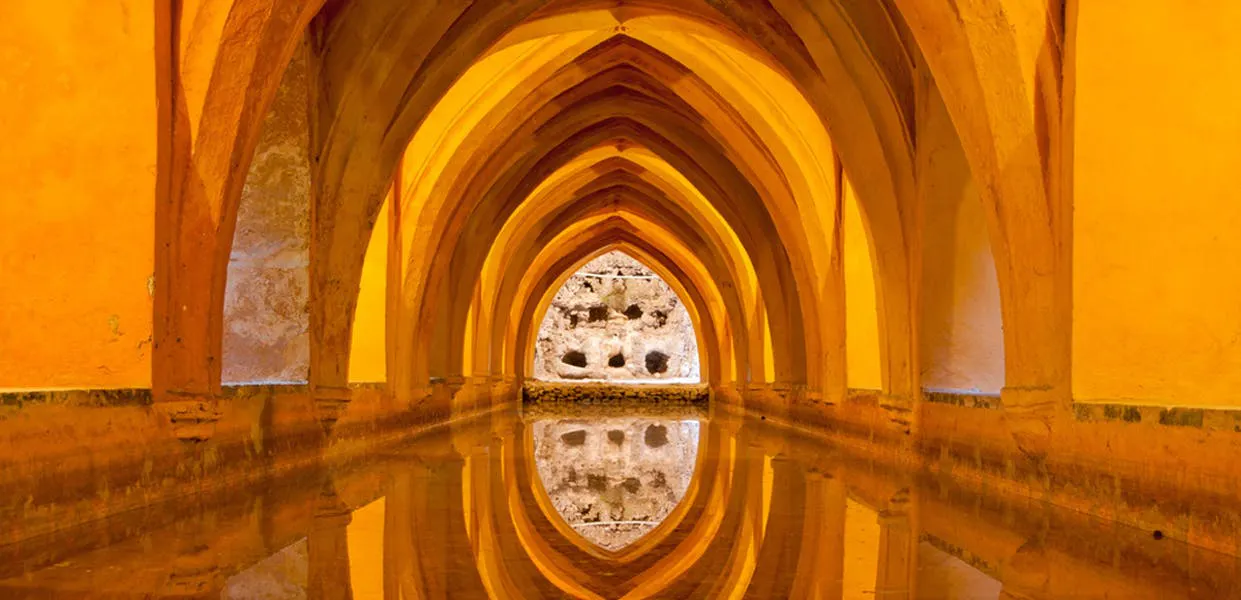
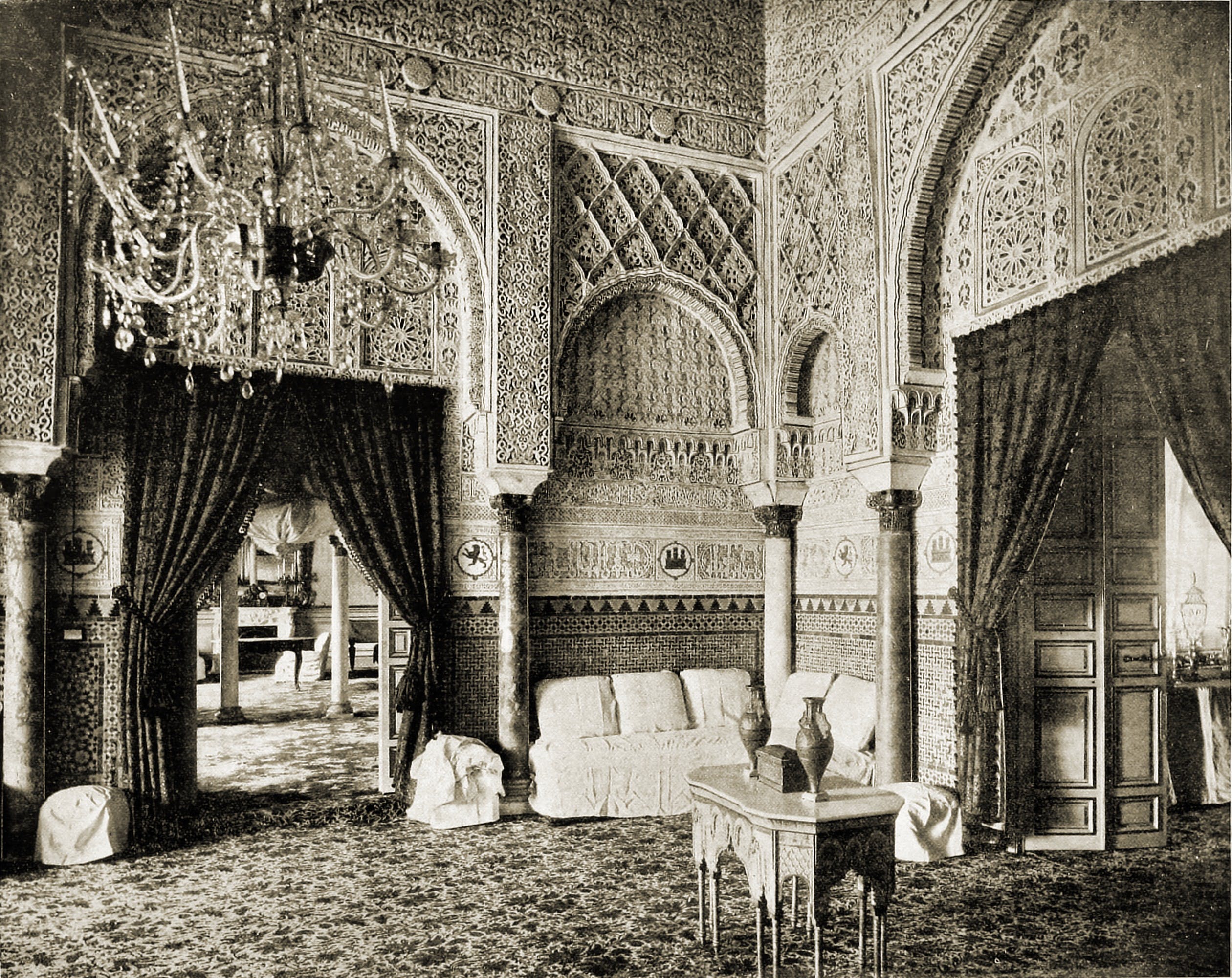
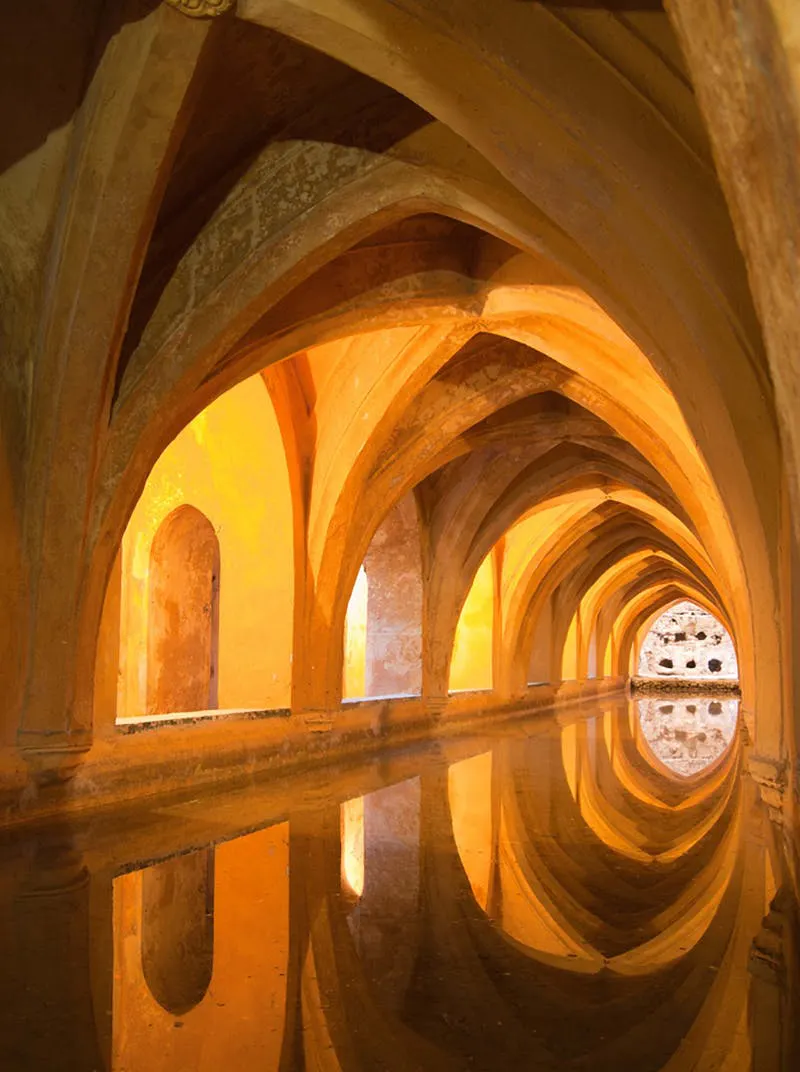
The underground gallery of the fortified palace, the Alcazar of Seville, known as the 'Baths of María de Padilla', was built between the 12th and 13th centuries under the design influence of the Almohad Empire and is the subject of many legends. It is said that María de Padilla, a noble lady of dazzling beauty, liked to walk naked in the palace to go to the baths, causing a sensation in front of the members of the court, as depicted by the French artist Paul-Jean-Louis Gervais in an engraving.
María de Padilla was born in 1334 to the Castilian nobles Juan García de Padilla and Marie González de Hinestrosa. She met the king of Castile Pierre I (also known as Pierre le Cruel) in the summer of 1352, when he led an expedition to Asturias to fight against his half-brother Henri de Trastamare. Their affair began immediately, although the king was engaged to Blanche de Bourbon, daughter of Duke Pierre I of Bourbon and Isabelle de Valois. The marriage, arranged by his own counsellor João Afonso de Albuquerque and the queen mother Marie-Constance, was simply one of advantage. Very in love with María, he took her for his mistress and endangered his standing with the powerful court, who did not approve of this illicit relationship and tried, on several occasions, to put an end to it.
See also: Top 6: The Art of the Kiss
He abandoned his wife three days after his marriage, in 1353, to join María and the daughter she had just given him, Beatrice. He installed them in the royal residence of the Alcazar of Seville, where María held her own court.
The underground passages of the palace were defined by galleries overhung by large arcades; these shelter edthe main basin where María loved to bathe. In hot weather, as is often the case in Seville, the temperature difference with the outside can be up to 15 degrees cooler. Some walls are decorated with paintings attributed to artists like Juan Díaz, Juan de Saucedo, Juan Chacón and Gonzalo Pérez. These large frescoes were produced between 1565 and 1579 and are found in the various galleries. Rediscovered in 1997 in a rather deplorable state of conservation, the artworks have undergone extensive restoration work.
See also: A New Renaissance for Old Masters
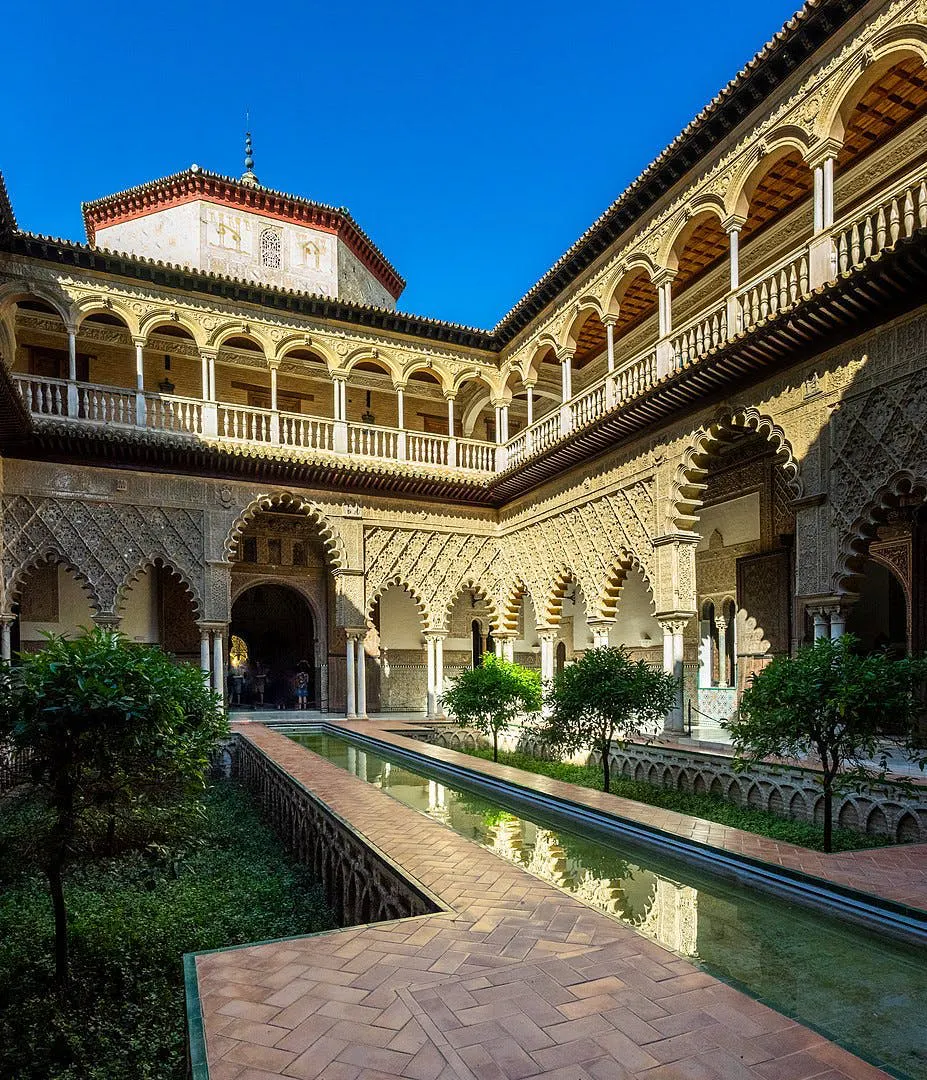
The Alcazar of Seville, a fortified palace built by the Umayyads of Spain, was modified several times during and after the Muslim period. In 1364, following an earthquake, Peter I, 'the Cruel', added a splendid palace in Mudejar style and called upon artists from Toledo and Nasrid to decorate it. The palace is considered the most brilliant example of Mudejar architecture on the Iberian Peninsula and one of the oldest royal residences in the country. The Alcazar has been listed as a UNESCO World Heritage Site since 1987.
See also: UNESCO Recognises 8 Frank Lloyd Wright Buildings as World Heritage Sites
María de Padilla died in Seville in July 1361. After her death, the king officially declared before the court that María was his first and only wife. He had her recognised as his legitimate wife and asked the Archbishop of Toledo to cancel his two previous marriages. The revocation allows him to legitimise their children, Béatrice, Constance, Isabelle and Alphonse. The body of María rests in the chapel of the kings of the cathedral of Seville, where the king joined her in 1369.