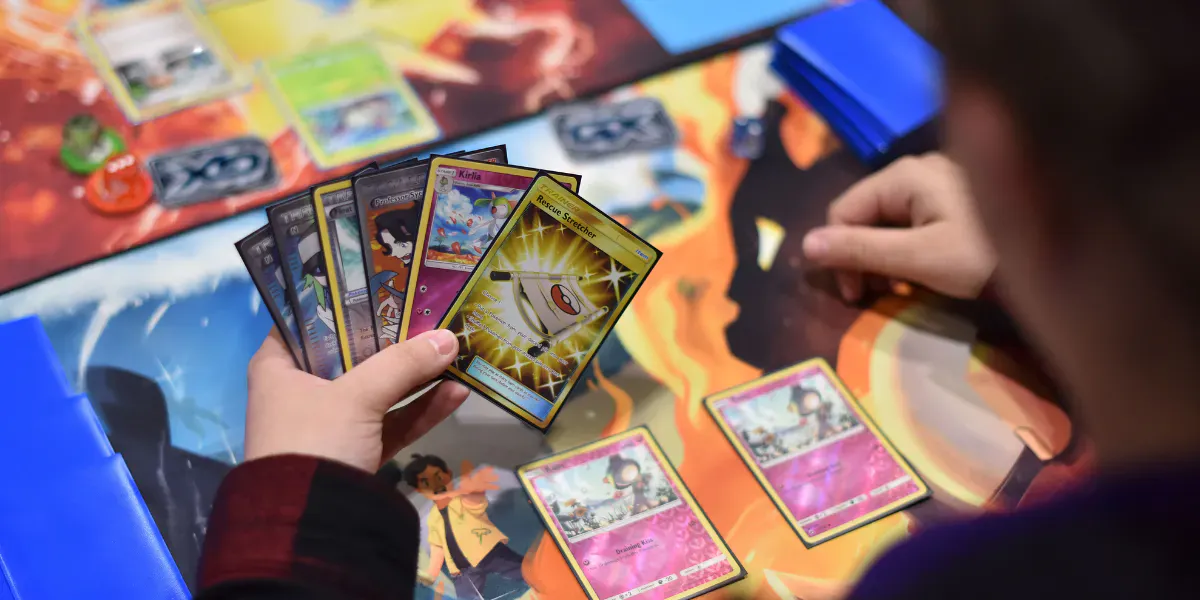
A Pokémon card selling for more than a Louis XVIII piece of furniture…these Pokémon cards just might be the antiques of tomorrow!
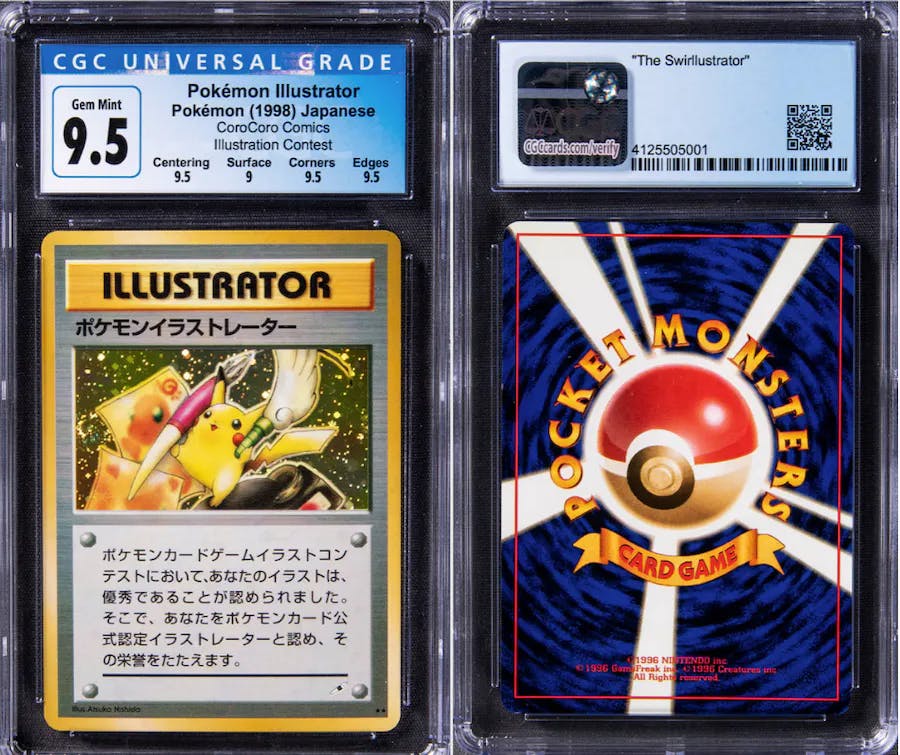
The Pokémon phenomenon started in the United States, in particular with influencers and Youtubers like Logan Paul. As the buyer of the most expensive card sold privately in the world ($5,275,000, circa £4.4 million), Paul is also known for his boxing fights during which he wears a Pokémon card around his neck. In France, rapper Lorenzo sings about Pokémon cards on his TikTok account. In May 2021, he sold his collection of cards for the impressive sum of €305,793 (£273,190) on eBay.
See also: Pokémon: Gotta Catch 'Em All

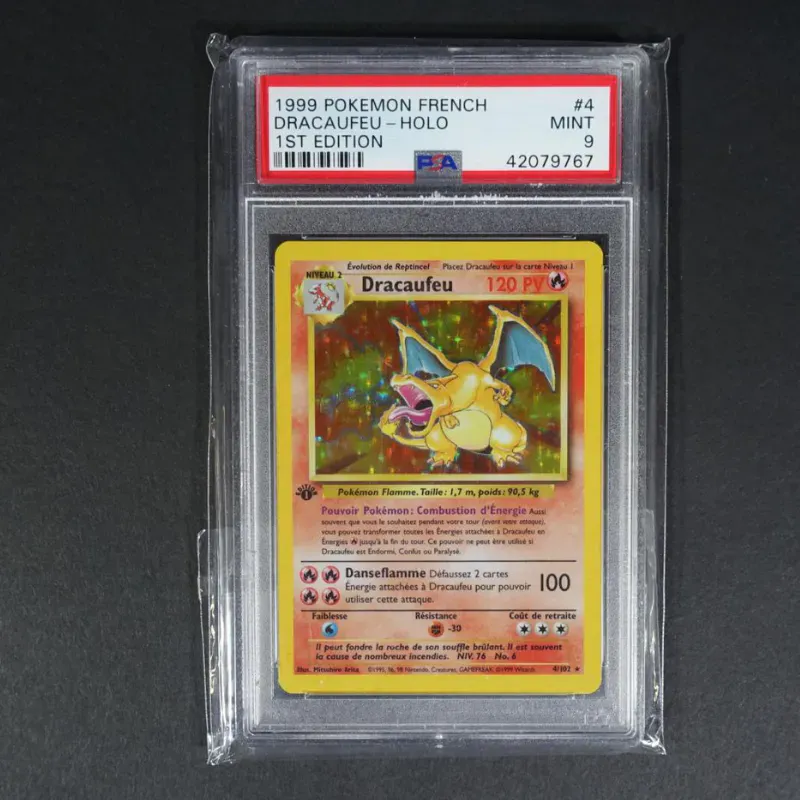
As with any speculative items, not only are fakes circulating, but it can also be difficult to navigate around the Pokémon market. Léonard Pomez, an expert at Ivoire Troyes, the leading auction house in this category in France, explains the booming market for Pokémon cards at auction. Since the pandemic, Ivoire Troyes has recorded excellent results, notably beating the auction record in France with a Dracaufeu card, estimated at €2,500 it finally sold for €12,000 (approximately £10,720) in June 2021. For the auctioneer, this market is in full expansion and will bring in a new generation of bidders. As he said, "a Pokémon card selling for more than an [Louis] XVIII piece of furniture...these Pokémon cards could well be the antiques of tomorrow."
Who are the buyers?
Nostalgics or investors? 1990s enthusiasts aged between 35 and 55 with a certain purchasing power see an opportunity with Pokémon cards to invest, to collect, and even to decorate. Pomez told us that it is not uncommon to see buyers exhibiting cards in showcases where other icons of Japanese culture are enthroned (Dragon Ball Z figurines, Shogun, and Golderak, for example).
See also: The Baseball Card Boom: A History of Trading Cards
In terms of nationality, cards issued in one country will sell to buyers of the same origin, so there is an international market. Nevertheless, the most incredible results are recorded in the United States and Japan.
The Pokémon Rule of Three
As with all categories of objects sold at auction, expertise is a key step. So what should be considered? Here's the Pokemon Card Collector's Rule of Three:
1. The condition
A so-called 'Mint' state is ideal: cards taken out of the 'boosters' (sealed pack of cards) and carefully stored in binders. Then there are companies like PCA in France and PSA in the United States that specialise in the scoring of trading cards. These companies will rate the card in particular according to the state of the surface, the edges and the corners where the slightest micro-scratch, white dots, stain or irregularity will considerably reduce the value of the card.

2. The edition
When a card goes to auction, the experts also scrutinise the edition of the card, knowing that the first cards were published in October 1996 in Japan and in 1999 internationally. First published in Japan by Media Factory in 1996, the cards (TCG in English and JCC in French) were published in the United States by Wizard of the Coast in 1999 and, from 2003, the rights were transferred to The Pokémon Company. Since the first editions are the rarest, they are also the most sought after.
3. Rarity
Like any collectible, rarity is at the heart of card valuation. So what makes a card rare? Often, cards that have been played in a tournament are more coveted. In some cases, the winner's name is even printed on the card. The number of copies made and the illustrator of the card (the Pikachu card bought by Logan Paul was illustrated by Atsuko Nishida, the creator of Pikachu) are also important. Design also plays an important role.
Want to receive our latest articles straight to your inbox? Subscribe to our newsletter!
For example, in the case of the 1999 Shadowless Holographic First Edition Charizard, the stamp was a misprint, making it one of the most expensive cards in the world. In Pokémon, the graduation system helps to see things more clearly: cards with a circle or a diamond, for example, are not worth much, while if you can see a star next to the creature's name, it will have more value. Pomez explains that out of a deck of 102 cards, 16 cards feature a star and a holographic background. If these cards are in good condition, then it is worth going to have them valued. For example, Ivoire Troyes sold 6 first edition cards, graded PSA 9/10 and 10/10, for the sum of €51,000 in June 2021.
Want to know the value of your Pokémon cards? Find out with ValueMyStuff!
How to spot fakes?
Pomez reveals to us some details that his experts look for to avoid any counterfeits. For example, authentic models have a thin grey line on the edge of the card, unlike counterfeits. If the front face of the card is well imitated, the back may reveal a fake, so therefore it is necessary to observe the quality of printing and the colours, in particular the blue tones and the inscriptions. Finally, weight and consistency are revealing as fake cards are often lighter and more flexible.