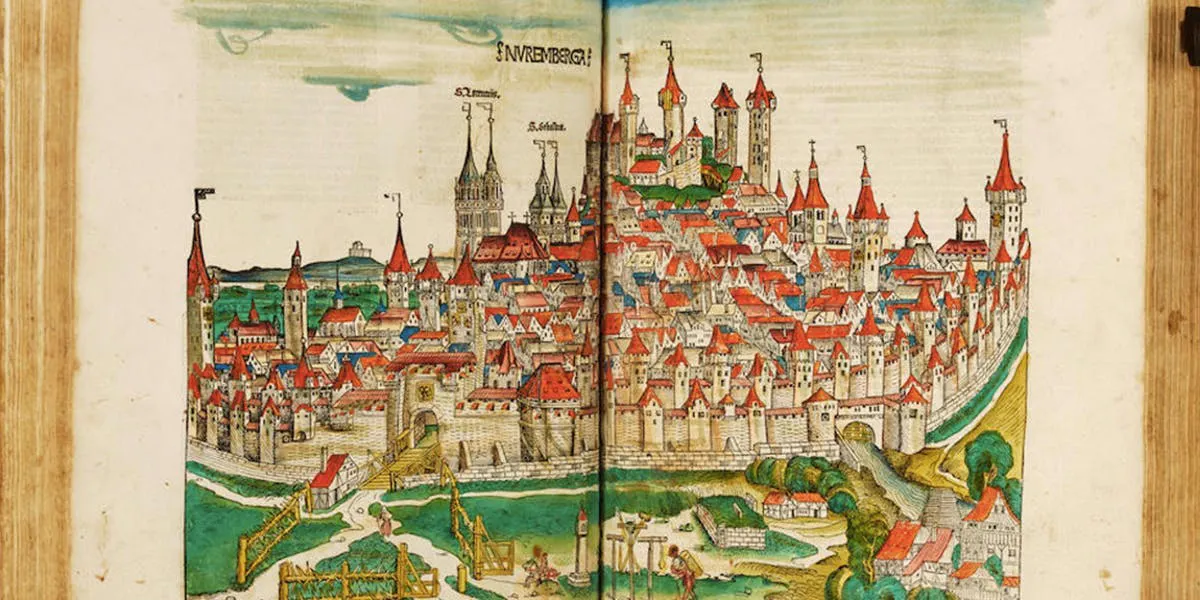
After he published a collection of songs and a cookbook, the Nuremberg scientist, doctor and humanist Hartmann Schedel (1440-1514) tackled a new work: a sort of encyclopaedic universal chronicle including histories of several European cities. The ambitious project, titled the Nuremberg Chronicle, was funded by two traders Sebastian Kammermeister and Sebald Schreyer.
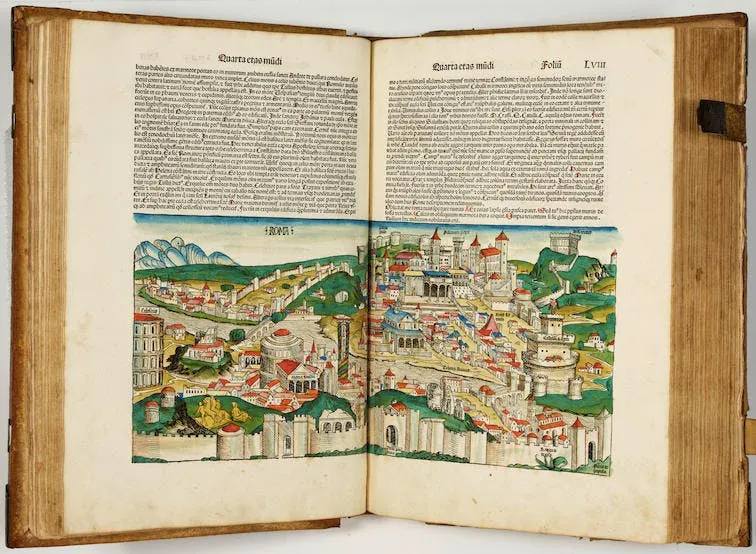
Schedel intended to tell the history of the world, beginning at Creation through to the 1490s. The texts, based on Genesis, follow the traditional medieval division of world history into seven ages.
The printer and publisher Anton Koberger, one of the most famous in Germany at the end of the 16th century, produced an unprecedented number of 1,809 illustrations, making the Chronicle one of the most important and technically advanced books of the time.
See also: The First Works of 10 Famous Artists
The painter, draftsman and wood engraver Michael Wolgemut and his son-in-law Wilhelm Pleydenwurff, also based in Nuremberg, were asked to carry out the engravings for the work (the commission amounted to 1,000 guilders). Wolgemut and his employees, including his pupil Albrecht Dürer (who probably contributed to some illustrations), executed 645 woodblocks that were used to create the 1,809 illustrations.
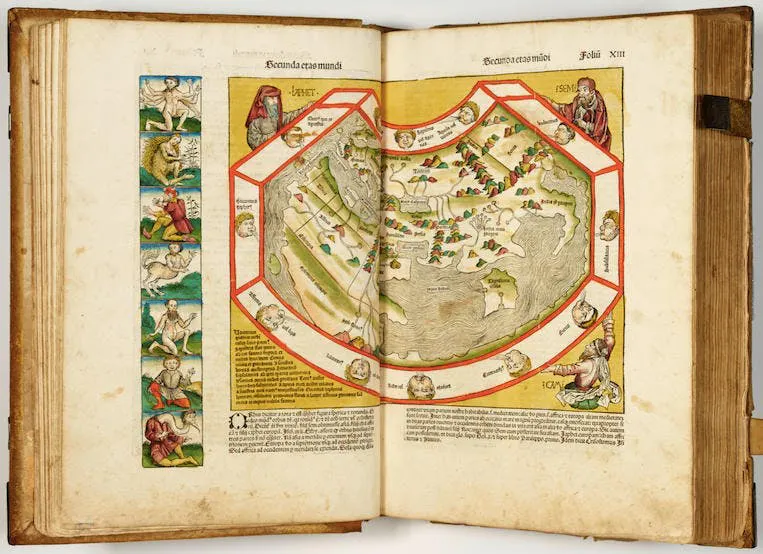
Visuals include city views, a world map and a map of Europe, as well as illustrations that provide an interesting glimpse into the everyday world of the late 15th century.
The text, written in Latin by Schedel and translated into German by Georg Alt, finally arrived in Koberger's studio in 1493. The 656-page work was then available in two versions: a black and white unbound version and a more elaborate edition, bound and coloured by hand.
See also: Archaeologists Discover the World's Oldest Illustrated Book
On 11 December 2020, a bound and illustrated Latin copy was presented at Bonhams in New York. The estimate of $200,000-300,000 was largely surpassed with the sale price of $437,813 (£321,370), the highest amount ever paid at auction for the Latin edition of this extremely rare encyclopaedia.
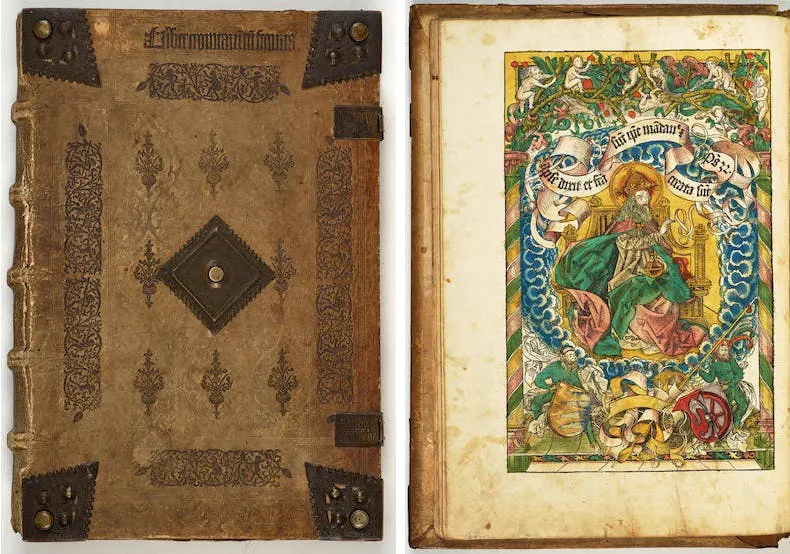
"It is impossible to exaggerate the significance of the Nuremberg Chronicle," said Ian Ehling, Head of Books at Bonhams in New York. "Magisterial in its scope and ambition, it was the first printed work to integrate text and illustrations in a truly successful and effective way. First editions of the Chronicle in their original binding with contemporary hand-coloured illustrations very rarely appear on the open market."
The original Latin editions number between 1,400 and 1,500 copies, and only 400 have survived to this day. The German edition of the Chronicle was published in smaller numbers, and a German copy printed by Koberger in 1493 sold for £541,250 at Christie's London in 2010.