Art has long evoked emotion, from feelings of happiness and love and sorrow. And what about fear? Here are 10 paintings that are meant to scare, with gruesome motifs and dramatic compositions.
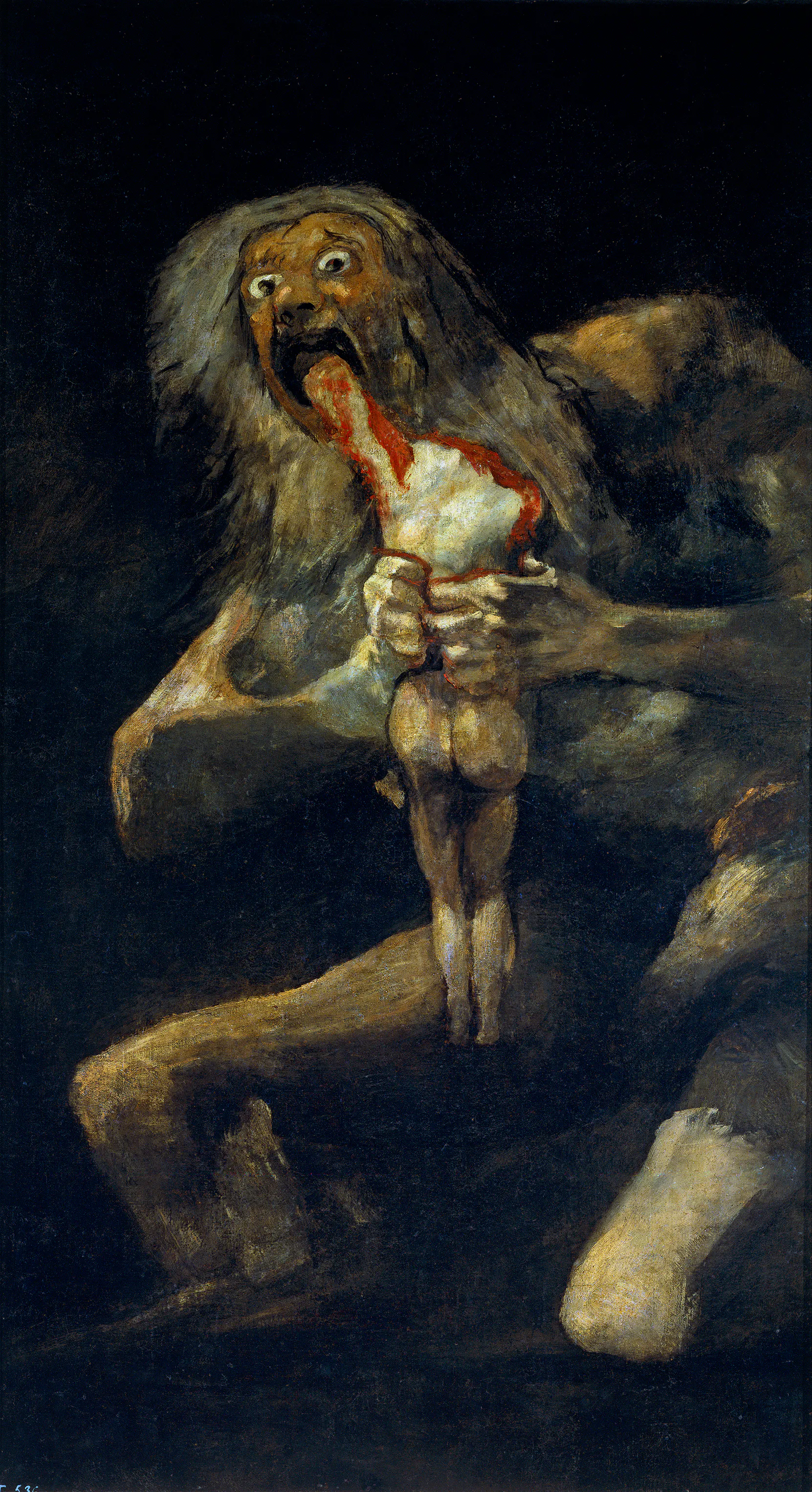
Francisco de Goya, Saturn Devouring His Son, c. 1820
See also: 10 Artists Between Genius and Madness
At the beginning of the 19th century, Spain tried to get rid of Joseph Bonaparte, who had been put on the throne there by his younger brother Napoleon in 1808. The result was a brutal war from which the Spanish people suffered terribly. Francisco de Goya evoked the uncertain and violent mood in his home country to create fourteen paintings between 1819 and 1823, a few years after Napoleon's fall, called the Pinturas Negras ('Black Paintings'), containing frightening motifs. One of these works is Saturn Devouring His Son, portraying an episode from Greek mythology. Saturn, afraid of being overthrown by one of his children, ate each of his children after birth.
Henry Fuseli, The Nightmare, 1781
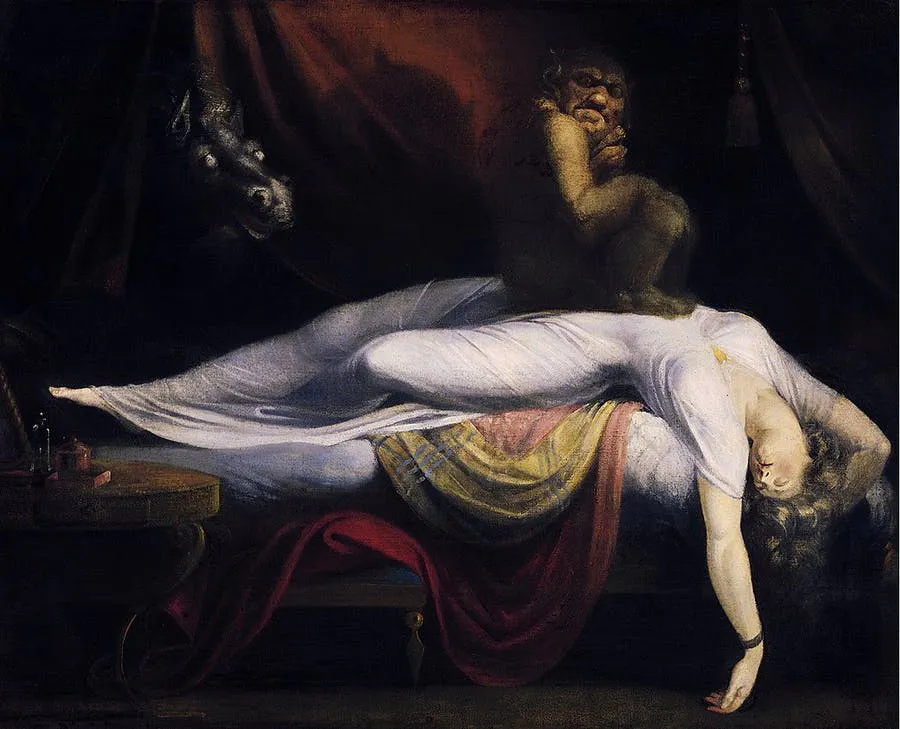
Henry Fuseli was a Swiss artist of the 18th and early 19th centuries who was fascinated by horror and the supernatural. Fuseli's best-known painting The Nightmare from 1781 is a prime example of this topic: the embodiment of a nightmare crouches on the chest of a sleeping woman, while the head of a horse with bulging white eyes appears out of the dark. Infused with a sense of demonic eroticism, it's certainly not a work to hang in the bedroom...
Théodore Géricault, The Severed Heads, 1810s
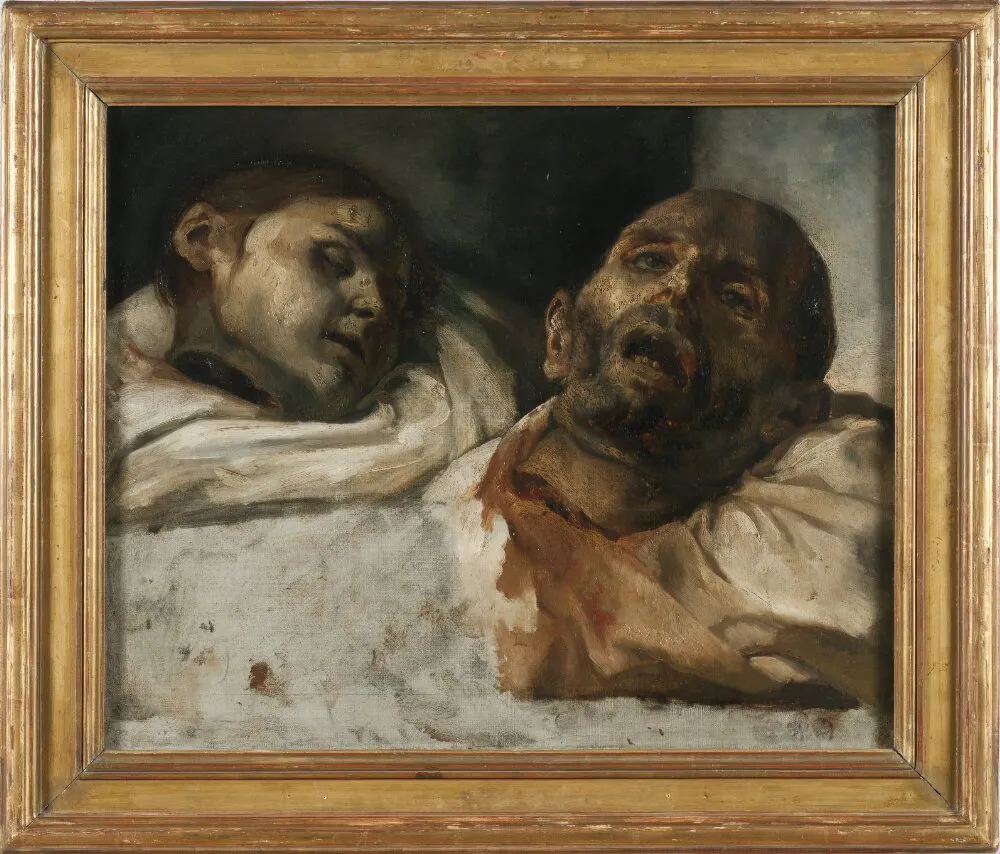
When Théodore Géricault presented his famous work The Raft of the Medusa in the Paris Salon of 1819, scandal ignited. This was because the work depicted the real and shocking events that had happened three years earlier after a shipwreck off the coast of West Africa, resulting in cannibalism of the survivors. Not only that, but the people were depicted in a terrifying and gruesome way. Before carrying out his work, Géricault made macabre studies for it, including The Severed Heads.
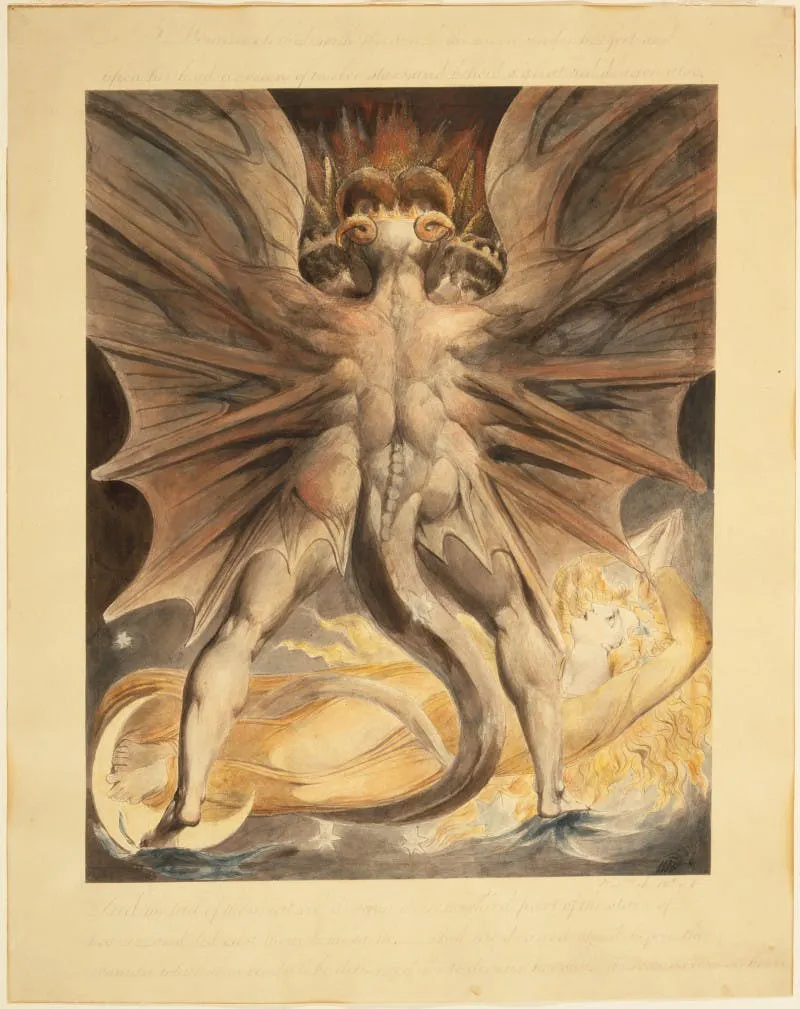
William Blake, The Great Red Dragon and the Woman Clothed with the Sun, 1805-10, and The Ghost of a Flea, 1819-20
See also: Symbolism: Europe’s Mystical Art Movement
The English poet and painter William Blake was strongly influenced by spirituality in his works. Needless to say, he was rejected by his enlightened contemporaries. Only with the advent of Romanticism in the early 19th century did his work find increasing recognition and imitation by other artists. Blake created the painting The Great Red Dragon and the Woman Clothed by the Sun between 1805 and 1810 as an illustration of the Old Testament book of Job. In 1981, it inspired the American author Thomas Harris for the first novel in the Hannibal Lecter series, Red Dragon.
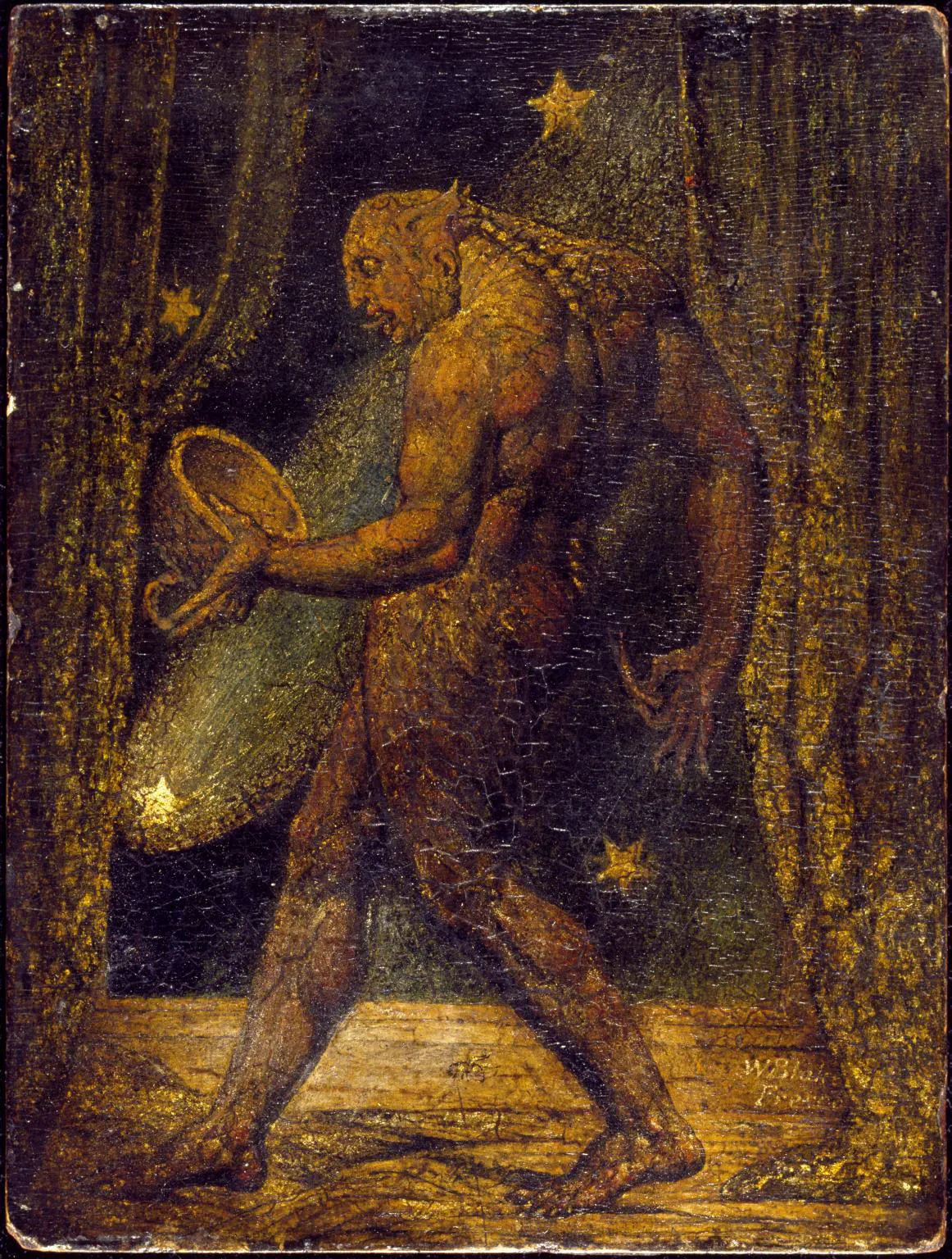
Blake stated several times in his life that he had seen visions. One of these phenomena was the ghost of a flea that visited him in his sleep. He immediately captured his dream experience in a miniature depicting the flea as a demon-like monster that greedily gazes at its bloody prey in a vessel.
Bill Stoneham, The Hands Resist Him, 1972
Sometimes not only is a painting itself scary, but also the story behind it. The Hands Resist Him was painted in 1972 by the American artist Bill Stoneham and is based on a photograph that shows himself at a young age next to a girl, who is depicted like a doll. The two children stand in front of a window behind which are multitude of hands that seem to be reaching for the children out of the darkness.
See also: The 10 Most Scandalous Artworks
In 2000, the work was offered on eBay. In the ad, the sellers, an elderly couple, said they found the picture abandoned against a barn wall. They took it home with them, where all sorts of scary things are said to have happened: at night the children could be heard talking to each other in the picture and the boy repeatedly stepped out of the frame.
The advertisement and painting became an internet sensation, and it was later discovered that three former owners of the painting allegedly died while it was in their possession.
Francis Bacon, Study After Velázquez's Portrait of Innocent X , 1953
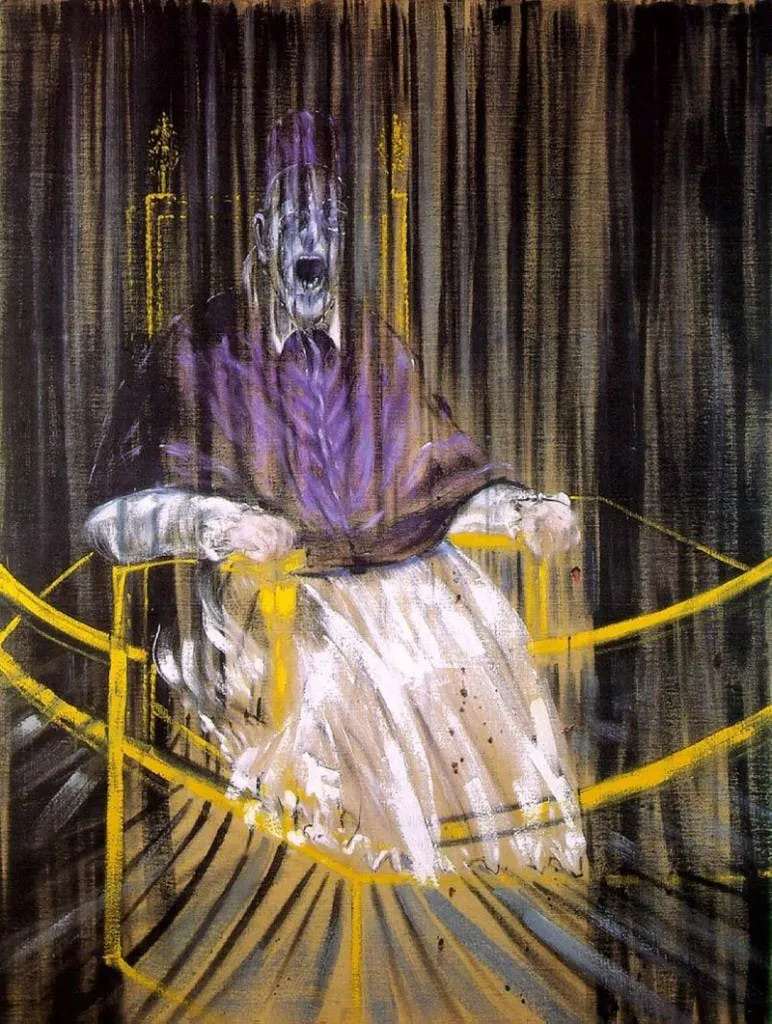
One of the most famous artists of the 20th century was the Irish-born Francis Bacon. For inspiration, Bacon repeatedly referred to the works of other artists, including the Spanish baroque painter Diego Velázquez.
See also: Obsessive Love: Francis Bacon and Peter Lacy
In 1953, he used Velázquez's portrait of Pope Innocent X as a template for one of his own works. He transformed it so that it looks like the head of the Catholic church is screaming. Some now say that with this work, Bacon dealt with the death of his father, who had died shortly before. Others think that he only wanted to express his atheism.
Salvator Rosa, The Temptation of St. Anthony, 1645

Salvator Rosa was an Italian painter, poet, and musician who lived in the 17th century. He primarily devoted himself to images of the Italian landscape, which he enlivened with soldiers or outlaws. Every now and then, however, he also added a good deal of drama, even Surrealism, to his work, which was completely unusual at the time. In the present work, the hermit Antonius is confronted with creepy figures on his wandering through the desert, who want to tempt him in the name of the devil.
Gustave Moreau, Diomedes Devoured by His Horses, 1865

See also: The Enduring Appeal of Old Masters
What can you do if your pets suddenly turn against you? This is the question that Thracian king Diomedes had to grapple with in Greek mythology. Diomedes was the proud owner of four horse beasts that lived in the swamps and ate on human flesh. With them, he terrorised his people. Then the hero Herakles stepped on the scene, who also had to take on the horse beasts in the course of his 12 imposed tasks. He finally ended the reign of terror by throwing Diomedes to his steeds to eat.
Hieronymus Bosch, The Garden of Earthly Delights, c. 1500
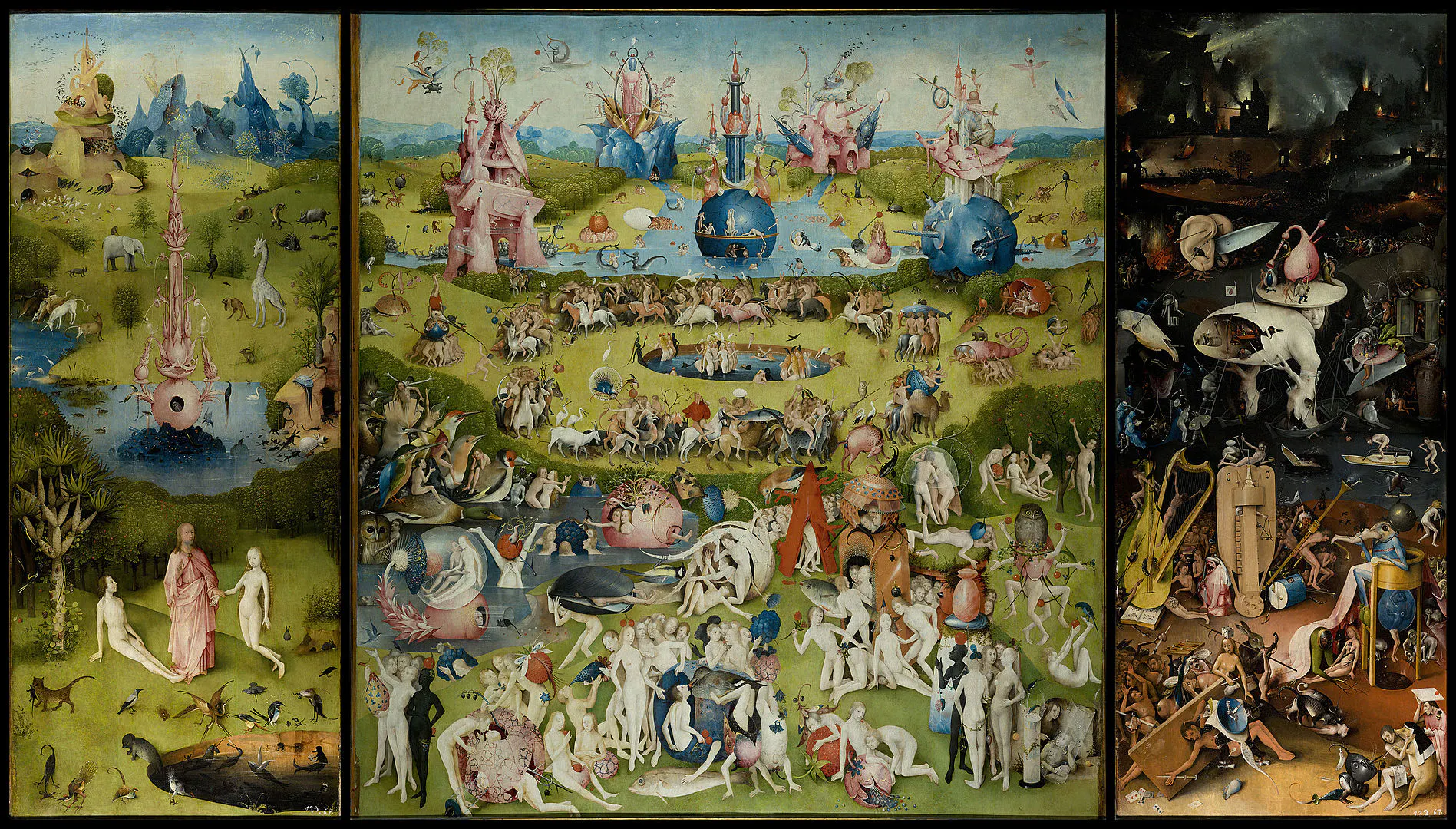
The mysterious and chaotic art of Hieronymus Bosch still raises many questions today. The triptych The Garden of Earthly Delights, which was created between 1490 and 1510, is no exception. The left panel depicts the Garden of Eden, the large central picture the Garden of Earthly Delights and the right wing is Hell, in which the damned, surrounded by disturbing, contorted beings, endure torments.